Can Bunnings' pod homes actually ease the housing crisis?




Bunnings' modular pods caused a buzz when they were first announced, but can backyard studios really help solve Australia's housing crisis?
The move to expand prefabricated and factory-built modular homes as part of a multi-pronged approach to help solve Australia's seemingly intractable housing affordability problem got a boost, thanks to Bunnings' announcement in February that it would start selling modular pod houses.
The pods and studios are designed for backyards, though every council is different, and permit requirements can vary depending on size, use and location.
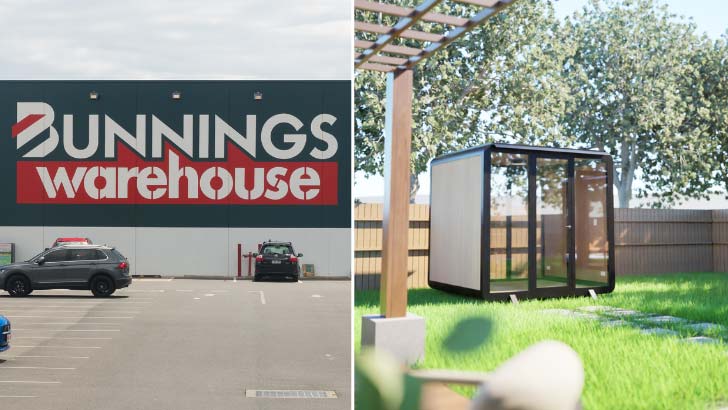
Australia's largest hardware and home improvement retailer now lists Elsewhere Pods' flatpack dwellings online and in store as a special order.
There are two models, a small 2.7m x 2.4m pod priced at $26,100 and a larger 4m x 2.4m studio at $42,900.
Bunnings says the units can be assembled in as little as two days, positioning the products as DIY-friendly solutions that can serve as crisis accommodation, home offices or teenage retreats.
How housing supply delays are worsening affordability
One of the biggest factors exacerbating our home affordability crisis is the lack of new supply and the increasing time it takes for standard on-site built homes to be completed.
Australia's national housing target is to build 1.2 million new homes over the five years from July 2024 to June 2029. But we are falling well behind this with the National Housing Supply and Affordability Council (NHSAC) predicting that Australia will miss its 2029 target by about 262,000 homes.
The factors causing this include severe workforce shortages and planning and regulatory delays that have increased the time taken to build a detached house by roughly 34% to 40% since the COVID pandemic.
With apartments it's even worse, with some reports that construction times have increased by up to 80% over the past 15 years.
Why construction costs are still climbing
Rising construction costs, with materials such as timber, steel and concrete jumping more than 40% in price since the start of the pandemic, have added to the woes.
Modular homes currently only make up about 8% of Australia's housing stock, but it's a sector gaining momentum.
"The Australia Prefabricated Construction Market was valued at US$8.35 billion ($11.8 billion) in 2025 and estimated to grow from US$9.01 billion ($12.73 billion) this year to reach US$13.17 billion ($18.60 billion) by 2031, at a compound annual growth rate (CAGR) of 7.88% during the forecast period (2026-2031)," stated a recent report into Australia's prefabricated construction market by market intelligence firm Mordor Intelligence.
"Tight housing supply, persistent skilled-labour shortages, and stricter energy-performance rules under the National Construction Code 2022 are steering developers toward factory-based production lines that compress schedules and curb cost overruns."
Why prefabricated homes can be faster and cheaper
A big advantage of prefabricated homes is that they only take about half the time to build as standard housing, one reason the Australian Federal government is investing $54 million to accelerate the adoption of modular and prefabricated housing.
Prefabricated homes often cost 10% to 25% less per square metre to build compared with traditional homes, according to data from the Housing Industry Association, with savings driven by reduced labour, minimised material waste, and faster, more predictable construction timelines.
Additionally, modular homes are generally of high quality and durable as they are built in a controlled, indoor environment, avoiding weather-related damage to materials, ensuring consistent quality. Many are also energy efficient and sustainable with better insulation, sustainable materials, and in-built off-grid capabilities like solar panels.
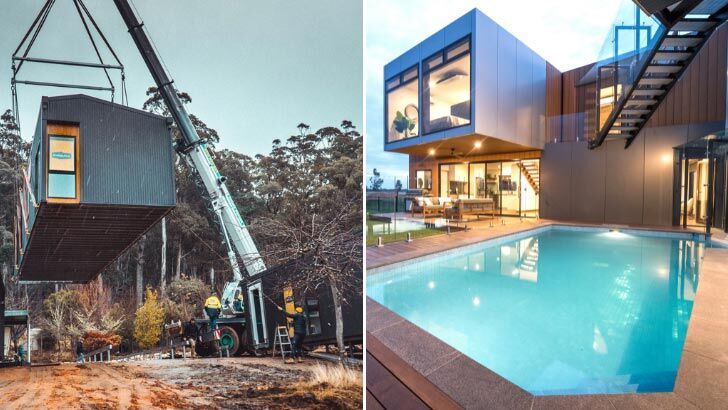
Many prefabricated homes can be customised and offer architecturally diverse designs, dispelling the myth that they are unoriginal or boxy.
Who modular homes and granny flats are actually suited to
While these types of secondary dwellings are usually considerably smaller than standard houses, they may indeed suit a large number of people. In Australia, 61% of households consist of one to two people, while three to four bedrooms make up 70% of our housing stock, according to analysis from leading real estate data firm Cotality.
Builders are responding to growing demand for modular homes with a Housing Industry Association (HIA) survey of builders in April 2025 showing that granny flat construction, mostly prefabricated, is set to take off across Australia. Respondents reported that they expected to build 10 times more granny flats this year than they did in 2022.
The origin of the sudden surge in granny flat construction lies in the planning system, says the HIA. NSW was the first State to make it much easier to build granny flats in 2009 and the others have followed, albeit some of them quite slowly.
What could hold prefabricated housing back
One of the problems associated with getting a loan to buy a prefabricated home has been lender hesitancy to come to the party because the home is built in a factory. This means lenders cannot use the building as security until it is installed, making them nervous.
This is being mitigated by the fact that at least one major bank, CommBank, is now offering tailored construction loans that allow for progress payments during the off-site, factory-build phase. Others will likely follow as the sector grows.
Another potentially considerable problem is the cost of transporting factory-built homes, usually on the back of a truck.
Depending on the complexity of the transport and lifting job, moving a home may cost anywhere from $5000 to well over $20,000, eating into cost savings from this type of home.
Get stories like this in our newsletters.