How gaming is getting Aussie kids hooked on gambling




It's ANZAC Day, and 10-year-old Carlos wakes to the sound of the TV. His mum is watching the dawn service, a scratchie balanced on her lap. Carlos grabs his iPad and opens YouTube.
Before his video loads, an ad appears: boosted odds for today's footy match. He doesn't understand the numbers, but the bright lights and cheering fans look exciting.
Later, the family heads to the local RSL for breakfast. Outside, a crowd gathers around a chalk circle. Coins spin through the air as adults laugh and cheer. It's two-up, the one day of the year it's legal. "Just a bit of fun," his dad says, handing over a gold coin.
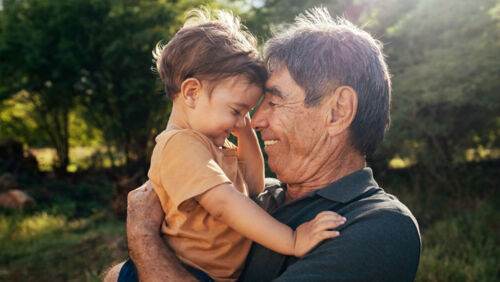
![Younger children now face gambling cues not just in ads or sports, but inside the games they play. A September study found [RJ21.1]simulated gambling in games aimed at kids as young as four.](https://media.moneymag.com.au/prod/media/library/Money_Mag/2026/01._January/gambling-exposure-children-australia-0001_tablet.jpg)
On the way to the shops, he passes a newsagency. Posters advertise Powerball jackpots. A digital billboard flashes: Win $20 million this Thursday.
Back home, Carlos watches the ANZAC Day AFL match with his older brother. The commentators talk about odds and multi-bets. Logos for gambling companies flash across the screen. Carlos cheers when the Bombers score. His brother doesn't, his bets have already lost.
After lunch, Carlos plays a free iPad game. He's prompted to buy a 'loot box' for a chance at a rare skin. The spinning wheel looks like Mum's scratchies. He doesn't realise it, but he's engaging in simulated gambling.
That night, the family watches a quiz show. During the ad break, a betting company commercial blares its catchy tune. Carlos hums it while brushing his teeth.
By bedtime, he's encountered gambling seven times - a lucky number for some. It's woven into his entertainment, his community, his games and his family's traditions.
For Carlos and millions of children like him, it's just another day in Australia.
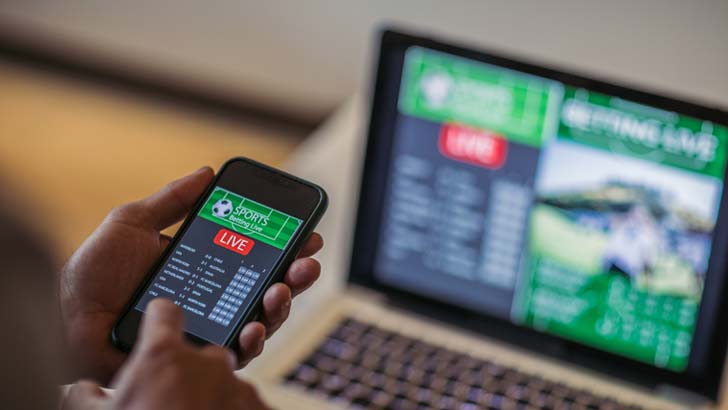
Key takeaways
- Nearly one million Australians aged 12-19 gambled in the past year.
- Teen gambling is fuelled by sport, social media, online betting and gaming.
- Experts say gambling ads have become difficult for children to avoid.
- The Murphy Report proposed 31 gambling reforms, many remain unimplemented.
- Loot boxes and gambling-like game mechanics remain a concern for parents.
Teenagers are gambling more than they're playing sport
Almost one million Australians aged 12 to 19 gambled in the past year - more than the number who played cricket, soccer, basketball or footy.
That's one in three teenagers, enough to fill the MCG nine times over, according to The Australia Institute. Together, they wagered an estimated $231 million, despite the legal gambling age being 18.
Among 18- to 19-year-olds, nearly half gamble regularly and many carry those habits into adulthood.
"We've allowed gambling to get to the point that Aussie kids think it's normal to discuss betting odds when they talk about the footy," says Morgan Harrington, research manager at The Australia Institute.
Public Health Association Australia (PHAA) warns that young people are five times more likely than adults to develop gambling problems. Between 3%-4% of young gamblers already show signs of addiction or are at serious risk.
"Like Big Tobacco, the gambling industry knows if it can get kids hooked, it has a pipeline of customers for life," says Ebony Bennett, The Australia Institute's deputy director.
Australians lose more to gambling per head than anyone else on earth - more than $31.5 billion per year, according to the PHAA. That's more than $1000 per person, more than gamblers lose in Las Vegas. The losses aren't just financial.
"They drive mental illness, domestic violence, family breakdown, housing stress, self-harm and potentially suicide," the PHAA said in July 2025.
Harrington says this didn't happen overnight.
"It's because of the proliferation of sports betting apps and the advertising for them, which has become just about impossible to avoid," he says.
"These technologies simply weren't available 10 or 15 years ago and the government isn't doing enough to restrict use to adults."
The government has known this for some time. In June 2023, a Federal inquiry into online gambling delivered a landmark report - You Win Some, You Lose More. This became known as the Murphy Report, led by the late Labor MP Peta Murphy. It sets out 31 urgent reforms, including a ban on gambling ads during live sports and stricter identity checks for online betting. Two years later, most remain untouched.
Harrington says it comes down to political will.
"We don't see ads for cigarettes anymore and no one thinks that is strange, yet you can't watch a sports match in this country without seeing gambling ads."
The Murphy Report had bipartisan support, but its recommendations stalled.
Betting logos still dominate broadcasts; gambling apps still target young people; the same digital spaces where children watch videos or play games are saturated with gambling cues.
"So far, the government seems more willing to side with the gambling industry than Australians affected by gambling," he adds.
By the numbers
- 1 million Australians aged 12-19 gambled in the past year.
- $231 million wagered by teenagers.
- $31.5 billion lost to gambling nationally each year.
- 72% increase in online gambling spending between 2019 and 2022.
- 85% of 12-17-year-olds have seen a gambling ad on TV in the past month.
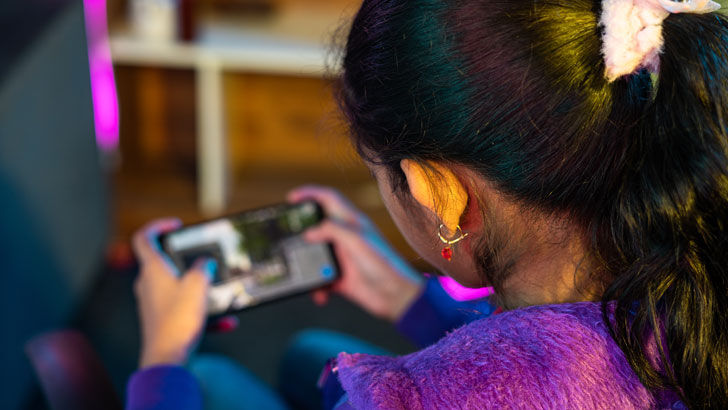
How Australian teenagers and children are exposed to gambling
"The impacts of gambling on the young generation will be everlasting ... My son fell into the trap after having a couple of wins. Those wins turned into losses and those losses are then chased until there is nothing left but tears and depression," reads one submission to the Murphy Report.
Gambling isn't one activity but a spectrum of risky behaviours, some far easier for kids to access than others.
Anne Hollonds, director of the Australian Institute of Family Studies (AIFS), says that while most 16-17-year-olds don't gamble, "a significant number do. One in five boys and one in eight girls reported spending money on at least one gambling activity within a year," she says.
"The most common form was private betting with friends or family - cards, mah-jong - activities that have no legal age restrictions." More concerning, about 5% of teens reported betting on sports, horse racing or greyhounds, all restricted forms.
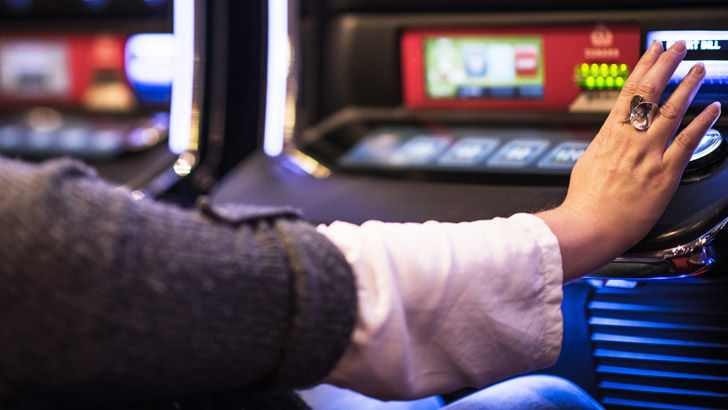
Poker machines and young Australians: Why pokies remain a gambling risk
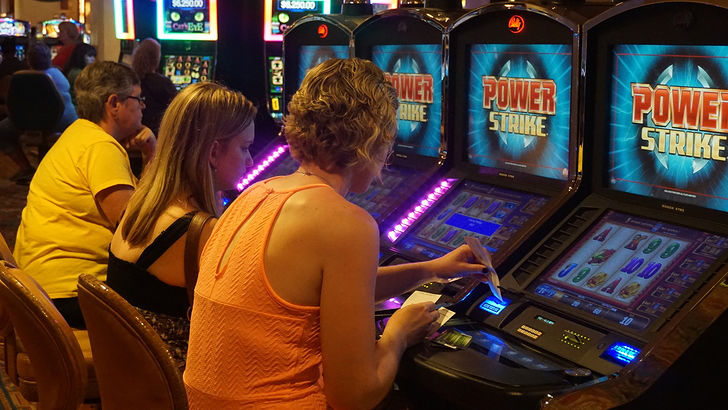
Poker machines aren't how most children first experience gambling, but they're often where problem gamblers end up. NSW has the highest concentration of pokies outside Las Vegas, with about 90,000 machines, roughly one for every 88 people.
In 2022-23, Australians lost $15.8 billion on pokies, more than half in NSW alone, up 7.6% from pre-COVIDpandemic levels.
Among 18-34-year-olds who regularly play poker machines, more than four in five are classified as high risk. Most also gamble elsewhere: 81% buy lotto tickets, 67% scratchies, 62% bet on racing and 56% on sports.
Australia has less than 1% of the world's population but 18% of its poker machines, according to The Guardian. Most global machines are inside casinos; in Australia, three-quarters sit in pubs and clubs.
Unsurprisingly, the world's biggest pokie maker, Aristocrat, is Australian. But what is surprising is that morethan 69,000 12-17-year-olds have used poker machines in the past year, despite ID checks, according to The Australia Institute.
Online gambling in Australia: Why experts are concerned about young people
Online gambling may still cause less total harm than pokies, but it's catching up fast and reaching younger Australians in ways pokies never could. Australians who gamble online are twice as likely to experience harm as those who gamble in person (34% to 15%), according to the Murphy Report.
The COVID lockdowns accelerated the trend. With pubs closed and people isolated, gambling companies filled the void.
"Many people withdrew their superannuation and gambled much of it," Financial Counselling Australia told parliament. "The industry bombarded Australians with marketing. It was the perfect storm for gambling harm."
National spending on online gambling jumped from $5.6 billion in 2019 to $9.6 billion in 2022 - a 72% surge.
Morgan Harrington wrote in The New Daily that "free-to-air TV alone airs more than one million ads a year, not counting the torrent online".
"If 85% of 12-17-year-olds have seen a gambling ad on TV in the past month, is it any wonder young people talk about betting odds like they once did player stats?"
Speaking to Money, he says there's no single fix, but implementing the Murphy Report's recommendations, "would be a good start".
"The fact that there is no Federal regulator simply has to change," he says.
The report called for a national gambling regulator, a minister for harm reduction and an ombudsman to handle complaints.
Three quarters of Australians support a total ad ban within three years, and more than four in five want gambling ads gone from social media, stadiums and uniforms.
On one of those points, the public may get their wish.
Since December 10, platforms such as Instagram, TikTok and Snapchat must block under-16s - a policy that may indirectly reduce gambling exposure. YouTube, initially exempt, is now included.
But experts warn gambling promos will still slip through via sport, streaming and other platforms.
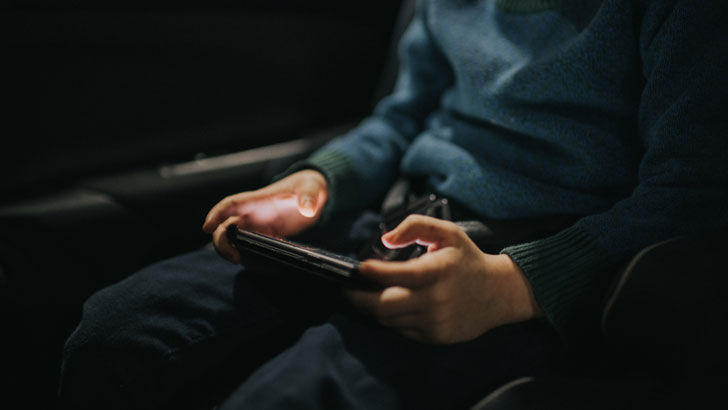
Why gambling reform has stalled in Australia
Movement on the Murphy Report's recommendations appears unlikely for now.
In August 2024, the Sydney Morning Herald reported that Prime Minister Anthony Albanese shelved a proposed ban on gambling ads under pressure from media networks and sporting codes ahead of the Federal election.
The timing raised eyebrows. Analysis by Reuters revealed that MPs accepted $245,000 in free tickets to sporting events while the ad ban was under consideration.
Albanese received $29,000 in tickets, mostly to Rabbitohs games and grand finals, while then Opposition Leader Peter Dutton accepted $21,350 worth.
Australia's professional sporting codes have a financial stake in the gambling industry, which pours millions into sponsorships. Political donations are also common. A 2021 ABC investigation found gambling-linked donors made more than $80 million in political payments between 1998 and 2020.
Even raising concerns can come at a cost. In October, independent senator David Pocock was removed from the Australian Parliament Sports Club - a social group for politicians and journalists (and lobbyists) - after objecting to a gambling lobby group being a paid member.
The Public Health Association of Australia PHAA) is calling for reform, including a ban on political donations from gambling operators and a 1% turnover levy to fund harm-reduction services.
Until such measures are introduced, critics argue Australia will continue to treat gambling as a commercial opportunity rather than a public health issue - leaving the house and its lobbyists, firmly in control.
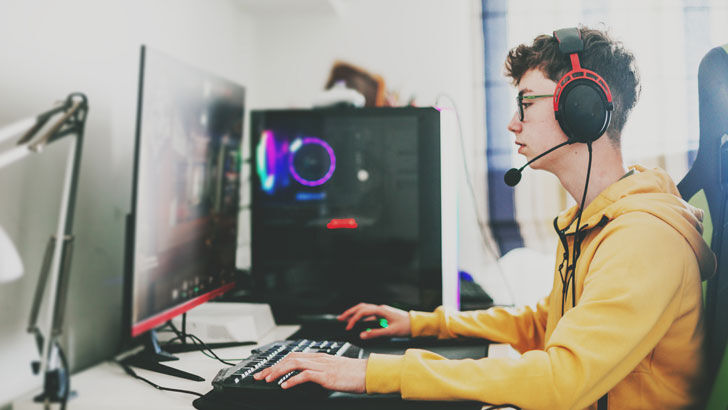
How loot boxes and video games expose children to gambling-like behaviour
Younger children now face gambling cues not just in ads or sports, but inside the games they play. A September study found simulated gambling in games aimed at kids as young as four.
Many of these games use 'loot boxes' or 'gacha' systems, digital lucky dips where players spend real money for a chance at rare virtual prizes. The flashing lights, suspenseful spins and near-misses mimic the psychology of slot machines.
These features "may function as a gateway to gambling-related harm", warn researchers from the City University of Hong Kong and The University of Sydney.
To get ahead of this, Australia introduced new age ratings for games with gambling-like content in September 2024.
Titles with chance-based purchases must carry at least an M rating, while games that simulate gambling, such as casino or betting apps, must be R18+. Yet out of the top 100 grossing mobile games, researchers found 20 on the App Store and 48 on Google Play that didn't comply.
"Several games with these features still carry ratings below what the law requires," says researcher Leon Xiao.
The team also uncovered wild inconsistencies. Of 31 games with gambling-like content, 30 had conflicting age ratings - some showing four different ratings at once.
Gardenscapes was rated G on Google Play, 4+ on Apple, 16+ in its privacy policy and 16+ with parental permission in its terms.
Dice Dreams was listed as 4+ on Apple, M on Google Play and 15+ under Australian classification - yet its developer admitted it was "intended for those 18 and older."
For parents, that means there's no consistent guide to what's appropriate. Xiao says confusion stems from poor communication.
The rules, which took effect on September 22, 2024, also apply to older games that add or alter loot boxes, but many still display outdated ratings.
"The relevant minister arguably misled the industry by declaring that the rules do not apply 'retroactively', even though they clearly do apply to previously released games that are substantively updated," he says.
He adds that the Australian Classification Board only released compliance guidance a week before the law took effect. "That gave the industry very little time to react."
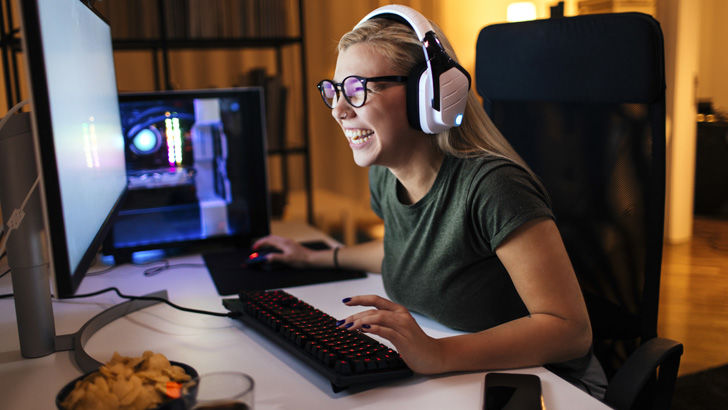
How gambling mechanics are built into popular mobile games
"Gambling-like elements are designed to make video games addictive," says Morgan Harrington, from The Australia Institute.
"They normalise gambling behaviour, which can become a problem as kids grow up."
Parents and carers, he says, need to understand the risks in the games children play. Parents have long relied on Australia's film and TV ratings to judge what's suitable for kids.
Those systems aren't perfect, but at least they're consistent. Gambling, too, is tightly controlled: betting apps must verify ages, and casinos can't let minors through the door.
Yet the study suggests the same consistency doesn't extend to mobile games.
A spokesperson for the Department of Infrastructure, Transport, Regional Development, Communications, Sport and the Arts told Money the updated classifications are "designed to help Australians make informed choices", and encouraged people to check ratings at classification.gov.au.
"The government is continuing to work on broader reforms to the National Classification Scheme to ensure it remains a trusted and relevant source of information for Australians when deciding what to watch, read and play," the spokesperson said.
The classification board vows to work with publishers and platforms to improve compliance, with enforcement handled by State and Territory authorities. Public consultation on updated classification guidelines is expected next year.
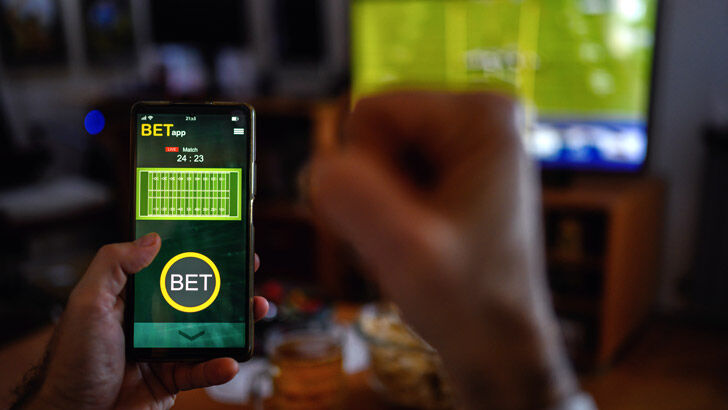
Roblox, loot boxes and gambling concerns for children
Roblox and Minecraft weren't part of the study but were tested separately due to their popularity.
Both are 'sandbox' games where players create their own worlds and minigames, making regulation near impossible.
Roblox alone has about 350 million users, 40% of them are younger than 13. Loot boxes and paid random-reward items remain widespread.
When researchers created a 12-year-old's account, they were immediately prompted to buy a $5 'starter pack' containing a random 'royal egg'.
Later, the same account entered Hotel Elephant, a player-made casino with a functioning poker machine that accepted Robux, Roblox's currency that can be purchased with real money. That, they argue, warrants an R18+ classification for Hotel Elephant, and by extension, Roblox itself.
Mislabelling games is illegal under Australian law, but penalties are weak: the maximum fine is only $6000.
"Given Roblox has a yearly revenue of $5.8 billion, it is reasonable to expect it to moderate its platform to protect child users and ensure compliance with Australian legislation," the study concluded.
Where to get help with gambling
- Gambler's Anonymous: 130 meetings weekly, free membership
- Gambler's Help: Under-25 service, 24/7 support - 1800 262 376
- Gambling Help Line: 24/7 chat and counselling - 1800 858 858
- Lifeline: 13 11 14
- MensLine: 1300 789 978
- Beyond Blue: 1300 224 636
Award-winning journalism
This article was named Single Article at the 2026 Mumbrella Publish Awards. Money also won Cover of the Year and Newsletter of the Year. Sign up for Money's award-winning newsletter.
Get stories like this in our newsletters.
 Reply
Reply