The best property investments after negative gearing changes




Commercial properties and new-builds have renewed appeal for investors, thanks to tax changes. But there are six things you need to consider.
More than half of Australian residential property investors follow a well-worn path to long-term wealth creation and building a portfolio.
They find an established property, put in a tenant, claim the deductions in their tax return each year and let time do the heavy lifting.

The Federal Budget changed the economics of that strategy in May, as investors buying established residential property were no longer able to offset rental losses against their salary.
Newly built homes, including off-the-plan apartments, remain eligible for negative gearing, while commercial property is unaffected.
These changes are expected to send more investors towards assets that some may have never seriously considered.
Here's what to weigh up before taking the next step.
1. Is it always better to buy a new-build than an existing home?
The proposed tax changes may encourage more investors to consider new residential property, but Flint Group co-founder and investment adviser Redom Syed says instead of asking whether to buy new or established, the question should be: will this established property outperform the new one by enough to justify buying it?
"Our modelling suggests an established property needs to outperform a comparable new property by around 0.5% to 1% per year in capital growth to justify buying it instead," he says.
"Historically, that's often happened because established homes tend to be in tightly held suburbs where supply is constrained. A lot of new developments are built in growth corridors where there's simply more land to develop over time."
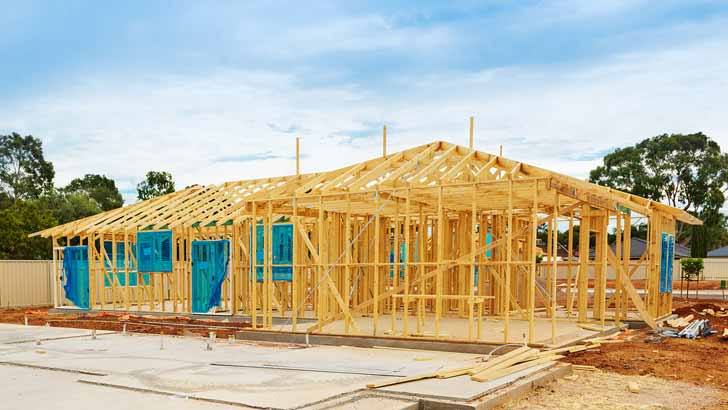
The balance between housing supply and population growth also differs markedly between growth corridors.
Western Sydney, for example, is expected to require more than 25,000 new homes a year to accommodate forecast population growth, yet fewer than 6000 dwellings are currently under construction across the region, according to Ray White Western Sydney.
Not all locations are equal
Knowing where to buy becomes just as important as deciding what to buy, says Eda Property founder Anissa Cavallo.
Rather than relying on suburb-level growth figures, she recommends understanding future land releases, local supply and demand, and the differences between individual estates.
"Not all estates and growth corridors are created equal, and plenty will lag on capital growth. The right street in the right pocket matters enormously."
Cavallo expects the Budget changes to increase competition for quality new housing and says investors who have already identified the right opportunity may benefit from acting sooner rather than later.
"Given the Budget has ensured that a lot of investor focus will shift to the new-build space, I think there's a real window of affordability right now."
Take the final price into account
Buying new also comes with tempting upgraded finishes and features that aren't included in the base contract, while site costs can materially change the overall budget.
"I've seen people walk into a display home, get completely mesmerised by the interior design and the very talented salespeople working those spaces, and then feel let down when they start pricing up what they need," she says.
"The quoted base price is rarely the full story. Drainage issues, easements and slope problems can add $20,000 to $60,000-plus if they weren't disclosed upfront."
Negative gearing isn't the only financial advantage of buying new, according to Cavallo.
She says depreciation and the ability to lock in today's purchase price during construction can both improve long-term returns.
2. Is it advisable to seek independent advice before buying?
Just as most investors rely on a conveyancer to review contracts and a mortgage broker to arrange finance, a buyer's agent can also play a role, particularly when purchasing a new build, an off-the-plan apartment or commercial property.
While buyers agents are often associated with established homes, many specialise in these markets, helping investors assess opportunities, negotiate contracts and navigate the different lending, construction and settlement processes.
Buyer's agent and current Property Investment Professionals of Australia (PIPA) chair Cate Bakos says demand for specialist knowledge is likely to increase as more investors explore parts of the market they may not have previously considered.
"New property selection requires a different approach and skillset given the complexities vary greatly," she says.
"From defects, sunset clauses, lending regimes and subdivision/titling, not all agents understand new builds and the responsibilities that these assets command."
When looking for the right buyer's agent, Bakos recommends checking they have a firm knowledge of lending policy for new or off-the-plan properties, and the ability to tackle the settlement process, including defecting and sign-off.
Make sure it's the right investment for you
It's a service that Cavallo believes is less common than it should be, as investors assume that because they're buying directly from a developer or project marketer, they don't need independent representation.
"When you buy through a developer's sales team, their job is to sell you that product at that price. They're not thinking about whether it's the right asset for your portfolio, whether the pricing stacks up against comparable stock in that corridor, or whether the contract terms protect you," she says.
"You need an independent and experienced set of eyes to review the contract, assess the location and developer track record, and tell you honestly whether the numbers make sense."
3. Is it worth owning more than one dwelling?
Not every investor buying new will look at greenfield estates or off-the-plan apartments.
Instead, they may add a granny flat, subdivide an existing block or create a second dwelling on land they already own.
According to Domain research, "granny flat" was Sydney's most searched property keyword in 2025, while searches for "dual living" and similar terms have risen sharply.

Solvere founder and property adviser John Pidgeon says experienced investors have long used subdivision projects and secondary dwellings to manufacture equity and improve returns, and he expects more investors to explore those strategies under the proposed tax changes.
"The sophisticated investors have always used this as a wealth-creation method so that will continue for them," he says.
"The granny flat will be in vogue as people search for a better-yielding portfolio to offset the negative-gearing impacts."
Strong capital growth vs tax benefits
However, Pidgeon says investors should remain disciplined when assessing development opportunities, and if there's no prospect of capital growth, tax benefits will be of little help.
"Proceed with caution around supply and demand, the number of investors surrounding you, build costs and reliability, and forecast supply coming into the market in the coming years," he says.
Creating additional housing is often more expensive and time-consuming than investors expect, Cavallo says, as people underestimate the cost of planning permits, surveying, civil works, service connections, legal fees and holding costs.
These can quickly erode the economics of a small subdivision.
Timing is important
"The entire process from purchase to title on the new lot can easily run two to three years. It used to cost around $50,000 on average per block. Now, even subdividing a small block can cost over $150,000 per block," she says.
"It can absolutely work, but the numbers must work, not just the concept."
Cavallo suggests the easier and least risky path is to find land that's already been subdivided.
4. Is commercial property a good investment?
Commercial property is also expected to attract greater investor interest because it sits outside the proposed residential negative gearing reforms.
BMT Tax Depreciation chief executive Bradley Beer says many investors overlook smaller commercial assets because they assume the entry price is significantly higher than residential property.
"Many investors looking around the $1 million mark focus primarily on residential property," he says.
"But smaller commercial assets such as offices, industrial units, retail spaces and consulting rooms can also sit within a similar price range."

BMT analysis found commercial properties purchased for $1 million or less delivered average first-year depreciation deductions of $13,659 and average deductions of $62,720 over the first five years.
Flint Group broker Ben Robinson says investors looking for well-leased assets in major cities should generally expect to enter the market closer to the $2 million mark, where larger tenants, longer lease terms and stronger liquidity become more common.
Smaller commercial assets can carry higher leasing risk and can be more difficult to sell.
Tenant turnover and vacancy rates
Unlike residential property, commercial values are closely tied to the income generated by the asset, making tenant quality, lease terms and vacancy risk central to the investment.
He says one of the biggest mistakes investors make is entering the commercial market too early without the financial buffer to withstand vacancies or tenant turnover.
"Unlike residential, where you might only be vacant for a few weeks, commercial properties can sit empty for months, so you need a longer runway and stronger cashflow to hold the asset," Robinson says.
He adds that commercial lending is also more structured than residential lending, with finance strategy and ownership structures required.
Urban Property Australia founder Sam Tamblyn says the best opportunities are emerging in markets where population growth, tourism, major projects or defence spending are increasing demand faster than new commercial space can be built.
He lists industrial markets on the Gold Coast, Adelaide, Perth and Melbourne's south-east, where vacancy rates remain exceptionally low, along with selected regional hotel markets benefiting from tourism and major infrastructure investment.
5. Is buying off the plan a good idea?
Developers are also expecting to see an uptick in investors making up a larger share of the buyer pool, with the Gold Coast's Lewis Land anticipating an increase in interest in its 16-hectare master-planned community, Harbour Shores, which will deliver more than 2000 new homes over 10 years on the northern Gold Coast.
Lewis Land's head of development Michael Long says the challenge will be ensuring that there's enough well-located apartments available for both investors and owner-occupiers.
"Competition between first-home buyers and investors has always been a challenging market dynamic, but the real issue is whether there is enough well-located, attainable product to serve both," he says.
Lewis Land is responding by placing greater emphasis on one- and two-bedroom apartments in future releases, while continuing to prioritise first-home buyers through projects such as Palm House, where there's a greater concentration of more affordable property.
The lowdown on apartments
Investor appetite for new apartments was already on the rise well before Budget night, with the latest Urbis Apartment Essentials insight report showing that local investors accounted for 28% of apartment pre-sale buyers during the March quarter, the highest share since 2017.
New investor loan commitments for new builds accounted for almost 43% over the same period, of up from 15.1% five years earlier.
Interest has been strongest in Perth and the Gold Coast, where the latter's sales figures were up 47% in the March quarter, the highest level of new project activity recorded since Urbis began monitoring the market.
With only 14 months of supply left at the end of March, Urbis director Lynda Campbell says demand continues to absorb new stock almost as quickly as it reaches the market.
The same can't be said for every apartment market, Flint Group's Syed says, encouraging investors to focus less on whether an apartment is new and more on whether supply is genuinely constrained.
"People often talk about apartments as though they're all the same, but they're not. Apartment markets move in cycles just like housing markets do," he says.
"The biggest thing I look at is supply. If approvals are falling, projects aren't stacking up financially and fewer apartments are getting built, eventually you create scarcity.
At some point prices have to move higher, otherwise developers simply won't build."
Quality of the asset
The final assessment still comes back to the quality of the asset, rather than the tax treatment, Ray White Group chief economist Nerida Conisbee says, listing yield, rental demand and long-term resale prospects are more important than ever.
"In a low price-growth environment, investors cannot rely as heavily on capital growth to make the numbers work. If negative gearing is no longer available on established apartments, the property needs to generate enough rental income to be viable on its own," she says.
She reminds investors that under the new tax rulings, the advantages of a new apartment are largely enjoyed by the first purchaser.
"A new apartment is also only new once. The first buyer may benefit from the tax treatment, but the subsequent buyer pool is smaller if future investors cannot access the same concessions. That could affect resale demand and long-term capital growth."
6. What really makes a good property investment?
For all the discussion around negative gearing, capital gains tax and housing supply, the Budget hasn't changed what makes a good property investment.
Investors still need to buy quality assets, pay the right price and ensure the investment suits their financial circumstances.
What is likely to change is where those opportunities are found and how investors assess them.
Syed expects the market to become more selective over the next two years as investors place greater emphasis on cashflow, rental yields and affordability than they have in the past.
Rather than stretching to borrow as much as possible, he believes many will focus on building more resilient portfolios capable of performing under a wider range of market conditions.
"I think we're going to see investors become a little more defensive. Higher yields, lower entry prices and stronger cashflow are becoming more attractive than stretching to buy the most expensive property possible."
Long-term perspective
That doesn't necessarily mean investors should become more cautious.
Periods of uncertainty have often produced some of the strongest buying opportunities, provided buyers remain disciplined and keep a long-term perspective.
Syed says investors worried about changing tax settings should spend less time trying to predict the market and more time assessing their own position.
"I'd almost ignore the market for a minute and focus on yourself. Are you financially secure? Can you comfortably service the debt? Are you investing for the long term?" he says.
"Because if those things haven't changed, then the investment thesis really hasn't changed either."
The outlook is likely to vary between markets, with supply-constrained locations expected to outperform while others contend with affordability constraints, weaker demand and softer conditions.
PIPA's Cate Bakos agrees the proposed reforms are unlikely to produce a single winning property type.
Instead, she expects investors to become increasingly discerning about the quality of individual assets, while placing greater importance on rental yields, purchase price and long-term fundamentals.
"I predict a rise in quality, boutique and low-density apartments in the capital cities," she says.
Do your research
At the same time, she cautions against assuming every new development will perform well simply because it attracts more favourable tax treatment.
"New property will likely thrive, but investors will need to be cautious about overpayment risk, high outgoings, and compromised locations and zones."
Whether the next investment is an off-the-plan apartment, commercial property, a house-and-land package or a subdivision project, location, supply, quality, cashflow and a long-term investment horizon will be far more critical than any tax concession.
Get stories like this in our newsletters.