What you need to know about 2025 state and territory budgets




After a three-month stretch which has included nine state, territory and federal budgets, the curtain has finally closed on budget season.
The main event, of course, was the 2025 federal budget handed down back in March, but in the months since each state and territory government has released its own budget outlining revenue collection and spending commitments for the next financial year and beyond.
Health, housing and infrastructure were among the major themes across the country, while cost-of-living relief wasn't quite as prominent as years' past.
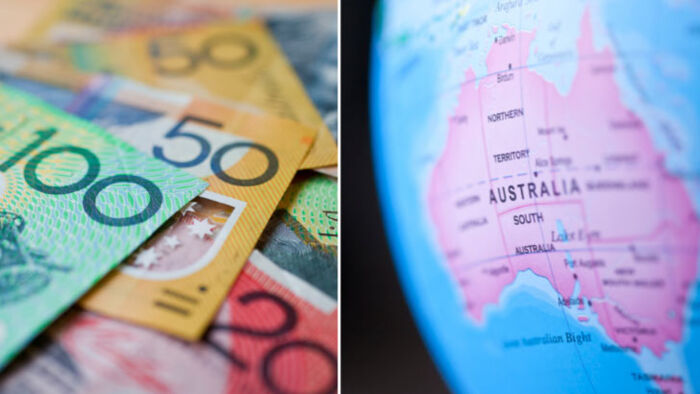
Each state and territory government has their own unique commitments though. So read on for a run-through of some of the key measures unveiled.
Australian Capital Territory
On delivering his first budget as ACT Treasurer on June 24, Chris Steel emphasised that the focus for the government had moved towards ensuring that the budget was on more sustainable ground after years of pandemic and natural disaster-related spending.
In order to help fund its funding commitments in the health space, the government announced that ratepayers will be hit with a new $250 health levy each year for the next four years. That's on top of a 3.75% average increase to the residential land rates.
In another change designed to improve the bottom line, Sustainable Household Scheme loans - which can be used to fund energy-efficient home and vehicle upgrades - will no longer be interest-free. Instead, from July 1, they will come with a 3% interest rate attached.
In what will be more welcome news to some Canberrans, the government will permanently increase the Electricity, Gas and Water Rebate to $800 for eligible recipients, raise its stamp duty exemption threshold for some buyers and provide a $250 cost-of-living payment to apprentices.
New South Wales
The centrepiece of last years' New South Wales budget, housing was once again one of the major focal points of the 2025-26 budget handed down by Treasurer Daniel Mookhey on Tuesday.
Among the largest commitments was an allocation of up to $1 billion towards guaranteeing pre-sales of approved housing projects. In essence, the government argues that this will allow developers to start building more quickly and estimates that it could help 5000 homes come online over the next five years.
The budget also outlined $83 million to speed up planning approvals for housing projects, $20.9 million to support infrastructure for new builds in regional areas and $20 million to fund crisis accommodation.
Elsewhere, the government committed $1.2 billion for a series of reforms in the child protection space, including a 20% increase to the foster care allowance.
There was no funding set aside to extend the existing toll relief scheme though, with the current $60 per week cap set to expire in January.
Northern Territory
Delivered on May 13, the first budget of the new Country Liberal Party government in the Northern Territory had a strong focus on initiatives related to law and order and health.
In fact, Treasurer Bill Yan described it as a 'law and order' budget. On that note, the government used the budget to outline spending commitments of $608 million related to policing and $495 million for correctional services.
There was also $2.5 billion worth of health spending. Among the specific measures, $100 million has been allocated to improving the delivery of health services, while $16 million in additional funding will be put towards a new mental health ward at Royal Darwin Hospital.
The government also announced a lift in the tax-free threshold applicable to payroll tax from $1.5 to $2.5 million. The change means that, from July 1, businesses with a wage bill below $2.5 million will be exempt from payroll tax, while those with a wages between $2.5m and $7.5m will see their bill decrease.
Queensland
Health was also high on the agenda for the newly elected Liberal National government in Queensland when Treasurer David Janetzki handed down his 2025-26 budget on June 24.
Tens of billions of dollars have been allocated towards spending on health services and infrastructure. Included in that is $1.8 billion to improve elective surgery waitlists, $1.7 billion for measures aimed at reducing ramping times and $5.5 billion for hospital construction and expansion costs.
Future home owners are likely to benefit from the government's new $165 million Boost to Buy initiative. Set to launch in July, the scheme supports eligible first home buyers by way of a 30% equity contribution from the government.
Meanwhile, the budget also included financial support for families with children. Primary school students will be eligible for a $100 back-to-school voucher and those aged between 5-17 will also be able to access a $200 voucher to put towards the cost of sport.
South Australia
Unveiled on June 5, the 2025-26 South Australian budget was billed as one for the states' future by Treasurer Stephen Mullighan.
While critics have argued that the budget was light on public transport spending, plenty of money has been allocated towards major road infrastructure.
$15.4 billion will be go towards the River Torrens to Darlington Project, $250 million towards the removal of the Curtis Road Level Crossing and $80 million towards upgrading the Main South Road between Myponga and Yankalilla. Half of the funding for each project is federal though.
The budget also included a previously announced $55 million support package for South Australians affected by the ongoing drought. The money will be used for infrastructure grants, mental health support and charities who transport donated feed.
And $20 million has been allocated to the Powering Business Grant program for the 2025-26 financial year. The program gives eligible businesses and not-for-profits access to grants which can be used on energy-efficient equipment or upgrades that reduce energy costs.
Tasmania
Tasmanians are off to the polls again on July 19 which means that - depending on who forms government - many of the measures announced in last months' state budget may be short-lived.
Like South Australia, infrastructure was one of the key spending priorities put forward in the budget by Treasurer Guy Barnett.
Among that was $1.6 billion for road developments and improvements, $243 million for the states' freight rail network, $297 million for education facilities and $414 million for sporting infrastructure.
The budget also contained $488 million for social and affordable housing through Homes Tasmania, as well as ongoing funding for initiatives related to home buying, such as stamp duty exemptions for first-time buyers and the My Home shared equity program.
Victoria
Health and the cost of living were two of the major priorities outlined by Victorian Treasurer Jaclyn Symes when she handed down her first budget on May 20.
The government allocated $31 billion to the health system overall, including an additional $11.1 billion injection. More than $9 billion will be put towards hospital care and the opening of a number of new and refurbished hospitals, while $497 million will go towards the mental health and wellbeing system.
On the cost of living front, $859 million will be used to fund Victoria's Free Kinder initiative for 3 and 4-year-olds which, according to the government, will save families up to $2600 per child each year.
There was also $50 million for a new $100 Power Saving Bonus program for eligible Victorian concession card holders. Details about the timing of the energy bill rebate are still yet to come out though.
The budget also contained $320 million which will be used to fund free public transport for under 18s every day of the week and every weekend for seniors.
Western Australia
When Treasurer Rita Saffioti delivered her first post-election budget on June 19, it's fair to say that she would have been the envy of many a treasurer around the country given that Western Australia has recorded seven surpluses in a row.
In addition to health and housing, cost-of-living relief was among the key areas targeted in the budget, though it wasn't quite as generous in some areas as last year with the end of the $400 state-funded electricity credit scheme.
There was plenty of spending targeting households with children though, including money to deliver Student Assistant Payments for primary ($150) and secondary school ($250) students, plus $300 kids sport vouchers and the extension of free public transport for school students.
The budget also set aside $337 million to fund the Residential Battery Scheme which offers Western Australian households rebates and interest-free loans to help with the cost of installing residential batteries.
Get stories like this in our newsletters.