$1000 tax deduction: Who can claim it and when it starts




Millions of Australian workers could soon be eligible for a new $1000 tax deduction. The measure, due to start from July 1, 2026, will allow eligible taxpayers to claim a $1000 deduction without keeping receipts for work-related expenses. Here's how it works, when it starts and whether it could increase your tax refund.
An estimated 6.2 million Aussies workers are set to land an instant tax deduction worth up to $1000.
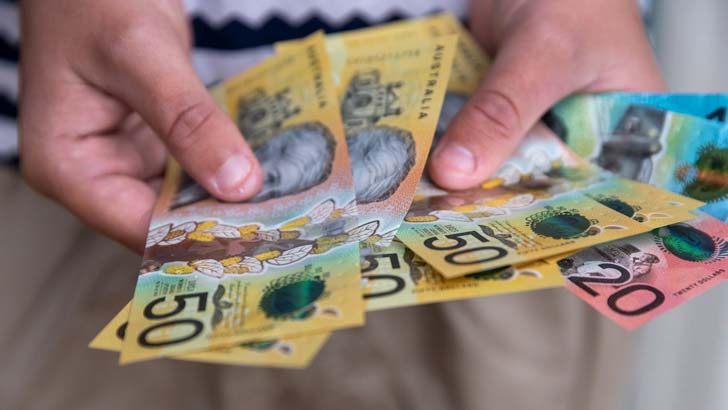
It means workers will be able to knock a thousand dollars off their taxable income without having to stump up receipts.
The idea was first mooted in early 2025, as part of Labor's election promises, when they proposed a $1000 instant tax deduction for work-related expenses.
Federal Treasurer Jim Chalmers now says it's all about "making the tax system simpler and delivering more lasting cost-of-living relief".
The $1000 instant tax deduction will save time and money at tax time.
But there is a catch.
When does the $1000 tax deduction start?
It won't kick in until next financial year.
You'll only be able to claim the $1000 deduction when you lodge your 2026-27 tax return in the second half of next year.
How much will the $1000 tax deduction save you?
A tax deduction lets you save on tax. It is not the same as a tax refund.
As a guide, 6.2 million workers - close to two in five taxpayers - are expected to benefit from the $1000 instant tax deduction.
However, the average tax saving will be around $205.
Around 3.3 million women are expected to pocket a tax saving of $200. The 4.5 million workers who earn less than $100,000 in taxable income, will see a tax saving of $195.
If you opt for the $1000 instant tax deduction, you can still claim other costs.
Donations to charity as well as union fees and memberships to professional associations, plus other non-work related deductions (like, say, investment expenses) can be claimed separately.
Remember, you'll need proof to claim these deductions.
Who can claim the $1000 tax deduction?
The deduction is designed for workers with relatively low work-related expenses.
If your deductible work expenses are less than $1000, the new measure could reduce paperwork and simplify tax time. However, workers who typically claim more than $1000 in expenses may be better off keeping receipts and claiming their actual costs.
Should you claim the $1000 tax deduction or keep receipts?
The $1000 instant deduction builds on the $300 deduction that can already be claimed if you don't have receipts for work-related expenses.
An instant $1000 deduction sounds appealing but it could see leave workers seriously short-changed on their tax refund.
Tax Office data shows that Australians claim, on average, around $2700 in work-related costs - far more than the proposed new standard deduction.
Of course, if your work-related tax deductions next financial year total more than $1000, you can choose to claim these in the normal way, and give the instant $1000 deduction a miss.
The trouble is, you need to hold onto work-related receipts to know if this is the case, which reduces the savings on paperwork being touted by the Treasurer.
The bottom line is that if you normally have very few work-related deductions, the $1000 instant tax deduction may have the potential to boost your tax refund.
On the flipside, if you normally claim a large volume of work-related costs, or your work expenses typically total more than $1000, or you're simply not sure, it's still important to hang onto receipts to maximise your tax refund.
Get stories like this in our newsletters.