Flood cover and home insurance: What you need to know




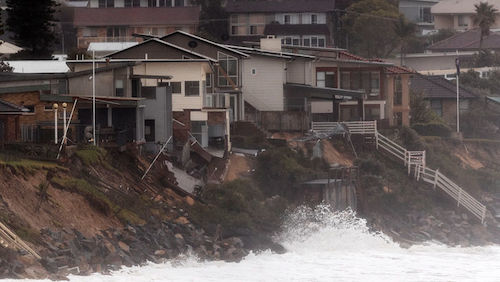
Severe weather events like Cyclone Alfred, which caused significant damage in South East Queensland and the New South Wales North Coast back in March, are costing Australians $4.5 billion annually.
That's according to a new report released by the Insurance Council of Australia (ICA) which underscores soaring costs faced by insurance customers, and more broadly, as a result of an uptick in extreme weather events.
The average annual insured loss per person from bushfires, floods and storms has risen from $19 ($US inflation adjusted) in the 1980s to $109 in the 2020s, while the average economic loss has gone from $60 to $193.
"While Australia has always faced extreme weather, the accelerating losses per person and their compounding impact on communities is costly and ongoing," says Andrew Hall, chief executive of the Insurance Council of Australia.
"Australia is in a global race to ensure its built environment has the resilience needed to protect assets - this data clearly shows that each decade is costlier than the last, with insufficient investment in resilience leaving Australians to shoulder an outsized economic burden."
Flood cover costs skyrocket
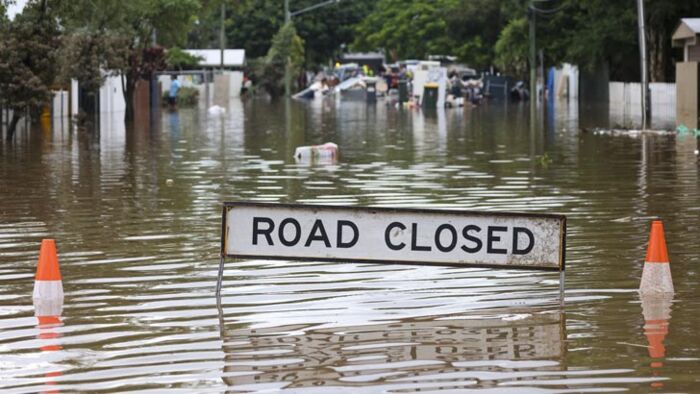
The report makes particular note of the impact of severe flooding events, like those in North Queensland and the Mid-North Coast and Hunter regions of New South Wales earlier in the year.
As major floods have become more frequent and extreme, the risk to homes in flood-prone areas has increased, pushing the cost of insuring them higher.
It's not uncommon now, the ICA says, for households in high-risk areas to be quoted $7000 a year for flood cover and, in some cases, as much as $30,000.
This is leaving many households underinsured (if they have opted out of flood cover) or completely without insurance altogether.
In fact, the ICA estimates that of the 242,000 homes in Australia at greatest risk of being impacted by flooding, 186,000 (77%) have no cover.
In many cases these are households who can least afford soaring insurance costs either, with the report noting that more than two-thirds of high-risk flood areas have incomes below the national median.
Do all home insurance policies cover flood damage?
For an increasing number of households, the decision to opt-out of flood cover - or home insurance altogether - isn't a choice. It's a decision based on cost.
But for those who do have home insurance, understanding what they are and aren't covered for when it comes to an event like a flood can be important.
Taylor Blackburn, personal finance and insurance expert at Finder, says that while flood cover is included in many home insurance policies, it can come an optional extra, so it's worth checking the Product Discloser Statement to make sure.
He also says that it's worthwhile appreciating the difference between flooding as an insured event compared to storm or rainwater damage.
"Flood damage occurs when water has escaped from the confines of a water source like a lake, river, creek or dam. So, if a river breaks near you and water comes into your home, that's flood.
"Storm or rainwater damage is water that has fallen from the sky, like rain or hail. If heavy rain has filled up your gutters and brought water into your house, that is storm damage, and that's covered by almost every policy without fail."
For households who are looking to cut back on their home insurance costs without giving up their safety net entirely, Blackburn also has a few recommendations:
- Up your excess: "Increasing your excess will usually lower your premium. If something happens you're going to be more out of pocket though, so you may want to increase your emergency savings if you increase your excess."
- Utilise multi-policy discounts: "Another thing you can do to save money is combine policies. A lot of insurers will give you a discount if you bundle your building and contents insurance together, or your car and home insurance."
- Remove unnecessary cover: "That could be optional extras like cover for motor burnout or accidental damage, or a high-value item you have on your policy that you don't necessarily need covered. Removing those can lower your premium."
- Consider switching: "Probably the best way to reduce your costs is by shopping around. Once you get a few quotes you have the power, and your insurer will have to compete to keep you. One of our colleagues recently did this and managed to get a $200 discount just by telling her insurer what other offers were available to her."
Get stories like this in our newsletters.