Mortgage demand falls: Can borrowers get lower rates?




Commonwealth Bank, Westpac, NAB and ANZ say mortgage demand is falling, so can borrowers negotiate a lower home loan rate? Plus, why cheaper access to Ozempic-style weight loss drugs remains out of reach for many Australians. Here are five money stories you may have missed this week.
1. Borrower's market as mortgage slump continues
If you've got a home loan, now could be a good time to look for a lower rate, with more signs the mortgage market is shifting in favour of borrowers.
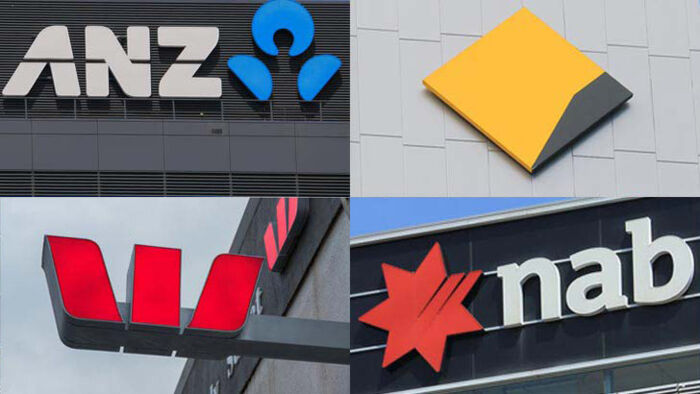
All four of Australia's big banks have now confirmed they're seeing softening demand for home loans, as competing lenders cut rates to grab a slice of the market.
On Thursday, ANZ revealed people had started applying for smaller mortgages since the May federal budget.
The bank said the average dollar value of loan applications it received between mid-May and the end of July was 12% lower than it had been earlier in the year.
That news came a day after the Commonwealth Bank, while announcing a bumper profit of $ 11 billion, reported it too had seen demand for mortgages fall since the budget, with applications down 15%.
These were the last two of the big four to confirm a waning appetite among Australians for help buying property.
NAB reported last month that applications for its home loans had dropped 15% in the three months to June, while Westpac noted it too had seen a slump.
The fall in mortgage demand comes after the budget wound back tax concessions for property investors and three interest rate hikes since February increased borrowing costs.
Mortgage brokers have told Money they've seen lenders cutting rates on variable home loans - something Canstar says 28 mortgage providers have already done in the last two months.
2. When will Ozempic and Wegovy be cheaper in Australia?
Both the federal government and the makers of drugs like Ozempic want the medications to be put on the Pharmaceutical Benefits Scheme (PBS) and made cheaper for Australians, but can't agree on a price.
Commonwealth health minister Mark Butler this week said drugs like Ozempic and Wegovy were "too important not to have on the PBS," but that his department couldn't agree with manufacturers on a price "they're willing to receive and we're willing to pay on behalf of taxpayers."
When a medication is on the PBS, the government negotiates with manufacturers to agree a price at which it will be sold to Australians and then subsidises a portion of this, lowering the cost to local consumers substantially.
GLP-1 medications like Ozempic that suppress appetite are listed on the PBS to treat type 2 diabetes, but not for weight loss. Accessing these drugs outside the PBS can cost between $5000 and $6000 per year.
A few days after Butler's comments, the CEO of Eli Lilly, maker of GLP-1 drug Mounjaro, confirmed to the ABC that his was one of the companies whose PBS negotiations had broken down over price.
David Ricks said the rate proposed by the federal government was "significantly lower" than what was being offered by other countries' subsidy schemes, adding Australia wasn't recognising the real value of the drug.
3. ASIC says shopping around could cut your car insurance premium
Aussies are again being urged to shop around to save money, this time on car insurance.
The corporate regulator ASIC says insurers are hitting customers with "sharp and repeated" premium increases that are above inflation, but isn't explaining why.
ASIC looked at eight different insurance providers and conducted research involving more than 2000 Australians and found premiums had "surged" 8% in the year to July 2025 and 42% between 2019 and 2024.
Despite these hikes being well above the rate of inflation, no insurance companies had properly explained how the new prices had been calculated and why premiums had increased so much.
The solution? Again, Aussies are being told to shop around, or at least threaten to - ASIC says 31% of people who contacted their insurer to challenge their new premium got a discount.
4. AUSTRAC shuts down 96 crypto ATMs over scam concerns
The federal government's financial intelligence agency has shut down 96 cryptocurrency ATMs across Australia, saying the company running the machines wasn't doing enough to prevent them from being used for money laundering and scams.
Crypto ATMs allow customers to exchange cash for cryptocurrency, but authorities say scam victims are being directed to the machines and coached to use them to send money to criminals.
The Australian Transaction Reports and Analysis Centre (AUSTRAC) suspended Cryptolink's operating licence for three months this week, shutting down all of its ATMs.
The intervention came after the company was late submitting reports on large "high-risk" transactions being made with its machines.
AUSTRAC says requiring these reports is one of the ways it's trying to get crypto ATM operators to stop their machines being abused by criminals.
Cryptolink last year said it had put measures in place to prevent its machines being misused, but consumer groups have called for all crypto ATMs to be banned anyway, saying they have "no legitimate use".
In any case, the pause on Cryptolink's operations may do little to cut down on scams - the company's machines make up only 96 of the more than 1800 crypto ATMs now running across Australia.
5. Cbus changes death benefit nominations after consumer concerns
An advocacy group for superannuation consumers has criticised the industry for not doing enough to help customers decide who gets their super when they die.
The criticism from Super Consumers Australia came as super fund Cbus made changes appearing to mirror those the advocacy group was calling for.
In research released on Monday, Super Consumers Australia noted only 13% of people it had surveyed were certain they had a binding death nomination.
It said super funds should be reminding members to make these, pointing out that they provide more certainty than non-binding nominations.
In reporting these findings, ABC News highlighted the story of relatives of a Cbus customer, who complained their uncle's superannuation money hadn't been distributed as he had wished because his death nomination was non-binding.
Cbus told the ABC it was undertaking "significant reforms" to simplify its death and insurance claims processes and some of these appear to have already materialised.
Just days prior to the ABC story being published, the company announced it would stop offering non-binding death benefit nominations.
It also said it would scrap nominations that expired after three years - another system quirk consumers have raised concerns with.
Get stories like this in our newsletters.