Frank Mitchell: From an electrical apprentice to a Local Hero




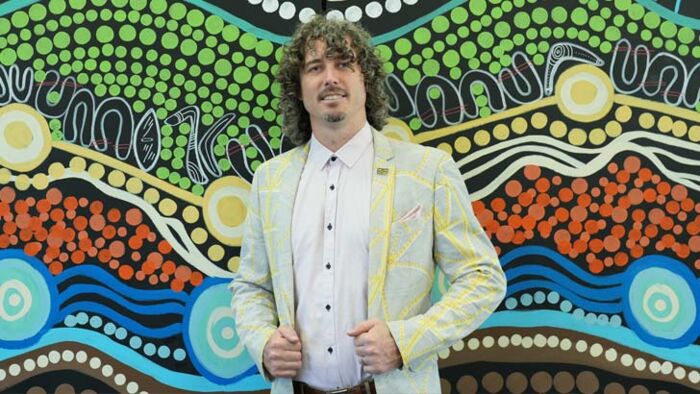
Frank Mitchell, a proud Whadjuk-Yued Noongar man, is co-director of Wilco Electrical and co-founder of Kardan, Baldja and Bilyaa. Named the 2026 Australian Local Hero, Frank's commitment to change was shaped by early grief and loss.
As a young single father, receiving an electrical apprenticeship felt like a lifeline. When he launched his business in 2015, he vowed to create the same chance for Mob.
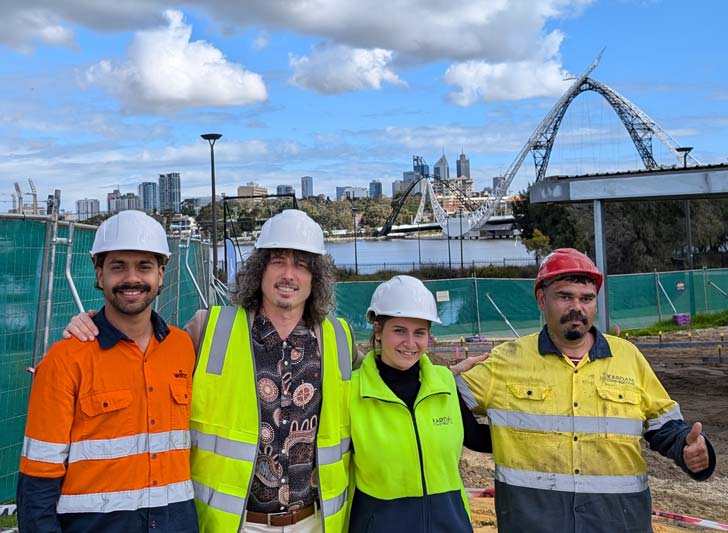
Starting with eight staff, Frank and his partners have since created over 70 Aboriginal upskilling roles, including 30 apprenticeships, and awarded more than $11 million to Aboriginal subcontractors. Today, his four companies employ over 200 people, blending cultural values with business leadership to drive social justice and lasting impact in construction.
Tell us about your early years. What shaped your attitude to money?
I was raised in a government-subsidised house in a small rural community, with artist parents who were often on the dole and rarely in full-time work.
My life was filled with colour and adventure, but I knew early on that there were material things my friends' families could afford.
I spent some of my early adulthood on the dole, and there was no shame in that for me as it was normalised through Mum and Dad.
However, when my girlfriend became unexpectedly pregnant with our first son (both of us aged 21), something shifted.
Although there is nothing wrong with the path Mum and Dad chose, subconsciously, I was driven to provide more financially for my family than my parents provided me.
You've spoken about how early experiences of loss shaped your commitment to change. How did those moments influence your approach to business and life?
I struggled with my own mental health early on, got into drugs aged 12, fought a lot with my dad as a teenager, and was fortunate to survive a suicide attempt.
Before I turned 20, two of my closest friends died, aged 17 (manslaughter DUI) and 19 (suicide).
Those experiences made me realise that life is for living, and in some ways, I felt responsible to live on their behalf, to seize the day.
In my early years, that outlook sometimes showed up as recklessness; today it probably makes me less inclined toward long-term investments.
I'm not planning to wait until retirement to travel or to build my dream home.
We never know what the future holds, so I choose to live today.
Those losses were also a major inspiration behind our original 20 Aboriginal apprentices by 2020 pledge.
I often wonder if there had been more opportunity and hope in our town, perhaps those boys might have found something that helped them through their hardest moments.
While I can't bring those boys back, I hope that through the work we do we can help prevent it from happening to others.
As a young single father, what did being offered an electrical apprenticeship mean to you, personally and financially?
It was everything.
I've often found it difficult to fully articulate why my uncle's belief in me, and the opportunity of an electrical apprenticeship, was so transformative.
What I have since learned is that employment and education are key social determinants of health.
They have a profound impact on a person's mental health and wellbeing, not only through individual confidence, but through the ability to provide for family and create an opportunity to become a leader within my community.
When people haven't had parents who role model these pathways, it can be hard to name what feels wrong or why achieving your potential seems out of reach.
Looking back now, I know that moment was pivotal. It still requires hard work, patience, and perseverance, but without a door opening somewhere, none of what I've achieved since would have been possible.
Your businesses have grown over the years. What were the key financial decisions that made that growth possible?
Too many to list over the last decade but I'll highlight two that stand out.
The first, without a doubt, was vendor finance. Had Uncle Russ not allowed this option I wouldn't have been able to afford buying into Wilco Electrical in 2015 alongside my Wilco business partner Tim Bidstrup.
Then, when Dwayne Rowland and I co-founded Kardan Construction in September 2019 we had zero success with securing a business loan from all the major and minor banks.
Fortunately, I was recommended an organisation based in Sydney called Sustainable Enterprise Funding Australia (SEFA).
Without SEFA providing Kardan Construction a $1 million loan, we wouldn't have achieved the business maturity, number of staff and delivered the depth of positive social impact in our community.
What's the best money advice you've ever received? Did you follow it?
'Be fearful when others are greedy, and greedy only when others are fearful' - Warren Buffett.
The day the ASX was hardest hit due to the GFC I remember taking note of how far some of the blue chips had fallen and later, how well they had recovered.
Fast forward a decade later when ASX plummeted due to COVID, I was ready, turning $10,000 into $50,000 in four years.
What's one piece of money advice you'd give your 16-year-old self?
Commit to an affordable amount from each pay to be invested into various ETFs across equities, bonds, commodities, currencies and real estate.
When you're my age (43), there's a high probability there'll be a decent-sized egg.
Keep that up until your 60?
You'll thank yourself for your commitment and dedication to the cause.
Please finish this sentence: Money is good for...
...turning values and vision into reality.
Money's not the goal but the means.
It allows me to act on what I believe in, to back people, movements, ideas, and outcomes that matter to me.
Get stories like this in our newsletters.