Gold price soars: Is it still a smart investment?




Gold has remained a glittering investment opportunity over the past year for a variety of reasons, and the outlook for the long derided 'barbarous relic' remains encouraging.
Gold broke above $US2000 ($2924) an ounce in late 2023 and this time last year had climbed to about $US2500 ($3654).
Many thought gold had done its dash, especially given that a newly re-elected US President Trump promised to cut taxes and stimulate the US economy, which in turn risked pushing up interest rates and the US dollar, neither of which tends to support higher gold prices.
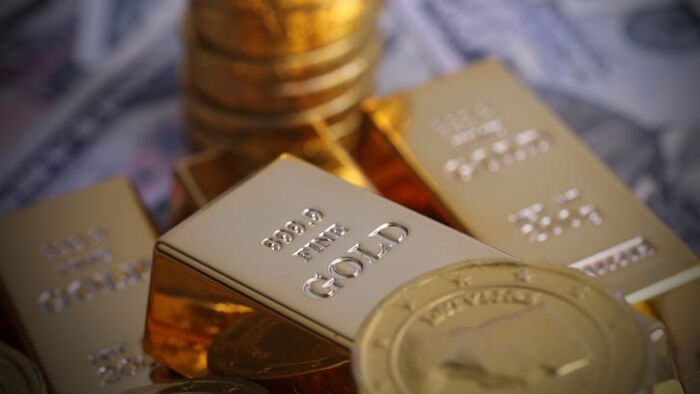
But fast forward to late 2025 and the gold price had not only pushed through US$3000 ($4550.34) an ounce, but it had also zoomed through $US3500 ($5308.73) - with more upside potentially to come.
Gold demand has remained firm so far this year.
According to the World Gold Council, global gold demand reached 1249 tonnes in the June quarter of this year, up 3% from the same period last year.
Although central bank buying and jewellery-related demand has moderated, both remain firm. Investment demand for gold, meanwhile, has ratcheted higher through traditional demand for gold bars and coins but also ETFs.
Why did investors lift demand?
Although President Trump did cut taxes, his lift in tariffs created considerable US economic uncertainty, which weakened the US dollar and favoured gold as a safe-haven asset.
A slowing in the US labour market has raised market expectations for US Federal Reserve interest rate cuts, which also favour a weaker US dollar and firmer gold prices.
Gold remains a hedge against a potential lift in global inflation and/or an upsurge in geopolitical tensions in Europe and the Middle East.
With the Fed on course to cut interest rates several times over the coming year and ongoing US economic uncertainty, due to the erratic nature of policy making under President Trump, the future for gold as an investment seemingly remains bright.
How to invest $10k
Due to its top-heavy exposure to banks and mining stocks, the Australian sharemarket has been
under-exposed to the global technology boom over the past decade. It has underperformed global markets
as a result.
But look beneath the surface and Australia's sharemarket does contain pockets of growth. With smaller well-run companies in vibrant areas that have share price and earnings performance often rivalling that of America's tech mega-stars.
An easy and low-cost way to tap into these pockets of growth is through well-chosen ETFs. The Australian Quality ETF (AQLT), for example, screens for companies with good 'quality' metrics such as high return on equity, low leverage and relative earnings stability.
Similarly, the S&P/ASX Australian Technology ETF (ATEC) provides exposure to innovative companies in Australia's fast-growing technology sector.
Both ETFs have performed especially well in recent years.
With interest rates declining and the economy gradually picking up speed, these growth opportunities seem particularly well placed to continue performing well.
Get stories like this in our newsletters.