How Dave Butler traded pro basketball for big finance




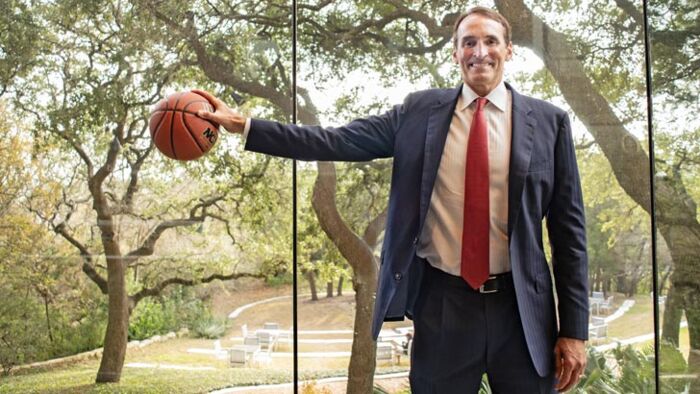
From hardwood to high finance, six-foot nine forward Dave Butler has gone from chasing rebounds to co-running Dimensional Fund Advisors, which has six ETF products and $65.5 billion under management in Australia.
Known colloquially as 'the biggest fund you've never heard of', the firm's renowned approach to financial science is the stuff of economic legend.
Drawing on research from five Nobel Prize-winning laureates, it has reshaped the way investors build wealth. Dave is in Australia to support client events.
From professional basketball to fund management
Tell us about your early years.
Money wasn't a big topic at home, but my dad, an accountant, was very organised and thrifty.
I remember him laying out spreadsheets on the kitchen table, carefully managing our finances.
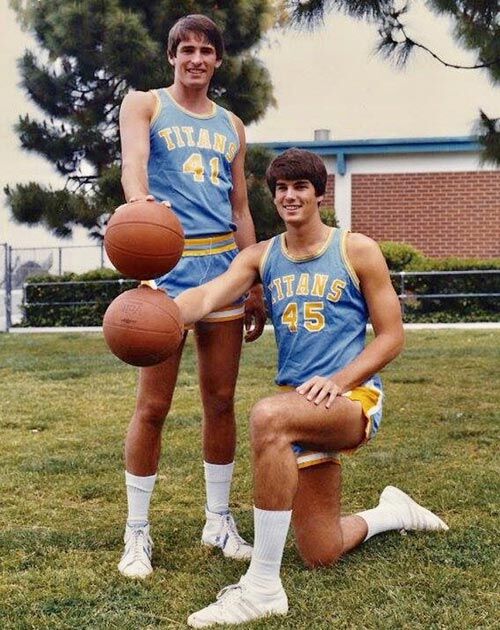
He focused heavily on education and encouraged us in sports. My brothers and I, all tall, were big on basketball.
My brother, Greg, is seven-foot tall and ended up playing for the New York Knicks. Needless to say, the front yard one-on-ones were competitive.
What was your first job and how much did you earn?
In college, I worked at an oil refinery painting pipes for $9 an hour.
I was so excited as it was double what my basketball team mates were earning.
We'd drive to downtown LA, paint a bit, eat lunch, paint some more and head home. I learned it's much easier to stay busy than pretend to be.
How did you get picked up by the Boston Celtics? Where did basketball take you?
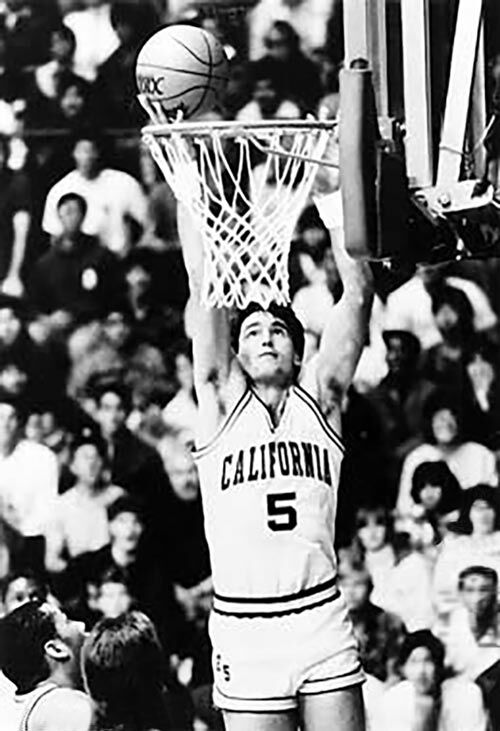
I played five years at Berkeley University, after getting an extra season because of an injury. While finishing my MBA, I was drafted by the Celtics in 1987.
But that year, a player strike cancelled training camps. My agent didn't think there would be a season, so he found me overseas options.
I nearly ended up in Australia, but I had $237 in my account and a Turkish team offered $5000 and a plane ticket, so I went.
The investing mistake that changed everything
What made you leave professional sport for finance?
After a year in Istanbul, I injured my Achilles and played my second season in Tokyo. Playing at 70% wouldn't cut it for the NBA. I eventually made it to Birmingham but physically I was done.
It was one of those inflection moments where you must decide: do I continue to push down this shortening path, or do I do something else?
I'd interviewed with some investment banks before and got a call while still in England: "Come to Wall Street".
I told my coach on Sunday morning that I was finished, then flew to New York that day.
What's been your biggest investing mistake?
Boston Chicken.
During my early days at an investment bank, I bought the rotisserie chicken chain at $16/share, convinced it was a bargain, hoping it would hit $24.
Instead, it dropped to $7 per share and wiped out most of my net worth.
That was my 'aha' moment.
I thought I understood investing, but the market had other ideas.
I started reading up on efficient markets and economist Eugene Fama's work. That moment led me to rethink everything I knew.
How Dave Butler joined Dimensional Fund Advisors
How did you start at Dimensional?
After my Boston Chicken moment, I thought I might just go back home and become a basketball coach.
But one day at the trading desk, I saw an ad for a fund manager role in California and sent in my résumé. That led me to Dimensional.
I flew out during Christmas and walked into an interview with my future boss, Dan Wheeler, and David Booth, the founder.
While I was there, Nobel Prize winner Merton Miller came in.
I still remember what Miller said to me: "You only need to know three things: diversification is your buddy, costs matter and markets work." That stuck with me.
Why passive investing has grown so rapidly
What's changed since then?
When I joined, we managed $12.3 billion and only 4% of assets in the market were invested in passive strategies.
Today, more than half the market is passive, and we've grown to $1.3 trillion under management. The world has shifted toward ETFs and passive investing.
Dimensional follows the efficient markets theory. Why does this branch of 'financial science' underpin its approach?
The efficient markets theory is basically the idea that prices reflect information.
The current market price includes everything we know and gives us the best estimate of value at that moment. We call it an investment information-processing machine. It's tough to beat that machine.
Think about trying to outsmart the collective wisdom of millions of investors trading on new information as it comes in.
No matter how smart or experienced you are, it's very difficult to consistently stay ahead of that. In fact, decades of data show that most active managers haven't added value beyond chance.
That's why indexing took off in the 1970s... if you can't beat the market, why not buy it?
Dimensional's founders helped start that movement with three of them winning the Nobel Prize in Economic Sciences.
Robert Merton and Douglas Diamond built on this academic approach also winning the award in 1997 and 2022, respectively.
Investing lessons learned from basketball
What lessons from basketball have carried into investing?
So many. Discipline, team culture and setting clear goals are all transferable.
But the parallels between basketball and finance extend beyond me. Basketball has evolved dramatically since the days I played, shifting from inside play to a focus on three-point shooting.
A lot of that change was driven by data about where you could get the most points on the floor.
Teams studied historical trends and players, which allowed coaches to make decisions about how to play.
As an investor, you are like the basketball coach, using data to adjust your portfolio towards the highest-performing parts of the market.
The rule of seven and the power of compound returns
How have your personal money habits changed over time?
I rely more on my adviser. Even though Dimensional is grounded in financial science, I turn to my adviser for holistic advice, from investment management to tax planning and education costs.
In today's world, there's so much fear or greed.
My adviser has become a trusted voice that helps me reflect on my financial decisions and is an important relationship for me and my family.
What money advice would you give your 20-year-old self?
It's the same advice I give my 21-year-old son: follow the rule of seven.
With a 10% annual return, your money doubles every seven years. If you start with $10,000 at 21, it becomes $20,000 at 28, $40,000 at 35, and more than $600,000 by your 60s.
The key is to invest properly, stay diversified, keep costs low, and stay in the market. You don't have to do more than that.
Finish this sentence: Money is good for...
Connection with family, friends and the people you love. It's a vehicle for shared experiences.
Get stories like this in our newsletters.