How infrastructure impacts your home value




When it comes to house prices, the expression location, location, location is spot on.
In our diverse real estate markets, the value of any property is strongly impacted by its location, and not just the suburb or the street but also its proximity to several micro factors, which can either add or detract from its appeal and, in turn, its value.
This is the good and bad when it comes to infrastructure and your property value.
The good
1. Being near a school is usually a plus
Domain's 2023 School Zones Report shows that across the nation's capitals almost half of primary and secondary school catchment zones outperformed the house price growth of the suburb they are in, commanding up to a 10% premium.
Even better is being near a school that is highly rated.

The price of a house located in a high-performing school zone is on average about 2.5% to 3.6% higher than a similar house in a lower performing zone, according to a study based on NSW house prices published in the Journal of Housing Economics in December 2021.
The study, Neighbourhood, School Zoning and the Housing Market pointed out that with admission into public primary schools in most Australian States and Territories contingent on a student's residential address, the capitalisation of school quality into the price of houses in high-performing public-school zones is inevitable.
2. Walkability
Walk Score (walkscore.com) measures the walkability of any address in Australia (and the US and Canada) using a patented system. For each address, it assigns a score of 0-100 based on its accessibility to amenities. In other words, it assesses how easy it is to walk from your home to places that meet your daily needs, such as schools, work, shops, parks and public transport.
A score of 90-100 indicates a 'walkers' paradise', where you don't require a car for daily errands. Any score of more than 70 is considered very walkable, enabling most errands to be accomplished on foot.

"Walkability really impacts house values, which is why so many real estate agents highlight a property's walk score," Ben Rossiter, executive officer of Victoria Walks told domain.com.au in August 2022.
At the time he said Melbourne research had found that an increase of five points in the walk score of a suburb meant houses in that suburb commanded nearly $300 extra per square metre, equating to $30,000 for a 100sqm home.
3. Views and natural scenery
In Australia a view can be worth a fortune with a property advisory firm estimating in late 2024 that you could expect to pay up to an $800,000 premium for an unobstructed water view.
Michael Matusik of Matusik Property Insights (matusik.com.au) shared the findings of a study that he had undertaken with colleagues with realestate.com.au. "Our investigation was based on an identical new dwelling built in the same area - but with differing views - with a base price of $1 million," says Matusik.

While the unobstructed water view commanded the fattest premium, a range of other views also boosted values. Matusik estimated that a park view could increase the price by 5%, and city glimpses might add 6% to 8%.
An unobstructed view from a medium elevation would net a premium of 9% to 12% and a panoramic view from a high elevation would be worth a 15% to 25% price boost.
4. Transport links
Major transport links, such as Sydney's WestConnex, Melbourne's level crossing removal and Perth's Metronet represent significant investments in infrastructure that have profound implications for residential property values in surrounding neighbourhoods, says Nerida Conisbee, chief economist with the Ray White Group.
"Transport infrastructure's impact on property values follows a distinct proximity principle: areas close enough to benefit from connectivity but far enough to avoid negative externalities like noise pollution."
"Properties within walking distance of new metro stations might see significant price premiums, but those immediately adjacent to noisy transport corridors often experience value depreciation."
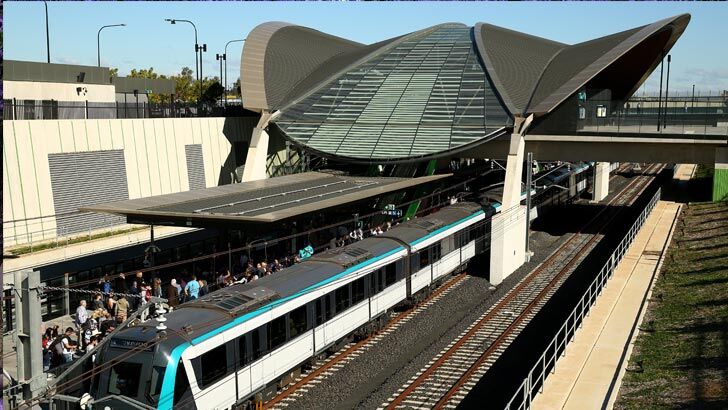
University of Sydney research found homes within 800m of Sydney Metro Northwest stations experienced up to 15% higher price growth than the broader market, says Conisbee. And RMIT documented an 8.7% premium for properties near Melbourne's Mernda rail extension.
Light rail can also have an impact, for example, the Gold Coast Light Rail attracted a 7.1% premium for apartments within 400m of stations, according to a Griffith University study.
Road access is a two-edged sword, says Conisbee. "While improved road access can boost values by 5% to 10%, properties directly facing major highways often suffer from noise pollution and other negatives."
The bad
1. Transport noise
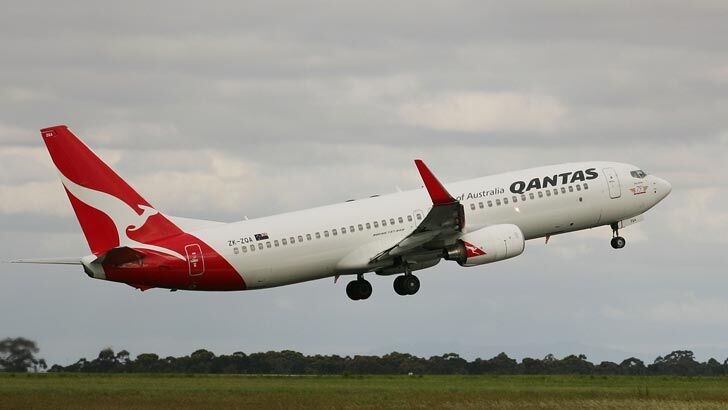
The number one offender here is undoubtedly aircraft noise. A 2020 Sunshine Coast University study found that properties under the Cairns Airport flight path experienced about 17% lower values compared to similar properties outside the flight path, according to Ray White's Nerida Conisbee.
A more recent March 2025 study, in which PropTrack partnered with Ambient Maps to examine the impact of transport noise on residential property values across Victoria, backs up this analysis.
It found aircraft noise had the most substantial impact, with property values falling between 6% to 9% for every 10-decibel increase, indicating a 12% to 18% decrease when comparing properties outside flight paths to those directly underneath.
Traffic noise had the next biggest impact on home values, with the study finding a 6% decrease associated with every 10 decibels increase in road noise. And rail noise was associated with a 4% decrease in property values.
To put this in context, the sound level of typical daytime activities can vary between 40dB and 85dB. Typical aircraft noise levels are between 65dB and 95dB. Very close to a runway, an aircraft could be as loud as 130dB, according to experts.
2. Other turn-offs
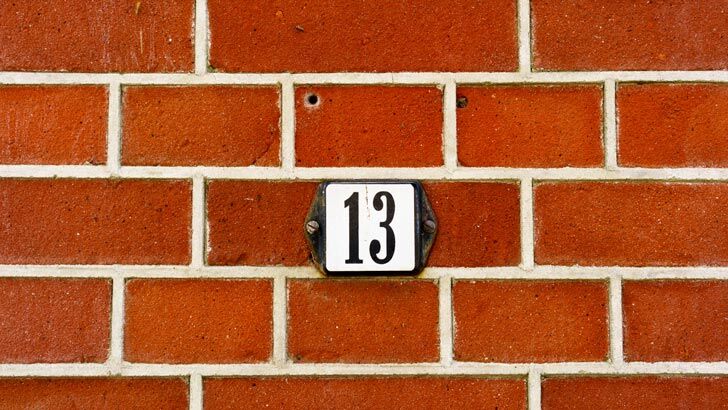
This can include noise from neighbouring pubs and sporting venues ranging to very local factors such as bad neighbours, the number of your house (is 13 lucky or unlucky?) or a street that is not as attractive as most in a neighbourhood - remember the real estate rule of buying the worst house in the best street.
Before you buy any home - to live in or as an investment - do thorough research. Everything may look rosy during the day but visit at night and noisy people spilling out of the pub at midnight might be a turn-off.
Do your research
If you need help with your research, there are several websites that may be useful, but there may be costs involved.
Microburbs (microburbs.com.au) gives you street level data for median pricing and capital growth but also includes noise maps, public housing data, development applications as well as insights into lifestyle, convenience scores and natural disaster risks. Free reports offer limited information.
PropTrack (proptrack.com.au) offers property data, analytics and insights. It provides detailed property histories, market trends and investment analysis tools, particularly suited to investors.
Homely (homely.com.au) combines property listings with suburb reviews and local insights. It includes school-catchment maps and neighbourhood reviews, which are useful for home buyers. Its user generated so it's free but that also means some reviews can be biased and out of date.
Get stories like this in our newsletters.