Podcast producer Claire Murphy on being made redundant




After seven years with a major media company, podcast producer and journalist Claire Murphy was made redundant. She shares what happened, how she checked her redundancy entitlements, and the steps she took to protect her finances.
"Don't cry." That's what I told myself as I walked into the CEO's office the first time I was made redundant.
I knew it was coming. They'd given me a new job title which I have since been told is a sure pathway to redundancy land, easier to cut a role you've just created.
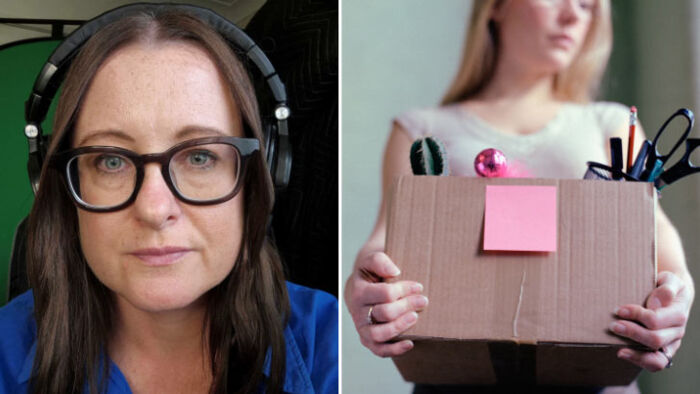
The CEO actually handled it spectacularly well. He was gracious and kind and understood when I said I had to leave, emotion getting the better of me.
How redundancy affects your identity and confidence
I was so hurt. I had poured so much of myself into this job.
I'd helped them get nominated for ACRAs and had taken them to number one in the ratings. I'd given them so much, why was it so easy to discard me?
What to do immediately after redundancy
- Check your redundancy pay and notice period.
- Confirm any unused annual leave or long service leave payouts.
- Calculate how many months your savings can cover essential expenses.
- Update your resume and LinkedIn profile.
- Contact your lender early if mortgage or loan repayments may become difficult.
I was bruised. My ego was in tatters. I wondered who I was without the company.
I didn't realise how toxic it is to tie your worth to your employer. I'd made it part of my identity and that's what hurt most when they decided I was no longer needed.
For as long as I can remember, I've wanted to be a journalist.
But when people asked me back then what I did, I wouldn't say 'I'm a journalist'. I would say "I work at NOVA".
By the time I started my most recent job, I was different.
I'd promised myself I would never become unhealthily attached to a company like that again.
If your job becomes your identity, redundancy feels like losing yourself. The sooner you separate the two, the easier the reset.
I didn't think I'd be next
Seven years, three launched podcasts, awards and millions of downloads later, news started to filter through that redundancies were coming. It wasn't a total surprise.
Advertising revenue was falling, we'd already seen what it had done to the radio industry.
The company was also pushing AI like it was life or death. We were reassured that we weren't AI'ing ourselves out of a job, but it didn't stop the uneasy feeling.
Truthfully, I wasn't prepared for it to be me, at least not so quickly.
I'd been pulling extra time in the past year, filling in for a maternity leave colleague while holding down my own job and backfilling others. I felt like my role was needed.
But on April 21, I got a call to inform me that the restructure would be impacting my role.
Now I understand that legally, managers are restricted with what they can say at this moment.
But when you just desperately want clarity on whether you're being made redundant or not, they can't actually confirm it.
It's rage-inducing and the management speak strips away any humanity.
What happens when you're told you're being made redundant
This is what happened inside my brain after I hung up:
"Agggggghhhhhhhhh!!!"
"Oh s**t, will I be able to pay my mortgage?"
"Who will hire me now?"
"How will we be able to afford to pay for things?"
"Ugh a new resume."
After some calls and a cry, the shock wore off quite quickly. I got myself together and started researching.
I looked up what my entitlements were and logged into my portal to check how much leave I had owing.
I'd been there for seven years, so I was entitled to 13 weeks' redundancy pay, plus a four-week notice period, which they would eventually pay out.
I would also have a payout for accrued annual leave and pro rata long service leave.
What redundancy pay could include
- Statutory redundancy pay
- Notice period payout
- Unused annual leave
- Long service leave
- Super contributions where applicable
How much redundancy pay can help after job loss
That immediately made me feel lighter. I would have enough money to get me through at least a few months, during which I was pretty sure I could find something to do with myself.
It also made me realise I should always have money like that payout in my bank account for situations just like this.
My resume was so old. We lovingly curate them and then abandon them for years, I should have been keeping it updated.
Thankfully my company had trained me on AI so I used it to help me create a new one which I then promptly rewrote.
I've already got an interview lined up, but not being based in Sydney is making the job hunt a little harder to navigate.
I went remote during the pandemic and haven't been back in the office full-time since. Remote jobs like mine aren't easy to come by in 2026.
A new job also means a potential shift in routine and working hours as well as a new commute, not just for me but my family too. With a school-aged kid, that's really stressful.
I asked my direct manager to be my support person for the formal redundancy meeting, and I am so glad I did.
Choosing the right person to sit beside you while you're being told your world is about to change is very important. She was amazing.
I was asked to work for another two weeks, which I agreed to.
Why the last day felt so unsettling
Then I had the weirdest last day at work ever.
People are commiserating with you but also celebrating you.
The speeches made it feel like I was attending my own funeral. But being able to separate my emotions from my employer actually made this last day quite joyous.
I got to say goodbye to the working relationships I'd been enjoying for the better part of a decade, while knowing there would be friendships that endured beyond it.
What you need to tell yourself if and when you ever face redundancy, is that business will business, regardless of how much the company directors and your colleagues like you as a human being.
The important thing to know is that you are not defined by who employs you; you're defined by the work you do and the lasting impact that has on the people around you and those who consume the outcome.
Whatever I do next, know that I go into it without a skerrick of hard feelings towards my previous employer.
Redundancy sucks, doors close, onwards to find open ones.
If you need support
- Lifeline: 13 11 14
- Beyond Blue: 1300 22 4636
- Headspace (for under 25s): headspace.org.au/online-and-phone-support
Get stories like this in our newsletters.

 Reply
Reply