Money habits are shaped before age 10, says coach Marion Mays




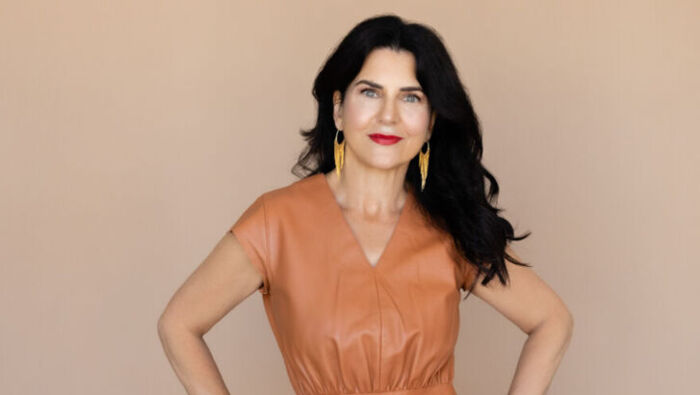
Marion Mays is the founder of Money Strong, a coaching business that blends behavioural psychology, financial education and mentorship to help individuals and corporations. She is a Certified Money Coach, a role that sits between a financial adviser and a financial counsellor. Marion has more than 30 years in the finance world, banking, asset recovery, property and consumer lending.
Tell us about your early years. What were your formative money experiences?
I am the youngest of many children and I grew up in a working-class family - not that I knew it really as we had everything we needed, including a stable home, organic homemade food and new clothes when we needed them.
I grew up with two belief systems that my mum and dad modelled for me: one, there is always enough to go round; two, there are always creative ways to make do. So while I may have been at the lower end of the social economic system, I never felt this.
My parents did everything together and shared the responsibility equally for money, chores, cooking and childcare. That was unusual for that time, but it is all I knew growing up, equality seemed normal to me. They instilled in me a notion that I should not borrow money or spend what I didn't have.
While well-intended, that advice would have stopped me from borrowing money to buy things, such as a car that impacted my ability to travel for work or stopped me from investing in property.
What was your first job and how much did you earn? What did you spend that money on?
My first job was in the Coles bakery in my local area. I didn't spend my wages, I always saved them. I'm going to guess about $4 an hour.
You're a money coach with three decades in the field, helping Australians navigate their finances. Tell us the main insights you've garnered about our relationship with money.
That we all have one and it was formed between the ages of two and 10. I liken it to the theory of 'attachment'; we all have a money story or an attachment style to money if you will, be it avoidant, anxiously attached or securely attached.
The main insight is that until we address this core belief/wound/story that drives our negative money beliefs or fears, no app, spreadsheet, system, financial product or course will be enough to sustain behavioural change and better outcomes.
Why did you found Money Strong and what is unique about it?
I founded Money Strong because the current financial ecosystem only has about 15,544 financial planners and 1500 counsellors and we are a population of 27.3 million people trying to do better with money.
There are a lot of people stuck in the middle; they are not in hardship and needing the services of a financial counsellor, they are not financial-advice ready or deemed financial-advice worthy, so they have nowhere to go. Enter Money Strong.
Money Strong is a non-advice alternative for Australians who want to do better with money. It is unique because it services a section of the market that is not met by financial counsellors at one end of the spectrum or financial planners at the other end of the spectrum. It takes care of those in the middle.
It helps ordinary people change/improve their relationship with money, while helping them level up their money smarts. More importantly, it supports people to implement and set themselves up for financial wellbeing.
What does money mentoring provide that a financial adviser doesn't?
A behavioural science approach to addressing our relationship with money and improving it.
It helps ordinary people upscale their money smarts, addresses serious money issues, such as under-earning, over-spending, mismanagement of money and assisting with behavioural change.
It shows people how to manage money in ways that align with their values and life goals. It also helps people set up and automate their money life.
You've recently focused some of your advocacy on issues that separated can face over delay and control tactics in family court proceedings. Tell us about that.
We know that in 95% of domestic violence cases financial abuse in some form is present.
One way abuse is continued after the victim leaves (if via the Family Court) is by using financial abuse as a vehicle to continue controlling the victim's life by forcing them to attend court, pushing them into financial hardship due to excessive legal fees, using court hearings as a means to see the victim and bringing vexatious matters before the court to mentally torment a victim.
Then there are the tactics of child-support avoidance to reduce the mother/child's quality of life, impacting where they can live and what experiences they can have. It is an extension of the need to control by withholding money.
I have researched, studied and learnt about this topic for more than 16 years and the reality is it happens, to nice people, to innocent people and to those who believe it could never happen to them.
When it comes to your personal money habits, how have they evolved over time?
The biggest shift in my money habits has been eliminating the use of money on things that are not really values aligned for me. An example, at a small level, would be not buying alcohol and a bigger example would be no longer needing to drive an expensive European car.
I'm very conscious now in my use of money; if it is bad for me I'm not using my money on it, if it is bad for the planet or harms others, my dollars will never find their way to it, if it's unfair on anyone in the distribution chain, it's off limits.
To me money is an extension of using our voice to say what we support and what we will not tolerate. I wish more people used money in more conscious ways.
What's the best investment - financial or personal - you've ever made?
Financially, commercial property. I used the bank's money and the tenants covered 110% of all the costs. Personally, mentors have been my greatest investment. I continue to invest a lot of money in mentors today for various areas of my personal and professional life.
Please finish this sentence: Money is good for...
... confidence to live our own path, especially as a woman. It is the one thing that will give you the confidence to stay, leave, say no, walk away or say yes to exploring a crazy expensive dream.
Get stories like this in our newsletters.