Is deinfluencing really saving you money?




Remember when social media was once a way to keep in touch with friends and family? You'd update your Facebook status every now and then, upload a few thousand photos from a night out, check on people's relationship statuses, and that was about it.
It was a simpler time.
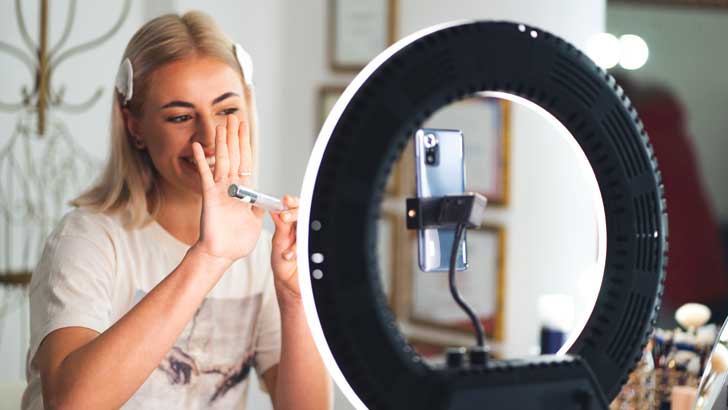
These days, the loved ones you want to connect with are sprinkled in between a 24-hour infomercial channel. If you scroll through any feed for long enough, a cabal of beautiful grifters will be hawking everything from beauty products, to diet plans, to clothes, to supplements. If it can be delivered to your home, someone wants you to buy it.
It's an onslaught.
This form of marketing is pervasive because it works. According to the theory of social proof (an oft-quoted concept by psychologist Robert Cialdini) people look to others when making decisions. It's why testimonials and reviews are so effective, and the reason that a friend's recommendation is more valuable than a television advert. The rise of the parasocial relationship has made influencers a particularly valuable resource.
But is the tide now turning against social media advertising?
What is deinfluencing and why is it trending?
In the last couple of years, a trend of "deinfluencing" has emerged. This phenomenon first started popping up on TikTok around mid-2022, and has since spread to other platforms. If it feels like you're seeing the term everywhere at the moment, it's not just your algorithm.
According to Google, searches for "deinfluencing" have exploded over the past two years.
The format is simple, but compelling.
Deinfluencing videos largely involve a person talking their audience out of a purchase. They'll counter hype with realistic reviews, or suggest against buying the item altogether.
Why are people tired of influencer marketing?
In a world filled with 'viral' products, there's no shortage of fodder.
For example, in one video labelled "deinfluencing viral makeup products", effusive social media personality Izzy Santulli speaks scathingly about several popular cosmetic items.
"There are so many viral TikTok products that are not good. Like, at all," she says to the camera.
Then in quick succession, Santulli finds fault with popular concealers, mascaras, lip stains, and beauty sprays. She's both energetic and convincing.
"We love an honest queeeeeen," writes one of her followers in the comments .Here lies the strength of the format. With so many disingenuous reviews and fake hype online, honesty is well-received. The cost of living is also on the rise, and yet the pressure to consume feels relentless. No wonder this trend is resonating with so many people.
Does deinfluencing actually help you save money?
But does deinfluencing actually save money? Well, it depends.
In theory, discouraging purchases should translate to fewer impulse buys and more intentional spending. On first glance, it's hard to interpret this movement as anything but a positive step for people trying to better control their finances.
But like a virus, advertising is highly adaptive.
Take this video from a prominent hair influencer on TikTok.
"I'm about to de-influence you from a very controversial product," she says. "You do not need the Dyson Air Wrap."
As someone who is not au fait with the intricacies of the hair influencing world, I was not aware that the Air Wrap was a controversial product. Or that hair influencers even existed, to be honest. But here we all are.
She explains her issues with the Dyson Air Wrap, chiefly being that it's too expensive. At first glance, this video appears to be a fair, perhaps even noble, attempt at moving people away from a pricey purchase. But then she then suggests a cheaper alternative.
Perhaps this was a good-faith recommendation, but this doesn't feel in the spirit of deinfluencing. Moreover this influencer had affiliated links to her preferred brand in her profile.
Here lies the danger of the deinfluencing movement: it's easy to co-opt. Social media personalities are still pushing the tenets of consumerism, but in a slippery way. Telling their audiences 'don't buy that, but do buy this instead'.
What Australian Consumer Law says about influencer claims
Locally, the Australian Consumer Law prohibits misleading or deceptive conduct. Yes, that includes influencer marketing. If someone stands to benefit financially from discouraging or redirecting your purchase, that relationship should be disclosed.
Of course, the problem is enforcement. There are many thousands of people around the world, making money from their social media profiles. Furthermore, deinfluencing falls into a fuzzy grey zone. It's not quite an ad, it's not quite advice, and it's just informal enough to slide through most regulatory nets.
As a good rule of thumb, if you want to engage with deinfluencing, beware of anyone with brand links in their profile. This usually means the creator is getting a cut from any successful recommendations. Or, if you find yourself particularly susceptible to social media marketing, perhaps try a different method entirely.
Personally, I choose to disengage with social media during the day. This stops the time drain, and helps me reclaim my attention span.
Practical ways to reduce impulse spending online
People who have online shopping habits may do well to track the times they're most likely to seek out those purchases, and not access their devices during those hours.
Some enlightened individuals may be able to do this using willpower. Good for them. I have purchased a Brick - it's a physical device you must tap your phone against to block (or access) distracting apps. This small friction between impulse and action has been highly effective for me. No, I am not trying to influence you. Yes, the absurdity of spending around $100 to make my $2,000 iPhone less functional is not lost on me.
Throwing your phone into the ocean would be much cheaper. That's my personal recommendation.
If that's too extreme, other people are having success by actively training their social media feeds by giving feedback on ads and sponsored content (clicking 'not interested' on ads they're tempted by) or unfollowing accounts that constantly push products.
It all sounds a bit complicated - that's because it is. The marketing machines that want you to spend money are both clever and pervasive. In modern life, there is no way to fully opt out. But the more vigilant and sceptical you are about any 'miracle' or 'must-have' products, the better chance you'll have of keeping your spending in check.
Get stories like this in our newsletters.