How to make more sustainable shopping choices





Your spending choices have more impact than you think. Here's how to shop more sustainably, avoid greenwashing and support better brands.
As consumers, we have the right to buy whatever is on the shelves that meets our needs.
That raises two questions: 'What is the right purchase for us?' and, more fundamentally, 'Do we really need the purchase at all?'
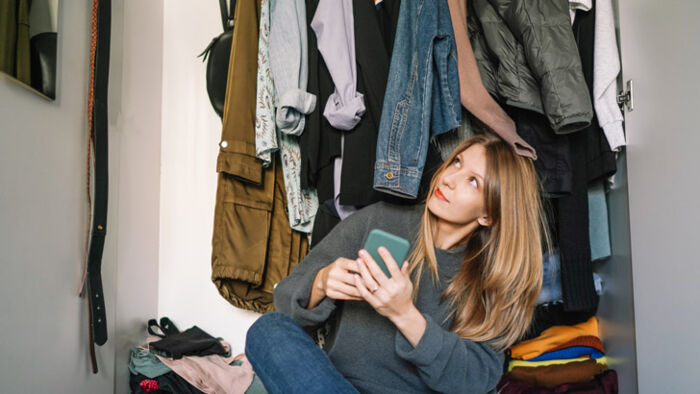
For example, many of us are tempted to buy more clothing than we really need.
As a result, globally, we bought 60% more garments in 2014 than in 2000 and kept the clothes for only half as long.
The environmental impact of the clothes we use or don't use, keeps piling up.
The fashion industry is second only to agriculture in its use of water and is responsible for 2% to 8% of global carbon emissions. Six out of every seven tonnes of the textiles it uses goes to landfill in the same year. Washing synthetic clothing sends microplastics to the ocean.
Similarly, while an estimated 733 million people are still going hungry, about 27% of all food produced is lost as wastage through the supply chain, and another 50% of what's left is lost after it reaches retail shelves.
Food waste in landfills alone contributes 8% to 10% of agricultural carbon emissions.
Obviously, we need clothes and food, but we might reconsider those needs from time to time and how they are fulfilled. We might decide that the carbon footprint of red meat or petrol cars is just too high.
Or, that a sustainably sourced and sold T-shirt is worth a little more than a T-shirt whose cotton comes at a heavy ecological cost and whose tailoring comes at a heavy human cost.
Or, that we can fully use what we buy and not let it rot at the back of the fridge or cupboard.
Ignorance may be bliss, but if you're reading this it's unlikely to be enough. How can we find out what's going on without losing our weekends and without losing optimism?
The main questions seem to be:
What everyday items might you avoid or reduce buying?
When you go into the facts, there's plenty of downside to farmed salmon, very cheap clothing and disposable coffee cups.
We'll need them from time to time, but we would argue against making them an indispensable part of your world.
Are your go-to retail brands part of the problem or part of the solution?
We give a large slice of our weekly budgets to grocery stores, banks, energy companies, phone companies and the like.
Similarly, we put a large slice of our income to expensive one-off purchases like a car or refrigerator. S
ome of these companies are making an effort to reduce their social and environmental impact, others less so.
How can you check who does what?
What can you do to help level the playing field for companies that are seeking solutions?
At the moment, companies that responsibly bear the real cost of their business are undercut at the checkout by those who do not.
We argue that the best companies will win in the end, but a lot of harm is being done by their competitors in the meantime.
Letting companies know what you think may be one thing, but in the end only regulation can set a level playing field.
However, that regulation may just be the lowest bar the government believes it can set at the time, and not necessarily the standard needed to address the issues.
A shortcut may be to do an ESG 'stocktake' every year or so.
Look up the ESG ratings of the companies you buy from, or might consider, and see which of them are leading or improving, which means they are taking sustainability seriously, and looking to minimise avoidable harm where possible.
Make choices based on either their total ESG rating, or if you prefer the social, environmental or governance rating, depending which means the most to you. Stick with your choices for the year, and then take a look again next year.
Alternatively, you could see whether your company is certified by B-Corp. B-Corp Certification of a business indicates that it meets performance, accountability and transparency standards on all sorts of ESG factors, from employee benefits and charitable giving, to supply chain practices and input materials.
Seeing through greenwashing
If a company claims that its product is 'sustainable', then that claim must be substantiated by someone else whose word can be trusted. In most industries, there are frameworks for third-party certification that the product is being made or grown in a reasonably sustainable way.
If there is no such verification, then ignore the claim, and treat the product and the company that makes it with a little more suspicion.
Then there are the advertising campaigns by whole industries who want to keep things the way they are - profits for them, and losses (of natural, social, human or financial capital) for others. They are 'externalising' the costs - imposing them on others, while 'internalising' the profits.
Or, as the saying goes, 'private gain and public pain'.
The examples of dishonest campaigns since consumerism really kicked in after World War II are legionary and legendary.
In 1946, in response to an epidemic of lung cancer, the R. J. Reynolds Tobacco Company advertised through newspapers and medical journals that "More doctors smoke Camels than any other cigarette".
While asbestosis was formally identified in the 1930s, asbestos was advertised as the 'magic material' to protect farms and homes well into the 1970s.
In 2011, the industry peak body Clubs Australia fought back against any form of restrictions on poker machines on the basis that it was 'un-Australian'.
That may be true given that Australians then (as now) comfortably led the world in gambling losses per capita, but we're not sure that's what the campaign meant.
Those campaigns are now being reined in, on some platforms.
In 2021, Google announced that it will "prohibit ads for, and monetisation of, content that contradicts well-established scientific consensus around the existence and causes of climate change".
Your responsibility, not ours
There's another industry sleight of hand it is worth keeping an eye on. Rather than an industry taking responsibility for the public losses it may cause, it blames you - in the nicest possible way, of course.
Consider what all the following campaigns have in common.
Support from the fast-food industry for a personal fitness campaign 'Life. Be in it'.
A campaign by BP for us to all measure a new thing called our 'carbon footprint'.
A campaign by plastics companies to 'Do the Right Thing' when it comes to putting our garbage in the bin.
A campaign by the gambling industry to 'gamble responsibly'.
A campaign by the global alcohol industry to 'drink responsibly'.
What they have in common is that a complex public challenge is reduced to personal responsibility.
These industries seem to be saying 'If you are worried about what climate change/obesity/plastic pollution/gambling/alcohol is doing to your society or environment, watch your carbon/sugar/plastics/gambling/drinking manners. We'll just focus on what we do best: selling carbon/sugar/plastics/odds/drinks.
And, while we're doing that, we'll push back hard against any attempt to regulate our industries.
Avoiding harm
All is not lost, however. There are some simple choices that do nothing to affect one's quality of life but help reduce social or environmental harm.
On the environmental front, we can all think twice before using single-use plastics, cheap gadgets, 'disposable' clothing, styrofoam and other non-recyclable plastics, single-use batteries, chemical-laden cleaning products, paper towels, non-recyclable coffee pods and air fresheners.
A quick web search will offer any number of lists.
As we noted earlier, throwaway clothing may be the most problematic item.
We'd also like to make mention salmon. It may seem an environmentally friendly protein alternative to red meats, but unfortunately that is unlikely to be the case.
In his ground-breaking book Toxic, author Richard Flanagan sets out the grim existence of retail salmon that is factory produced in marine pens.
Their nitrogen-rich diet is defecated by the tonne, obliterating all sea life around them. Lacking open sea nutrition, the fish are limp grey when harvested, and dyed pink to the retailer's order.
On the social front, we can think twice about cheap gadgets and the sources of our electronics, food, footwear, jewellery, toys and furniture. All these industries have several examples of child or slave labour being used to make the products.
Slavery is not a thing of the past.
The non-profit organisation Walk Free estimates that 50 million people were working in slavery in 2004 including 28 million people in forced labour and 22 million in forced marriage.
About one in five were in working under conditions of forced commercial sexual exploitation, and about one in 10 were children. Alternatively, people are working in wealthier countries like the US, the UK and Australia under conditions of modern slavery: they may not have full working visas, and work to survive without any union or regulatory support.
Checking out your brands
At the time of writing (late 2024), the brand identity of Tesla was hitting some road bumps.
Tesla cars led the world in performance electric motoring, and in home batteries to store electricity generated from rooftop solar. Now, the very people who are most likely to buy those things - wealthier people who are concerned about climate change but appreciate good design - are embarrassed that their expensive and much-loved cars bear the brand of Elon Musk.
Musk's political values appear far from those he had when founding the company, and far from those of his customers.
Re-branding stickers are selling like hotcakes, declaring 'I bought this before Elon went crazy', or 'Anti-Elon Tesla Club', 'Elon eats my cats', or simply 'I regret this purchase'.
Tesla, it must be remembered, was at one point in 2021 valued at more than the rest of the global auto industry put together.
et even then there were signs all was not well with the company.
Despite very high environmental ratings, its overall ESG ratings were very low - below even that of Chevron, a major fossil fuel company.
This upset Musk, who decried ESG as 'the devil incarnate'.
But Tesla's low performance on governance issues (too much power in the hands of the chief executive) and social issues (worker disputes and conditions) were perhaps a sign of things to come.
It's rare that such a major brand has been dropped so quickly and completely by its own customers.
In the same industry, Volkswagen (VW) lost customer support when it was found to have cheated on its emissions testing.
In 2015, VW admitted to the US Environmental Protection Agency (EPA) that it had used 'defeat devices' in its diesel cars to disguise actual emissions data, enabling it to meet emission targets and regulatory standards. The actual emissions were up to 40 times more than that recorded by the cars' software and in testing.
When the EPA notified markets that it was halting certification of VW's 2016 models, VW's global share price fell 38.2%, and its earnings per share fell 382% (that is, a previous profit turned into a loss 2.82 times as great).
Nudging change
Companies do respond to customers.
It may not be immediate, or exactly what you're looking for, but your voice adds up.
An NGO may be running a campaign against a government and/or industry on the issue that concerns you.
Joining campaigns in whatever works for you is another way of nudging for change.
Governments respond too, hard as that may be to believe at times. So, if you want something done, you may need to get in touch or even get involved.
This is an edited extract from Chapter 15, 'Buying things without harming others', from ESG Unlocked: How successful companies and investors can build our natural, social, human and financial capital. (De Gruyter, $45). Enter now for your chance to win a free copy.
Get stories like this in our newsletters.