Kim McDonnell quit a dream life to save Aussies $4000 a year




In 2013, Kim McDonnell and her husband had a successful advertising agency, a large house in the suburbs of Melbourne, a holiday home in Gippsland, three children in private schools and twice-yearly overseas holidays. But during a meeting with executives from a credit card company, McDonnell made a decision that would change their lives.
"I was sitting in a meeting with a client talking about how we could get people to spend more money buying things they didn't really need," recalls 58-year-old Kim McDonnell.
"And I had a bit of a moment: is this really how I want to be remembered for the rest of my life and is this really the role model I want to be for my kids?"
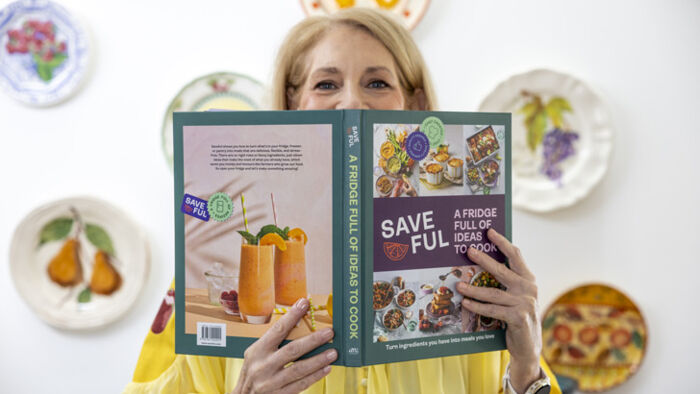
The answer was no, and she decided to use the skills she'd acquired after a quarter of a century in the advertising and marketing business to try to prompt people to do "a little bit of good in the world".
That led her to set up Thankful, a for-good company trying to draw on the power of gratitude as a motivator for people to do good.
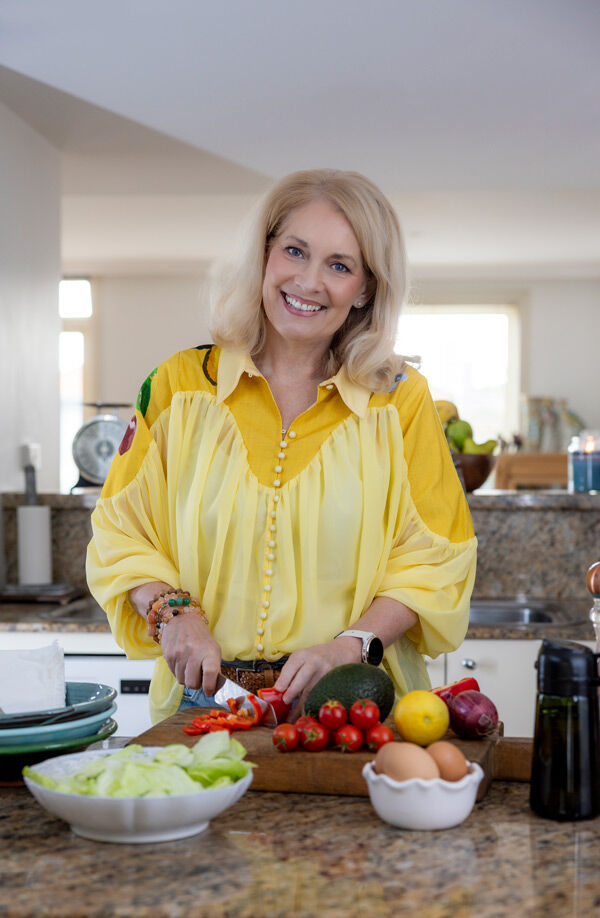
After being unable to find funding for the new venture in Australia, she and her husband, Mike Chuter, sold up in Melbourne and moved to New York. This led to McDonnell's latest venture, Saveful, a for-purpose enterprise that helps households tackle food waste and save money.
The $20 billion problem hiding in Aussie kitchens
Food waste is a significant problem in Australia, where every week each household on average bins two-thirds of a loaf of bread, more than half a litre of dairy products, fruit and vegetables, and 700g of meat.
In 2018-19, Australia produced about 7.6 million tonnes of food waste, or 312kg per person, and nearly three-quarters of that was edible, according to the government-commissioned National Food Waste Strategy Feasibility Study.
This equated to $19.8 billion of food wasted by households, at a cost of $2000 to $2500 each. The latest reliable data is from 2018-19 and since then inflation has undoubtedly pushed the cost significantly higher.
Singles and couples wasted less overall, but their per-person loss is much higher.
How one app could save you up to $4000 a year
Launched at the end of 2023, Saveful aims to educate householders and help them use food they would otherwise throw out.
It's an app that flips the recipe book on its head. Rather than starting with a recipe, which often requires home cooks to go out and buy ingredients, it starts with an ingredient.
Householders can enter a food item they have in their fridge or pantry and Saveful will provide them with recipes to use it up rather than throw it out.
And if they don't have one of the ingredients, the app will give them substitutes so they can use what they have instead of buying more.
Mayonnaise, for instance, can be used in place of eggs in a chocolate cake. Greek yoghurt can replace sour cream, mayonnaise or cream. Mashed banana or applesauce can replace sugar.
The app is also designed to educate users about what's in season and abundant, because these foods are usually less expensive.
Saveful says that the average Australian household could save between $2290 and $4352 a year by rethinking how they use food.
Why most Australians don't think they waste food
McDonnell and Chuter drew on their work in data-driven advertising to prompt change.
"We spent about two years researching to understand behaviour within our homes and understood what the key motivators were and what behaviour we had to overcome," says McDonnell.
"And that's when we identified that a technology tool, an app, could be a powerful way of helping people to save food at home as well as to save money and time."
They found that money is the main motivator for people to act, so they avoid talking to users directly about food waste.
"There's a reason the app is called Saveful and not Wasteful."
Most Australians don't consider themselves to be food wasters and believe that food waste occurs on the farm, at supermarkets and restaurants. In fact, 61% of wasted food is generated in the home.
The simple habit that could cut your carbon footprint
There is a strong environmental element to Saveful as well.
The numbers are striking. Food waste produces 8% of global greenhouse gas emissions.
If food waste was a country, it would be the third largest greenhouse gas emitter, behind the US and China.
About 2600 gigalitres of water is used to grow food that isn't used, equivalent to five Sydney Harbours.
Throwing away a loaf of bread wastes about the same amount of water as a 60-minute shower.
"Another bit of research told us that if we talk about climate change again, that's also not going to resonate. There will be a lot of shoulder shrugging and eye rolling because everyone thinks the problem is so large that our individual actions won't make a difference," says McDonnell.
"In fact, saving food at home is the single easiest and most impactful thing we can all do in the fight against climate change."
The new features designed to save you even more
Saveful introduced a more advanced paid version to sit alongside its free model in late April.
It includes a virtual fridge and pantry feature, where people can enter what they have at home and the app will tell them when and how they need to store it.
There is also a dynamic shopping list that integrates with supermarket shopping list apps, along with several other features.
In April, the app also launched Saveful for Business, a subscription-based platform for restaurants and catering companies.
They can list their surplus food on the app and charities can arrange to pick it up.
It provides businesses with traceability of the quantity and volume of food they have diverted from landfill, and Saveful can convert that into saved carbon dioxide emissions that the business can use in its sustainability and ESG reporting.
Businesses are charged to use the software-as-a-service application according to their size, while it is free for charities.
From small-town roots to a global mission
McDonnell grew up in the remote Queensland mining town of Mt Isa, where her father was a mine security guard and first aid officer.
"My parents were working class. They both worked incredibly hard and everything that we had was a result of their hard work. So if there was one lesson they imposed on me it was hard work and nothing comes easy," she says.
Keen to see life beyond Mt Isa, the then 17-year-old McDonnell moved to Melbourne to study economics but found it boring, so switched to history but didn't finish her degree.
She started work in publishing, then "stumbled" her way into advertising, which led to her own business, to New York and, ultimately, Saveful.
Why she redefined what wealth really means
After watching drought, fire and flood ravage Australian farmers from the other side of the world in 2019, McDonnell and Chuter decided to come home and see how they could use the power of gratitude to help them.
They discovered that while farmers were grateful for the help, they didn't want sympathy but instead wanted their efforts in producing food to be appreciated.
It was in thinking about how farmers' labours could be appreciated that the pair came up with the idea for Saveful.
McDonnell says that her attitude towards money has changed since she sold her advertising business.
"If you looked at it as an outsider, you would think life was pretty good," she says of her days with her own business, holiday home and overseas trips.
"But I felt incredibly unfulfilled by all of that, and in a world that defines success often as excess and where so often our self-worth is defined by our net worth, I think I've learned over the years that my wealth is not what I have in the bank."
The money lessons she lives by today
These days McDonnell is frugal with money, buying only what she needs and, now that she's launched Saveful, practising what she preaches.
Her smartest investment, she says, was in her children's education, which has helped them become "very good, decent human beings", all of whom are working in the service professions.
Their oldest daughter is a teacher of children with learning difficulties in a low socioeconomic area.
Her son works as a nurse in regional Victoria. Her youngest daughter is about to finish a Master's degree in counterterrorism and join the police force.
"The dumbest thing I've ever done with money is probably not always prioritising our needs before the business.
"Anything that we earn gets reinvested back in the business, which some might argue is not always the smartest thing."
But it's not something she regrets.
Running Saveful and Thankful, McDonnell enjoys the creativity and freedom to think about solutions to some of the world's biggest problems in an entrepreneurial way.
Most of all she likes hearing about the impact her work is having on people, like the Queensland mother of five who said that without Saveful, she couldn't afford to put food on the table.
She buys food when it's on special, a cabbage for instance, and uses the app to help her cook it in a way that will mean her children will want to eat it.
"Hearing those stories and hearing the impact that it has, it gives you the inspiration and the motivation to keep going," says McDonnell.
Get stories like this in our newsletters.