Qantas flyers urged to watch for this message




More than a million Qantas customers are set to receive compensation notices. Plus, the generation hit hardest by home loans and other money stories you may have missed.
Qantas compensation payouts move a step closer
More than one million customers can claim a share of $105 million settlement
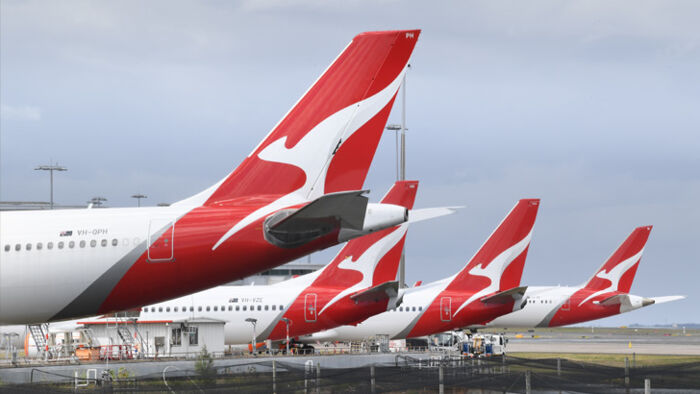
The next few weeks will see more than one million Qantas customers receive emails and text messages regarding the $105 million Flight Credit Class Action.
The class action relates to tickets for Qantas domestic or international flights that were cancelled between 2020 and 2022, including due to the COVID-19 pandemic.
The court-approved messages will explain the proposed settlement and set out the steps participating class action members need to take to claim their share of the payout.
Even if you have used the flight credit, or have since received a refund, you could still be eligible for a share of the payout.
The minimum payout per person is expected to be $50.
Echo Law, which is handling the class action, says settlement payments could start to be made as early as December 2026.
The generation that faced Australia's toughest home loan crunch
New research reveals it wasn't the Boomers or Millennials who carried the heaviest debt burden
Did the Boomers have it hardest when they stared down mortgage rates of 17.5% in the 1990s?
Or are Gen Ys (born 1981 and 1996) doing it tougher paying rates of 6%-plus on mega-mortgages averaging $735,000?
The answer is neither.
KPMG combed through archives looking at interest on home loans , personal loans and credit cards as a percentage of household income.
It found Gen Xers (born 1965-1980) faced the biggest challenge during the global financial crisis (GFC) of 2008-2009, when interest as a share of income peaked at 7.9%.
Back then the cash rate was 7.25%.
For Boomers, interest payments peaked at 5.7% of household income in 1990 despite double digit mortgage rates.
For today's Gen Y home owners, interest is around 5.4% of household income.
KPMG Senior Economist Terry Rawnsley says the GFC stands apart because central banks effectively lost control of interest rates.
"As the global system seized up, rates stayed higher for longer," he explains.
Rawnsley adds that in today's economy higher house prices have led to bigger loans, leaving household budgets susceptible to even modest interest rate hikes.
The simple food label change that could save families money
Confusion over use-by and best-before dates is helping drive food waste worth up to $1500 a year
Aussie households waste up to 113kg of food a year, and it's costing families around $1500 annually.
Part of this waste results from confusion over food labelling, and the difference between "use by" and "best before" dates.
The US state of California is attempting to solve the problem by banning "sell by" food labels to cut food waste.
Now, manufacturers selling food in California must use two standardised labels - a "Best if Used By" label for peak quality and a "Use By" label for product safety.
Apparently, Californians bin 2.5 billion meals worth of unspoiled food each year, making perfectly edible food a major contributor to organic waste in landfills.
Back in Australia, use-by dates show the last day a product is safe to eat, while best-before dates show peak quality.
It is illegal for stores to sell products that are past their use-by date.
One exception to these labelling rules is bread, which can be labelled with a 'baked-on' or 'baked-for' date if its shelf life is less than seven days.
Australia's ninth property downturn begins
Sydney and Melbourne prices are falling, but history suggests the recovery could be far stronger than the decline
The latest property price index from Cotality shows home values nationally dipped 0.4% in June - the largest monthly fall since December 2022.
The national result was dragged down by Sydney and Melbourne, where home values fell 1.2% and 1.0% respectively in June.
Several cities saw an uptick in values including Brisbane (up 0.3%), Perth (0.7%), Hobart (0.6%) and Darwin (1.4%).
According to real estate platform Domain, the worst may be yet to come.
It's predicting Sydney house prices will fall up to 7% in 2027, with Melbourne prices to dip by 8%.
Brisbane, Adelaide and Perth are expected to remain in growth.
Domain Chief Residential Economist Dr Nicola Powell says Australia has now entered its ninth housing downturn in 30 years.
But there could be a silver lining to the property price cloud.
The past eight downturns have each been followed by a recovery that not only reversed any losses but pushed prices to new highs.
While downturns have typically seen a 2.9% decline in house prices, the upswings have been longer and significantly stronger, delivering 32% growth on average over the following three years.
Help to Buy expands with 10,000 new places
Higher income limits and fresh funding could help more Australians buy a home with a 2% deposit
The next 12 months will see 10,000 new places up for grabs for the Help to Buy Scheme.
The scheme allows home buyers to purchase a home with as little as 2% deposit while the federal government contributes up to 40% of the purchase price for new homes and up to 30% for existing homes.
In addition to more place, taxable income limits have increased to $103,000 for single applicants and $165,000 for joint and single parent applicants.
Since the scheme launched in late 2025, Help to Buy has received more than 7200 applications. Almost seven out of 10 have been single home buyers.
Help to Buy is also supporting older single women - one of the fastest growing groups experiencing housing insecurity. Since launching, 42% of women supported by Help to Buy are aged 40 or above.
The median deposit among buyers using Help to Buy is $30,000.
Get stories like this in our newsletters.