Is gold still a safe haven or just a shiny bubble?




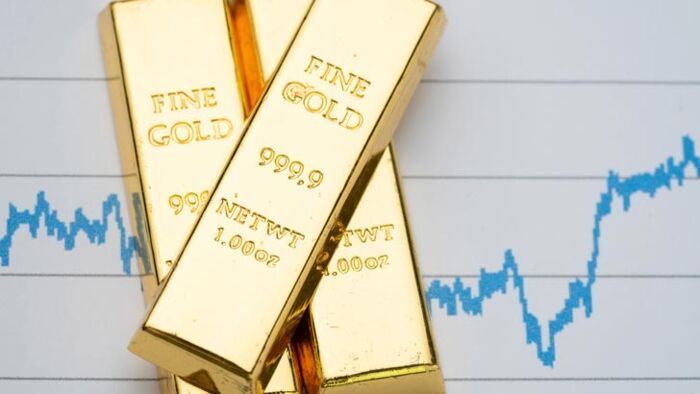
Gold appears to be scaling a vertical mountain.
When you look at the chart of the gold price from 1971 - when the US abandoned the gold standard - to present day, the price has risen from $40 per ounce to $4207.
For a long time, $2000 an ounce seemed to be a ceiling, however in November 2023 it broke through that barrier and has doubled in just under two years.
Why is gold surging right now?
A few factors are driving this surge. Central Banks globally have been increasing their gold holdings, moving away from USD exposure, a trend continuing for years. Also, the expectation that global interest rates are heading down has increased gold's attractiveness; the opportunity cost of holding it is lower when rates are low.
However, particularly in the last 12 months, momentum - where the rising price itself fuels investor enthusiasm - has become a major factor.
This is also seen in the share market with AI and defence stocks, but it bears some characteristics of a bubble.
Picking the top of a bubble is tricky, but if you find yourself at a Saturday night dinner with friends discussing the merits of gold, we are probably close.
The problem is that gold prices typically peak during periods of fear and economic worry, such as a recession. Yet, we currently have both the Australian and US share markets at record highs - hardly a pessimistic scenario. Share markets and gold are not meant to peak at the same time.
Is gold really a safe haven investment?
This raises a better question: is gold truly the 'safe haven' investment we believe it to be? Unfortunately, like many investments bought near a peak, the next few years can be terrible, which is often when most people destroy their wealth.
Consider two prior peaks in gold prices, which occurred during truly worrying times. In the global pandemic, gold peaked at AUD $1975 in July 2020; by October 2022 it had fallen to AUD $1633, a 17% decline.
Worse, during the aftermath of the GFC, gold hit AUD $1825 in August 2011 and by December 2015 had fallen to AUD $1061, a 42% drop. The volatility in gold since 1971 is very similar to the US share market - not what most would characterise as a 'safe haven'.
An investment like bonds is far more of a safe haven.
The critical difference is that, unlike bonds, gold does not produce an income. Your return on gold relies entirely on a future buyer's willingness to pay more than you did. Bonds, by contrast, pay interest and return your capital at maturity. This predictability of return over five or 10 years is a hallmark of a true safe-haven asset.
None of this means gold has no place in a portfolio. There are times when it will be the only asset that holds or rises in value, often during high inflation or economic fear. Perhaps we are moving in that direction, but I would be cautious.
What does history tell us about gold price peaks?
As history shows, buying gold near a peak can lead to significant losses. Therefore, an investor today should be very cautious about adding it to a portfolio. For those who already have gold exposure, as with a stock that doubles quickly, it is often a great time to take some gains and re-balance.
Finally, gold stocks, of which Australia has many, add an extra layer of risk. Many listed gold stocks do not mine an ounce of gold, yet their share prices have risen significantly; by the time they start production, the gold price may have fallen. It is far safer to stick with large, established gold miners.
After all, when it comes to gold, it's wise to be wary of the glitter beyond the bullion itself.
Get stories like this in our newsletters.