Joseph Healy on the truth about Australia's rich-poor divide




When Joseph Healy's son George died from a fentanyl-laced overdose in 2021, everything changed. After four decades in banking - including co-founding Judo Bank - Healy walked away from finance to take on a new mission: fixing Australia's broken mental health system. Today, as founder of Malu Health Group, he's blending business discipline with human care, driven by a question that now defines his work: Can capitalism - and society - rediscover its moral compass?
Two Scotsmen, divided by centuries and oceans, bound by one idea: capitalism.
In 18th-century Scotland, Adam Smith imagined a world where free markets flourish when guided by moral purpose.
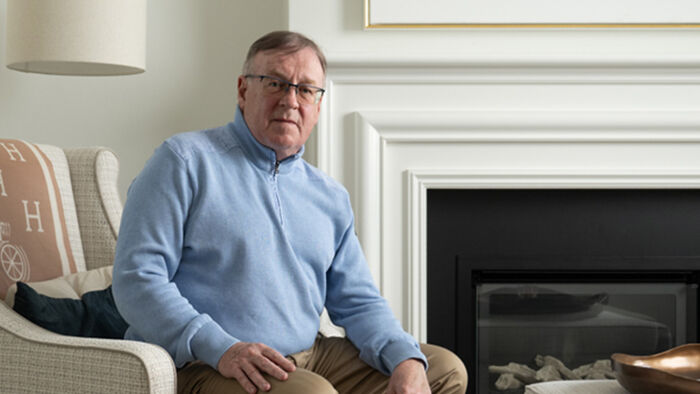
Some 250 years later, in 21st-century Australia, Joseph Healy warns we've drifted from that path.
Healy has spent four decades inside capitalism's engine room - from senior roles at ANZ and NAB to co-founding a bank built for small businesses; "the baker, the butcher and the brewer the majors ignored".
From inside that system, Healy saw where the cracks began to spread.
"Australia has never been richer by traditional measures," he says.
"But by almost every measure of social wellbeing, we're getting poorer."
"Smith believed economic progress should lift living standards and strengthen society. Still, he would be horrified at today's inequality, and the costs borne by those with the least."
For Healy, that paradox defines modern Australia. His new book asks, how can a nation so rich feel so broken?
"Smith believed you can't separate the economy from society," says Healy. "Yet that's exactly what we've done."
Banking monopolies: when competition fails
For Healy, that separation was clearest in banking, the system meant to spread opportunity. In his book, he highlights the dangers of monopolies, a problem Adam Smith warned would stifle competition by concentrating power in too few hands.
"Too many key industries in Australia are dominated by a handful of players," he says.
Healy points to sectors such as telcos, airlines and supermarkets, but his years inside the banking monopoly - and later as a challenger - give him a unique view.
"Our banking sector is among the world's most profitable," he says. "But it's highly concentrated."
The Big Four banks now control close to 70% of the market. That dominance, Healy argues, limits choice and drives up costs for consumers. He saw it firsthand. As head of business banking at ANZ, Healy oversaw 6500 staff across 220 locations. Scale brought stability, but also inertia.
"At that size, agility becomes a risk," he says. "If something goes wrong, it cascades across the organisation. You don't want Charlie in Toowoomba making up his own rules."
Uniform policies kept control but slowed decisions. Over time, these institutions became safe but monolithic, drenched in bureaucracy.
"I'm a big believer in specialisation - as was Adam Smith," says Healy. "Look at decathlon gold medallists. Compare their performance in each individual event - the 100 metres, the javelin - with the winners in those specialist events. The specialists outperform them by 30%.
"Why? Because that's all they do. It's the same in business."
By 2016, Healy set out to build a David among the Goliaths. "With Judo, we said we're going to be a specialist; a pure-play small-business bank. We'll place a premium on the calibre of our bankers. Our risk management team will work closely with them so decisions can be made quickly."
At the majors, those functions were kept apart.
"The banker collects all the information, then sends it off to Risk who sit on level 27 and never meet the customer," says Healy. "That disconnect is a problem."
Judo launched amid a wave of digital banks that sprang up after the Hayne Royal Commission. Each targeted a niche market or demographic and, for a moment, innovation flourished. But the monopoly reasserted itself. Volt and Xinja folded. Up was bought by Bendigo Bank, while Ubank (formerly 86 400) was absorbed by NAB.
Healy puts much of that down to challengers chasing a crowded mortgage market dominated by the majors. Yet Judo Bank endured. Focused solely on SMEs, it raised more than $1 billion in equity, became the first neobank unicorn in 2020, and listed on the ASX the next year. For Healy, its success proved that competition still works, when businesses are free to specialise.
"If a business is specialised in what they do, they'll produce better results in that one task than the business that tries to do everything." But the concentration of power isn't just an economic flaw, it's a moral one that shapes how people behave inside the system itself.
Moral cost of capitalism
If Adam Smith were to visit modern Australia, he wouldn't just be alarmed by the lack of competition in the market. He'd be dismayed by the moral character of those shaping it.
In The Wealth of Nations (1776), Smith wrote: "It is not from the benevolence of the butcher, the brewer or the baker that we expect our dinner, but from their regard to their own interest."
That line has been misused to justify an era where wealth is built by ownership, not labour; mass lay-offs are rewarded if they boost quarterly profits; and CEOs earn 55 times more than the people who make their products. Many have taken it to mean that self-interest is all that matters - that greed, if it lifts the bottom line, somehow lifts everyone else too. But Healy says they've only read half the message.
"It's as if we forgot to turn over the tablet of stone," he says.
"We've embraced The Wealth of Nations - the side that celebrates markets, competition and wealth creation - but ignored Smith's other book, The Theory of Moral Sentiments (1759), which emphasises ethics, empathy and moral responsibility."
Healy, a passionate believer in capitalism, argues that the economic system has been hijacked by its own champions - and Smith's message, over time, distorted.
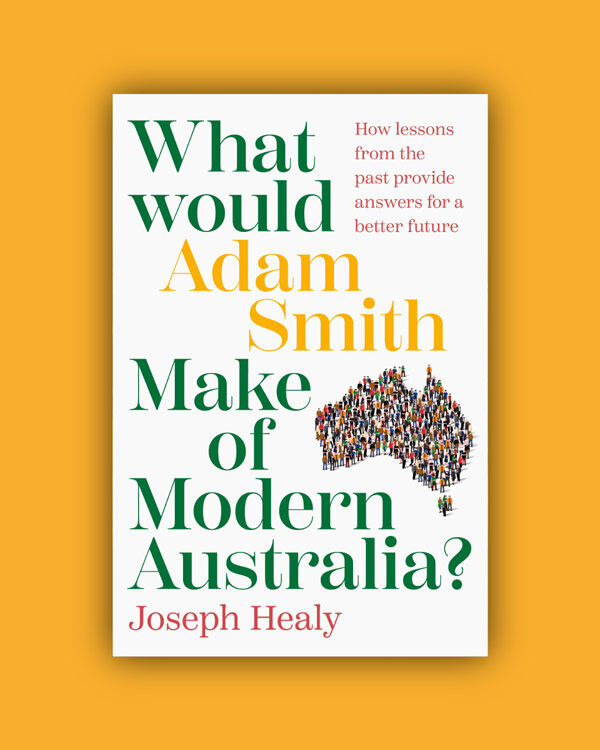
"It's why I wanted to write this book. The butcher, brewer and baker are doing business within a moral framework. We've done a huge disservice to one of the greatest intellectuals who shaped the world by reducing his contribution to a few self-serving sound bites."
Has the morality of markets been lost forever?
Healy doesn't think so. Smith believed markets only work when morality does.
In his earlier work, Smith wrote that people seek two things - to be loved and to be lovely. To be loved is to be admired for power or success; to be lovely is to be respected for virtue and decency. Healy says too many business leaders today confuse the two.
"The problem is that too many are loved but not lovely," he says. "When they lose their position of power, they stop being loved. And because they haven't conducted themselves in a way that earns respect, they're not seen as lovely either."
He adds. "Smith understood human nature. People haven't changed that much in 300 years. We still want to be admired, trusted and part of something bigger than ourselves."
Healy explains moral sentiment with a simple analogy.
"Imagine you're walking down the street and your wallet drops out of your pocket," he says. "I see it fall, pick it up. We all know I should call out and return it."
"But the way many businesses behave today is different: They pick up the wallet, look around to see if anyone saw, maybe check what's inside and only then decide to give it back."
When faced with a moral choice, Healy says he's heard business leaders ask, 'How is this going to look on the front page of the paper?' As if that's your moral compass."
In his book, Healy lists some of Australia's failed wallet moments: Qantas, which took $2 billion in Covid support while sacking staff and selling tickets for cancelled flights; PwC, accused of using confidential Treasury data to profit clients; and the banking abuses exposed by the Royal Commission.
"They took the cash, thinking no one was watching."
The cost - a new mission
Healy believes this moral blindness has real, measurable consequences.
On paper, Australia looks prosperous: GDP keeps rising, one in 10 Australians is a millionaire, and share prices are near record highs. But those numbers, he says, "measure the wrong kind of success".
"When you look at society what do you see?" asks Healy.
"Household debt is soaring. You might own a $1.5 million home with a $1 million mortgage - the stress that creates shouldn't be ignored.
"One in seven adults is on antidepressants. Suicide rates are climbing. Inequality is widening.
Our public schools are falling behind. Domestic violence and drug and alcohol abuse are increasing. And mental health services are broken - they simply can't cope."
And of course, Australia is but a symptom of a global problem, something Healy knows only too well.
In 2021, Healy's son, George, died from a fentanyl-laced overdose while studying in the US. He was 24. George had struggled with depression and, despite seeking treatment, found the mental health system fragmented and inadequate.
"I saw a system with my son that was difficult to navigate," Healy later told other media, "and when you did, it was underwhelming".
The tragedy, says Healy, changed everything. After 40 years in banking, he turned his focus to mental health and the systemic failures behind it.
He was already studying neuroscience and psychology through King's College London. After George's death, those studies became a mission.
A six-week tour of mental health hospitals and clinics in Europe helped shape his plan for a new venture: Malu Health Group.
Malu is now raising $100 million to acquire and professionalise about 125 independent clinics in Sydney and Melbourne. Just like with Judo Bank, the aim is to blend business discipline with human care.
"We need to ensure every Australian facing mental health challenges can access compassionate, high-quality support - no matter where they live."
The road back to ethical capitalism
Healy warns that Australia risks becoming the "boiled frog" of capitalism, slowly sliding toward dysfunction without realising it.
"We're nowhere near the level of social decay seen in the US or UK," he says, "but we're already on that trajectory."
Avoiding that fate, he argues, will require leadership with moral purpose.
"We need strong competition, fair taxation and a transformation in governance," says Healy.
"Boards today are buried in paperwork instead of purpose. Governance should be about ethics, not box-ticking."
True reform, he believes, can't happen in isolation. "If you push for one change, vested interests crush it. But when you show the bigger picture - taxation, competition, education, health - people see what's at stake."
Healy hopes for a return to the kind of economy Smith imagined: one built on trust, purpose and competition by people who strive not just to be loved, but to be lovely.
Get stories like this in our newsletters.