The costly detail missing from 97% of home listings




Almost 97% of Australian property listings don't disclose a home energy rating, leaving buyers in the dark about future running costs and sellers potentially missing out on value.
Australians can compare the energy efficiency of a washing machine in seconds.
Yet when we buy a home, the largest purchase most of us will ever make, too often we're expected to make a million-dollar decision without knowing what it will cost to run.

It's a problem hiding in plain sight. Almost 97% of Australian property listings don't disclose a home energy rating, leaving buyers in the dark about running costs.
And as thousands of homes come onto the market this spring selling season, that missing piece of information could cost buyers and sellers alike.
Buyers will commit to running costs that are unknown to them at the point of sale. Sellers will forgo value that is sitting invisible inside their property.
That cost and that value are the same thing: how much energy the property needs to run.
When we think of energy costs, our mind often starts sifting through different providers, or how we can get a better deal. But here is the rub.
Why energy ratings matter more than your power plan
Your energy plan sets the price of energy at any given moment. But it is your house that determines how much energy you need to buy over the life of your occupancy.
Many factors determining this can be painfully difficult to change, such as insulation, window glazing, or which way the living areas face. Switching plans also only saves a few hundred dollars once, then ACCC data shows these savings erode over time and require constant switching.
A better-performing house, on the other hand, lowers your bill every single year without any further action taken.
And Australians do want to know this before they sign. Research shows 86% want to see a home energy rating when buying, and 75% when renting.
So how did we become the third country globally to put energy ratings on appliances back in 1986, and yet are still catching up when it comes to our homes?
Why the rating never reached the buyer
The answer is in new research released by Cotality alongside the Real Estate Institute of Australia, examining how energy performance in homes became Australia's missing measurement.
The Efficiency Edge report notes that Australia already has a home energy rating system. It's just that most consumers don't ever see it.
The Nationwide House Energy Rating Scheme was built to show councils that a new home meets the construction code, which is how over 90% of new homes still use it. It was never designed to tell a buyer or renter what the place would cost to live in.
Yet Australians are doing the maths anyway.
Research shows around 68% of Australians planning renovations are doing so to lower their bills, sitting well ahead of the 55% who cite environmental benefits. Buyers are increasingly recognising that the cheapest home to buy isn't always the cheapest home to live in.
And where families can actually see a rating, they act on it.
When buyers can see a home's energy performance
The report followed several Australians as they bought, sold, or leased a home, to assess whether an energy rating impacted their decisions.
In one example, a family chose a four-bedroom rental that was 35% more expensive than another they liked, because it rated six stars against the 1.5 stars of their rejected choice.
This happened in Canberra, where energy ratings have been mandated at the point of sale and lease since 1999. The family was rewarded for their decision when the first electricity "bill" arrived as a $146 credit.
In a second Canberra case, a four-bedroom house passed in at auction at $2 million, but then five weeks later sold for $2.4 million instead.
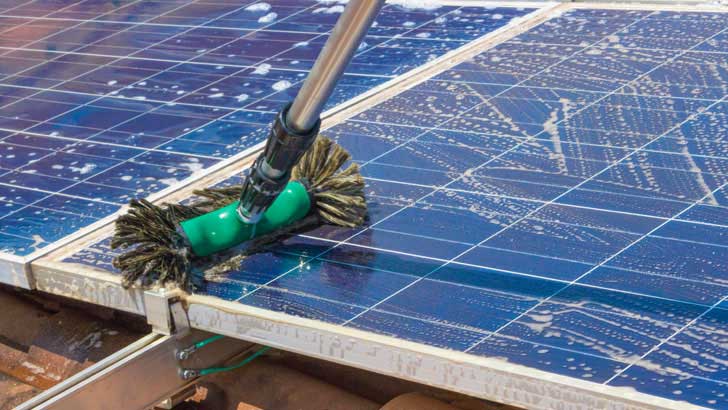
The buyer pointed directly to the reduced running costs predicted from the 15 kilowatts of solar, seven-kilowatt battery, and double glazing as the trigger to bid higher. And the vendor collected $400,000 that would otherwise have stayed invisible.
These examples are of course anecdotal. But running costs are becoming as important to buyers as mortgage repayment costs, showing up in what sellers can achieve.
So how can we bring this number to the forefront?
Most Australians aren't making the energy comparison that our aforementioned renters did, because there is no requirement to declare the energy rating of a home in most Australian states.
The hidden features affecting your energy bills
The features deciding your bill are also the ones you can't easily see at inspection.
Insulation, glazing, orientation, and draught sealing sit behind walls and above ceilings, and are routinely absent from listings or described inconsistently.
But when they do become visible, the money conversation changes.
Solar panels can be seen from the street and are usually in listing pictures. Research shows they lift a property's value by around 2.7%, or roughly $23,100 on a typical property.
So buyers and renters are already paying more for the savings they can see. But there are more savings within many properties that are just as capable of being shown like this.
A Home Energy Rating for existing homes launched nationally last month, delivered by an accredited assessor who visits the property to determine the energy score.
New South Wales began its voluntary rollout of rating disclosure in mid-2026 and has said it will move to mandatory disclosure once the market is ready. But there's no need to wait for the change.
Sellers and landlords can choose to order one now and put it in their listing, so the savings that are already built into the home can also be priced into the sale or rent.
Buyers and renters can also ask for one before they sign, to ensure they aren't setting themselves up for bill shock.
Because if a washing machine can offer you energy transparency, there's no reason the house it sits in can't too. And that answer may be worth a great deal more.
Get stories like this in our newsletters.