'This is not going to get better': Rising seas threaten homes




New research has calculated the effect rising sea levels could have on property and land values, with tens of thousands of homes in some of Australia's favourite locations at most risk of damage.
Rising seas levels could cost Australia $855 billion in damage to land and property by the end of this century, according to a new report from the Climate Council.
The climate advocacy group says as many as 267,000 coastal properties and two million hectares of land could be hit by flooding and erosion under the scenario, which it says is conservative.
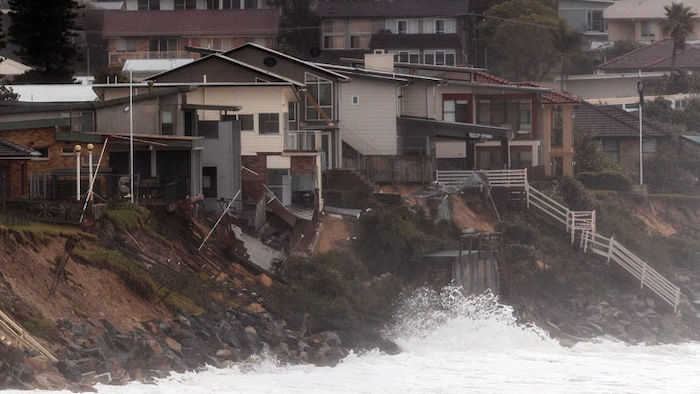
Its Rising Seas, Rising Bills report notes sea levels have already risen and that Australians can expect them to rise at least another 14 centimetres by 2050.
With further increases likely beyond this, water levels could then be as much as 54 centimetres above where they are today by 2100.
Most properties deemed at risk are in Queensland, New South Wales and Western Australia.
The Gold Coast alone faces $84.4 billion in projected economic losses - the most of any urban area in the nation.
Report co-author Professor Tom Kompas from Melbourne University says many properties in the firing line would be homes.
"It's mostly residential. So in most cases, in Brisbane and the Gold Coast and so on, it's basically residential properties to a large extent," he says.
Professor Kompas says homeowners would see damage mostly in the form of coastal erosion, mould, landslides and localised flooding, as higher seas levels carry storm surges to into wider areas.
Residents already seeing impacts
The Climate Council says emissions from the burning of fossil fuels is heating the planet and driving the rise of sea levels, which it says have increased already.
Aileen Vening lives near the Victorian coastal town of Inverloch.
She prides herself on monitoring the local coastline closely and has seen significant erosion events hit local beaches regularly over the last 15 years.
"Everyone started noticing it from about 2012," she says. "From then on it may not be every year, but it's only one serious weather event away from a lot of erosion".
Vening says a 2024 storm washed away 18 metres of beach, while the local surf club has had to deploy sand bags to protect its facilities from erosion.

Yet coastal properties remain popular
Kym O'Connell is a real estate agent in Currumbin Valley near the Gold Coast - the city the Climate Council warns will suffer more damage than any other.
She is cautious about flooding in her region, but says rising seas levels are "low on the radar" of people moving into properties near beaches or waterways.
"Migration [to the Gold Coast] is massive and won't cease," she says. "Beachfront properties really haven't been damaged enough to steer people away... those downsizing go straight to the beach to live".

She believes the lifestyle and climate will keep people coming to the area, but is concerned about how they'll deal with the escalating costs borne out of a growing risk of floods.
"When your insurance premiums become just completely unaffordable, it does make you wonder where that will end".
Homeowners facing costs on their own
Property owners will have to pay for much of the damage caused by tidal inundation and storm surges out of their own pocket because these events aren't covered by most insurance policies.
"Actions of the sea are generally excluded or limited because coastal erosion and inundation are high and increasingly predictable risks that are difficult to insure sustainably," a spokesperson for the Insurance Council of Australia (ICA) told Money.
What can be done?
The ICA spokesperson adds: "What's needed is greater investment in coastal protection and adaptation, and better risk-informed land planning so development is kept out of high-risk locations".
The Climate Council agrees, saying Australians should stop building properties in at-risk areas, invest in coastal protection measures and even "manage a retreat" from properties in highly-exposed locations.
Professor Kompas, who worked on the economic modelling of the damage rising seas levels would do, admits these mitigation measures would also be "very expensive".
In the meantime, he says, people should be careful about buying property near the coast.
"Check where the land is situated. What's it's elevation? Are there any barriers that are going to protect you? Is there a possibility of a landslide behind you?"
Aileen Vening from near Inverloch, agrees: "Do your homework, pay attention and just realise that this is not a hypothetical, this is not going to get better."
Get stories like this in our newsletters.