Solar savings shift: How to beat falling tariffs




Australia is putting its abundant sunshine to good use. This is the first instalment of our two-part series about how consumers can reap the financial benefits despite plummeting feed-in tariffs.
It's no secret that Australia is a sun-drenched country. So, once we figured out how to capture all that free energy bouncing off our rooftops, the solar panel market took off.
In 2001, the Australian government introduced the Renewable Energy Target (RET), aiming for 20% of the nation's electricity to come from renewables by 2020. Incentives like rebates and feed-in tariffs followed (more on that later) and uptake began to climb.

Early adopters were a trickle.
By 2008, just over 22,000 rooftop solar systems dotted the suburbs. But as manufacturing scaled and prices fell, that trickle turned into a torrent. In 2016, 1.5 million homes had systems installed and, by 2021, Australians were adding new renewable energy capacity 10 times faster per capita than the global average.
Needless to say, we hit our 2020 RET. By May 2025, more than 4.1 million dwellings had solar panels, covering 38% of all homes.
Solar isn't just popular, it's critical to the grid. At certain moments, renewables now supply up to three quarters of Australia's electricity.
But the boom is losing a bit of momentum - Australia's solar uptake has started to plateau in recent years.
Installations peaked at 377,000 in 2021 and have since drifted down: 315,000 in 2022, 333,000 in 2023, and 317,000 last year. By the end of May 2025, fewer than 95,400 systems had been added.
Prices have also stabilised. In August 2012, a standard residential solar system cost an average of $2.41 per watt, according to the National Solar Choice Index. A decade of competition pushed it down to $0.89 by 2021, but it hasn't shifted much since.
Competition, wholesale costs and the Australian dollar are the three factors that determine what you'll pay for a solar installation, according to Jeff Sykes, chief executive of comparison service Solar Choice.
What determines how much you will pay to install solar?
1. A crowded market
With more than 6000 contractors accredited by the Clean Energy Council, the solar industry is fiercely competitive. "Solar panel product development is continuing at a rapid pace making the technology cheaper, more efficient and lasting longer," he says.
This has forced margins to become very slim.
Some installers chase volume with lowball prices and flashy marketing, but Sykes warns that quality can suffer.
2. Equipment costs
While competition has driven down prices for consumers, other factors are putting upward pressure on costs. Sykes notes that the surrounding costs of solar panel installations - such as labour, components, and cabling - continue to rise.
However, the trend is only a recent one: the wholesale cost of solar equipment has dropped significantly over the past 15 years.
3. The exchange rate
Most solar gear is imported, which means the Australian dollar matters. Sykes says most quotes for installing solar are only valid for seven to 30 days so that solar installers are not forced to wear any underlying changes in cost.
"In general, an increase in the AUD/USD rate will lower the cost of a solar quote and vice versa," he says.
There's also a postcode lottery. A 10kW system might cost $13,060 in Darwin but just $7220 in Canberra.
Sykes says this comes down to differences in labour costs between States and some of the smaller markets being less competitive with fewer operators.
"Melbourne and Hobart also receive lower rebates due to receiving less sunshine."
Are solar panels about to get more expensive?
Australia's updated RET aims to generate half of its electricity from renewable sources by 2030. But Sykes says the net effect of the above three factors could result in price hikes.
"We could actually start to see the net cost of solar panels go up in Australia for the first time," says Sykes.
"There is still space for improvements in solar panels, but they are likely to be more incremental rather than the steep changes in prices we saw in the earlier years."
So if panel prices have evened out and household uptake is slowing, what happened to all those financial incentives that used to supercharge demand? That's where feed-in tariffs come in - and for many, that's where the frustration starts.
Why are feed-in tariffs in freefall?
In the early 2010s, solar households could be paid up to 60 cents per kilowatt-hour for exporting power to the grid. In Victoria today, they receive just 0.04 cents. That's a drop of 99.93%.
Feed-in tariffs were introduced to accelerate rooftop solar adoption when systems were still expensive. Early schemes paid generous rates to reward households exporting excess solar power.
"The policy was made to encourage the uptake of solar," says Billy Davis, founder of the Tru Blu Solar Company. "It certainly did its job and we achieved adoption of solar power generation in the country."
Here's how it works: when you install solar panels, they generate electricity during the day. But unless your home is using it right away - lights on, air-conditioner running, dishwasher humming - that power must go somewhere. Without a battery to store it your excess solar energy flows back into the grid.
"On its way out, the energy passes through the electricity meter in your switchboard, which records how much leaves your property and provides you with a credit," says Davis. "That credit is referred
to as the solar feed-in tariff."
Those credits, which wiped hundreds off quarterly power bills, are now barely noticeable. As rooftop solar surged in the early 2020s, the amount of solar energy being supplied into the grid began to outstrip demand, especially during the middle of the day when most homes aren't using much power. "That meant that as solar costs dropped, feed-in tariff prices also dropped," he says
In NSW, the Independent Pricing and Regulatory Tribunal now sets benchmark feed-in tariffs between 4.9 and 7.4 cents per kilowatt-hour.
In Victoria, the Essential Services Commission has locked in a flat rate of 0.04 cents for the rest of 2025. The change has been abrupt for many.
Households on Victoria's Premium Feed-in Tariff (PFIT) - which guaranteed 60 cents per kilowatt-hour for systems installed between 2009 and 2011 - lost that benefit when the scheme expired in November 2024. Their rate plummeted almost overnight.
Online forums and community groups have filled with frustrated solar owners comparing bills and questioning whether solar is still worth it.
The problem is what's happening upstream. "All of this plays out in the wholesale electricity market," says Davis. "That's where electricity is bought and sold by big generators and retailers who then provide it to retail customers like you and me."
Unlike the fixed rates shown on power bills, wholesale electricity prices shift every five minutes. Supply, demand, weather and market dynamics all influence the price. During times of low demand
and high rooftop solar output, especially on mild, sunny days, wholesale prices can fall below zero.
"There's too much solar hitting the grid all at once," says Davis. "And when demand drops so does the price."
Retailers and networks have started capping or even blocking daytime exports from residential systems. Some households are advised not to export during peak solar hours. Others face hard 'zero-export' limits.
This results in households sending cheap power to the grid during the day and buying it back at full price in the evening. Without a battery, that's a losing trade. For solar to keep delivering value, more households are turning to storage.
Where do household batteries come in?
While some may be angry about dwindling solar feed-in tariffs, others see it as the end of the first phase of Australia's solar journey. Rooftop solar was just the beginning. The next wave is storage and it's already started. More than 300,000 homes have installed a battery since they hit the market in 2015.
But that still represents only 8% of solar households. Most of the power generated during the day is still flowing straight into the grid at a fraction of its value.
"Batteries are our bridge to a 21st-century energy grid; keeping the lights on in our homes, schools and workplaces as our ageing coal fleet eventually retires by 2040," says Greg Bourne, climate councillor and energy expert.
When the sun's blazing, Australians generate more clean power than we can use - especially in States like South Australia, where rooftop solar alone can sometimes meet the entire State's electricity demand.
The problem is timing. The power has to be used - or lost - immediately. That's where batteries could help. Paired with rooftop solar, a battery can almost double a household's annual energy savings, up to $2300 compared with $1500 with panels alone.
According to the Climate Council, installing two million more home and business batteries by 2030 could save Australians more than $4 billion a year on energy bills.
Nearly half of homeowners with solar now say they're considering a battery. But for many, the decision comes down to cost.
Prices are falling fast. Since 2013, global battery prices have dropped by 86%, driven by cheaper lithium and scaled-up manufacturing. In 2024-25 alone, large battery system prices fell 20%, while gas-fired generation costs rose 11%. Still, the upfront costs remain high.
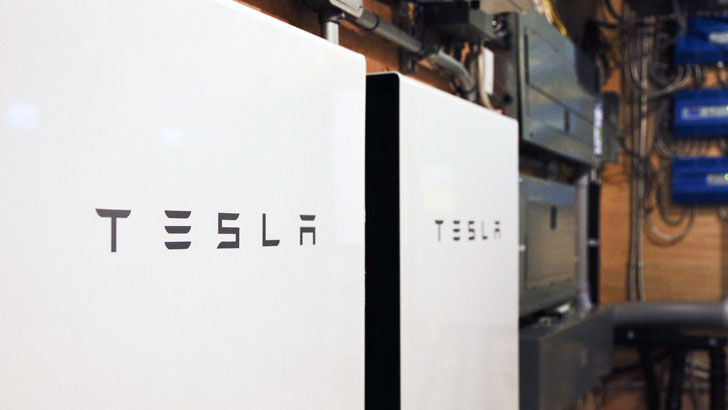
According to the Smart Energy Council, there are about 80 household batteries on the market, with a basic 5kWh household battery starting at about $4000. A 10kWh unit ranges from $6000 to $10,000. The Tesla Powerwall 3, with 13.5kWh of storage, can cost more than $18,000.
The average payback period sits at just over eight years, down from 19 in 2016. That's a big improvement but, just like rooftop solar in the early 2000s, it's still too long for many households to justify the investment.
Fortunately, the government has stepped in with the same playbook that kickstarted solar panels - offering rebates to help households overcome the upfront cost. Whether that's enough to tip the scales for batteries, as it once did for panels, is now being put to the test.
What are federal solar rebates paying?
The Small-scale Renewable Energy Scheme (SRES), Australia's main Federal rebate program for solar, was first introduced in 2011 to encourage the installation of renewable energy systems. It offers an upfront discount, currently at 30%, on solar systems of less than 100kW.
While this rebate has been gradually reducing each year and will phase out by 2030, it remains a key driver in Australia's world-leading rooftop solar uptake.
In a landmark change, the Federal government added battery storage to the SRES from July 2025. This effectively extends the 30% rebate to eligible home batteries, either when paired with a new solar system or added to an existing one.
"This is a huge change to the industry," says Jeff Sykes from Solar Choice. "Most of the homeowners who didn't install a battery were waiting for the price to fall and for the financial return to improve."
"The Federal battery rebate has tipped the scale for many of these customers and also been a trigger for many who haven't installed solar or batteries to jump on board."
Billy Davis, founder of Tru Blu Solar Co, says demand has skyrocketed since the battery rebate was introduced. "Prior to July 1, we were doing 20-40kWh of battery storage a week. We are now doing that per day."
He says the rebate is a game-changer but warns consumers to tread carefully.
"The Federal battery rebate you can only get once. So don't stuff it up and buy some dodgy system off the wrong company. It is a damn murky industry."
He advises homeowners to do their homework.
"Go to your local Facebook group pages and ask who the best solar companies are in your area. Judge the company by their worst reviews on Google. Pretty much all companies have 4.8 stars or higher, so you need to look deeper."
He also suggests choosing a provider that is embedded in the local community.
"Get a company that employs local trades and admin staff, and has their own warehouse in your area," says Davis.
"If they've been operating for more than five years, they've probably weathered both booms and busts. That should give you confidence."
Can you combine federal, state and council rebates?
While the Federal rebates can already save you money, they can also be combined with State and council rebates.
Provided by Solar Choice, below is an example of how much South Australians can save by stacking these incentives. To see the rebates in your State, visit your State or Territory's government website or solarchoice.net.au for a comprehensive guide.
How can you access the wholesale market?
In the heart of Sydney's inner west, Anthony lives with his wife, Bridget, and their teenage son in a single-storey terrace that's more than a century old. It might not look futuristic from the street, but inside - and especially on the roof - it's a different story.
With a 9kW solar panel on his rooftop and a 19kWh SolarEdge battery set-up, Anthony's home doesn't just run on renewable energy - it earns from it. But it wasn't always this way.
"We were putting 70-80kWh a day into the grid in summer and getting five cents per kilowatt," he says. "Meanwhile, they were charging us 35 cents at night. It just didn't feel like we were getting any reward at all."
This imbalance pushed Anthony to install a battery. Then, on a tip from an electrician, switched to Amber Electric - a new kind of energy retailer that gives customers direct access to the wholesale electricity market.
Instead of fixed rates or mark-up margins, Amber charges a flat monthly fee of $25 and passes through the real-time market price for both electricity usage and solar exports. "If you're getting a battery, that's the way forward," says Anthony.
Because pricing follows the live market, Amber founder and co-CEO Dan Adams says usage rates can drop when there's lots of renewable energy in the grid - and rise when demand is high. "The same applies to the price you can get for your solar energy that you sell to the grid," he says.
Feed-in tariffs with Amber aren't fixed; they move with supply and demand in the energy market. While prices can occasionally go negative, they can also rise dramatically during major price events.
"We see export rates go above $1 per kilowatt-hour quite often, and in rare cases, they can reach the regulated market cap of $19/kWh," says Adams.
"So households can earn significantly more than traditional fixed-rate plans allow, especially when paired with automation that allows your battery to buy, store and sell energy in real time in response to these price signals."
Anthony now earns between $1200 and $1600 a year through Amber, thanks to its access to wholesale energy prices and smart battery automation. On average, the family earns $100-$200 a month - and during a recent price spike, they made $375 in a single day by discharging their battery back into the grid at the right time.
"Amber's basically taken what was a bill and turned it into something you don't have to worry about," says Anthony. "We don't get a bill anymore - we get cheques."
How does vehicle-to-grid (V2G) work?
As home batteries gain traction, a new contender has entered the energy game: your car. Electric vehicles (EVs) are emerging not just as a mode of transport, but as mobile energy assets.
Typically, EVs are charged from the grid via a garage wall charger. But vehicle-to-grid (V2G) technology flips that dynamic. Instead of just taking power, your EV can also give it back.
EVs store five to six times more energy than the average home battery. With the right hardware, they can feed this energy back into the grid or your home. The key is the bi-directional charger, which allows electricity to flow both ways.
• V2G (vehicle-to-grid) Excess power is sold back to the grid, especially during peak demand.
• V2H (vehicle-to-home) The EV powers a household, providing back-up during outages and offsetting bills.
Ausgrid, which recently connected its first V2G system, calls it a 'new era of energy'. It joins SA Power Networks and NSW's Essential Energy in supporting the rollout.
"V2G transforms EVs into more than just a transportation tool," says Rob Amphlett Lewis, Ausgrid's group executive of distributed services.
"Customers who are interested can become income-generating assets and energy-management systems, enhancing the overall value and practicality of owning an EV."
The Electric Vehicle Council (EVC) has crunched the numbers. It says a $3000 rebate for V2G-capable chargers could push electricity prices down for consumers over five years. Participating households could pocket up to $1000 a year in return.
At scale, the benefits multiply. If 600,000 EVs were equipped for V2G, they could match the output of Eraring, NSW's largest coal-fired power station.
"Just as Australia became a rapid global leader in rooftop solar, we have the opportunity now to lead the charge in vehicle-to-grid uptake," says Julie Delvecchio, chief executive of the Electric Vehicle Council.
The council wants V2G included in the Federal government's $2.3 billion battery rebate scheme to speed up adoption. Not everyone's convinced. Solar expert Finn Peacock says the concept may seem elegant, but is clunky in practice.
"Home battery systems are still stubbornly expensive, yes. But history tells us that won't last," he said in a recent blog published by SolarQuotes.
"Just like solar panels, prices will fall and home batteries will be everywhere."
Peacock says a home battery is most useful when it's always at home. "Putting it in the car breaks that. You need the car? Bad luck - now your house can't run off cheap energy. Cars not plugged in? Back to buying from the grid. Got two cars? Welcome to charge juggling."
Hardware and software limitations are another hurdle. While models such as the Nissan Leaf already support V2G, most major manufacturers haven't caught up.
Still, the trajectory is clear. Costs are falling, capabilities are growing and the potential is undeniable. With the right incentives, V2G could become the next chapter in Australia's clean energy story.
How does vehicle-to-load help in emergencies?
It was March when Cyclone Alfred lashed the coast of South-East Queensland, with the Category 4 system leaving almost 250,000 homes and businesses without power, some for more than a week.
On the Gold Coast, dozens of EV owners offered up their electricity, transforming the fleet into a mobile lifeline for the community.
The initiative, powered by the mycar Charger team, used the EVs of more than 100 volunteers to provide essential power - such as charging phones, baby monitors or medical devices - during blackouts.
"Thank goodness they came along so that I could make contact with my family," said one resident.
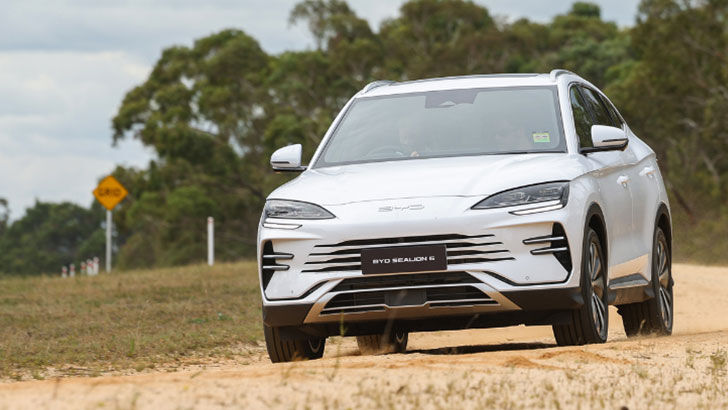
This was achieved through the cars' Vehicle-to-Load (V2L) capacity, where the electric battery is converted to standard 240v power through an adapter.
Research from the trial found 76% of Australians said that power would be a vital and important part of bringing back normalcy after a disaster.
Sylvain Borré, managing director of car-servicing company mycar, says the program could redefine how EVs contribute to support communities in a time of need.
"Partnering with emergency services or even energy providers could make this a permanent program to be implemented nationwide."
Get stories like this in our newsletters.