Campbell's Soup saga: Four scandals that rocked big-name brands





When words, tweets, and even sneakers go wrong, markets can move fast. From boardroom blunders to social media chaos, history is full of moments where a single slip sent share prices tumbling.
In the past decade, we've seen everything from a Campbell's Soup exec allegedly trashing his own products, to a fake Eli Lilly tweet promising free insulin, to an Aussie activist's hoax that wiped hundreds of millions off Whitehaven Coal. And yes, even a torn Nike sneaker has managed to shake Wall Street.
These four scandals prove one thing: reputation risk isn't just a buzzword - it's a billion-dollar reality. Here's how each drama unfolded and what it cost.
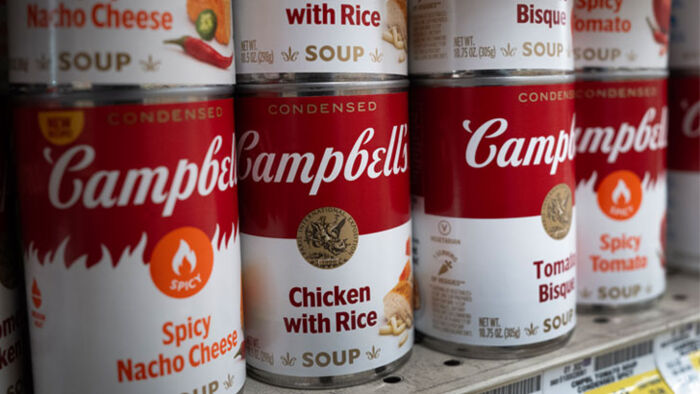
The Campbell's Soup recording
The stock price of embattled soup manufacturer Campbell's fell more than 3% on November 24 after details emerged of an hour-long tirade in which a company executive allegedly described its products as "bioengineered meat" and "shit for f***ing poor people".
Former Campbell's security analyst Robert Garza filed a wrongful termination lawsuit in the US last week, alleging he was fired in January after notifying the company about an audio recording of comments by its vice-president of information technology, Martin Bally.
Bally, who has since been put on temporary leave, allegedly went on to make racist comments about colleagues.
The scandal has come at a bad time for the NASDAQ-listed company - its share price is down more than 27% year-to-date.
The fake Eli Lilly tweet
The share price of American pharmaceutical company and insulin manufacturer, Eli Lilly and Company, nosedived following a simple tweet from what turned out to be an imposter account in November 2022.
Making use of a fake handle with the Eli Lilly name along with a purchased blue tick verifying the account - which, at the time, had just been made available to all accounts - a user impersonating the company posted a tweet announcing that Eli Lilly would be making insulin free for customers.
That wasn't true, but the fallout was real, as Eli Lilly's share price fell by more than 4% from US$368.72 on November 10 to US$352.30 on November 11.
The company's share price did recover in the weeks following and is now trading at around US$430 a share. And Eli Lilly has since taken over the handle used by the imposter and is now using it as its own.
The Whitehaven Coal activist hoax
Closer to home, another piece of fraudulent information had an even bigger effect on the share price of Australian mining company Whitehaven Coal.
In January 2013, environmental activist Jonathan Moylan sent out a phony media release purporting to be from ANZ announcing that the bank was pulling out of a funding deal for a new coal project set to be undertaken by Whitehaven.
The fake release was distributed to a number of media outlets, some of which ended up running with the news before it was identified as being a hoax. The result was that Whitehaven Coal's share price plunged by more than 8% and hundreds of millions of dollars were wiped off its value.
Moylan, who apologised to investors who had been impacted by the hoax, ultimately pleaded guilty to disseminating false information to the market for which he was sentenced to a year and eight months in jail, but he was immediately released on a good behaviour bond.
The Nike sneaker malfunction
Of course, releasing fake photos, tweets or even press releases aren't the only atypical acts that can cause the share price of a company to fall. Sometimes it can be as simple as a shoe breaking.
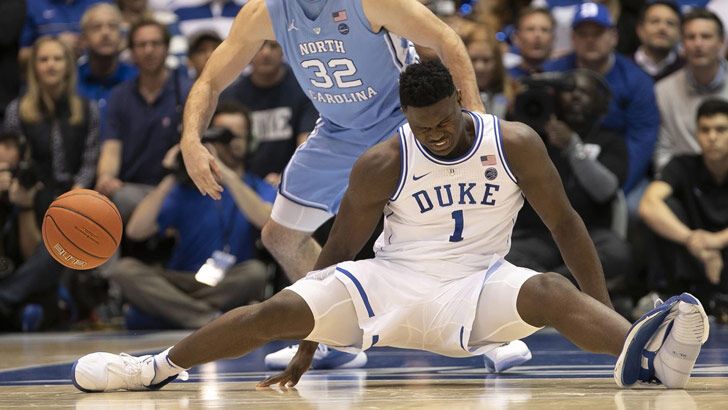
Duke's Zion Williamson was injured when his Nike shoe failed during a college basketball game against North Carolina in Feburary 2019.
In February 2019 sportswear giant Nike saw well over US$1 billion wiped off its market cap in a day following a high-profile footwear malfunction at a college basketball game.
Zion Williamson, who is now an NBA star but was playing for his college team Duke at the time, was at the centre of the strange occurrence when one of his Nike sneakers suddenly ripped apart mid-game as he was dribbling the ball, sending him to the ground.
While Nike was briefly left reeling from the reputational and share price hit it suffered as a result of the malfunction, Williamson also came off second best as he was injured in the fall. Both Williamson, and Nike's share price, went on to bounce back.
Get stories like this in our newsletters.

 Reply
Reply