Why Australia's tobacco tax sparked a black market boom




Linda was 17 when she pinched her first cigarette from a friend's pack.
By the early 1980s, she was smoking Winfield Blues, just $1.07 for a pack of 25. Today, that same pack costs $55.80. On a disability care worker's wage, it's out of reach. So, for the past three years, Linda, now 63, has been buying her cigarettes under the counter.
"They're $50 for 100 tailors," she says. "It used to be $60, but with more places competing, they had to drop the price."
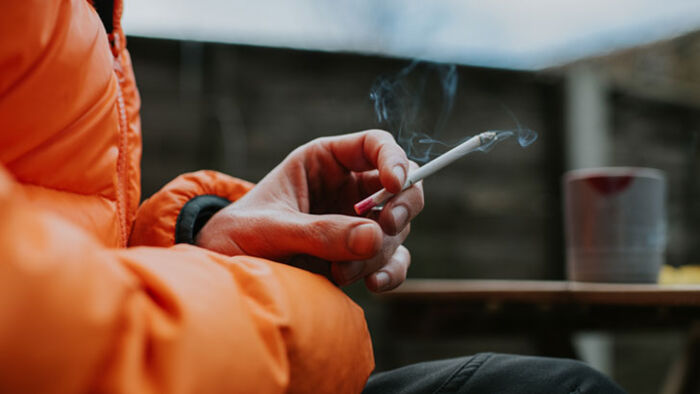
The rise of black market tobacco
Linda is part of a growing shift of everyday smokers turning to the black market. It's a multi-billion-dollar trade run by organised crime, fuelling turf wars, fire-bombings and undermining Australia's once-celebrated tobacco strategy.
Illicit tobacco is manufactured overseas for a fraction of the cost, then smuggled into Australia by crime syndicates, mostly based in Asia and the Middle East. Containers are mislabelled, hidden in cargo and quietly slipped through ports.
Some get seized and destroyed. In 2023-24, Australian Border Force (ABF) made more than 51,600 detections, intercepting more than 1.8 billion cigarettes and 436 tonnes of looseleaf tobacco. Yet the trade continues to thrive because the profits dwarf the risks.
Back in 2017, the Australian government's Black Economy Taskforce found smuggling $150,000 worth of cocaine or heroin that might fetch $2.3 million on the street often lead to prison time. Spend the same amount on illicit tobacco, and you could earn up to $10 million but would only be slapped with a modest fine under sentencing laws at the time.
A 2024 study by Charles Sturt University researcher Rob Preece showed how the numbers stack up: a single shipping container can carry 9.5 million cigarettes (around 475,000 packs), costing just over $562,000 to import. Sold at $19 a pack, the profit can reach close to $8.5 million, a 1500% return on investment.
"At this level of potential profitability, a criminal would only need one container in 16 importations to be successfully smuggled across Australia's border to make a profit," the paper stated.
Payments and penalties
While the ABF says penalties can include up to 10 years' imprisonment and fines five times the amount of duty evaded, enforcement on the ground tells a different story. Between July 2018 and January 2025, the Australian Taxation Office recorded only 30 convictions for illicit tobacco offences, with jail sentences topping out at three years.
Once inside the country, the cigarettes are distributed through a network of wholesalers, often linked to organised crime, before ending up under the counters of tobacconists and convenience stores.
"Of course, they're not on display but hidden in the back room," says Linda.
"There are many different types, and even vapes in many different flavours."
Many stores use privately owned ATMs to avoid paper trails. An ABC investigation linked these ATMs to Next Payments, a company Macquarie Bank increased its stake in to 47% earlier this year. But where there's money, there's muscle.
As rival syndicates compete for control of this lucrative market, violence is on the rise. Fire-bombings, arson attacks and targeted burglaries have become a regular feature of what police and media now call the tobacco wars.
In Victoria alone, more than 100 businesses linked to the black-market trade have been set alight since 2022. Some attacks are suspected retaliation between organised crime groups. Others are seen as warnings to shop owners caught selling for the wrong side.
The pattern is spreading. Arson attacks in NSW, Queensland, South Australia, and Western Australia have surged, with shop fronts targeted by gangs enforcing turf through fear.
Linda, who lives on the outskirts of Perth, has seen it first-hand.
"One of the shops near me got broken into twice," she says. "There are some awful people out there."
What worries her most isn't the crime but losing her only affordable supply.
"It really annoys me. We're just getting a good deal, and this kind of stupid stuff might shut them down," she says. "I'm not saying it's right, but it's what people can afford."
When good policy turns bad
Australia has led the world in driving down smoking rates through plain packaging, public campaigns and, above all, price.
Since 2000, tobacco excise has soared.
A cigarette that once carried 19 cents in tax now includes $1.40. Tax alone makes up nearly two-thirds of the price of a smoke.
In April 2010, the Federal government introduced a 25% hike to the tobacco excise. From December 2013, it began a series of 12.5% increases repeated annually until 2020, a blunt force policy that was popular and increased government revenue.
It worked... for a while. In 2019, almost 60% of smokers said the cost pushed them to quit or cut back. The World Health Organisation still calls taxation the "single most effective and cost-effective measure" to reduce smoking.
But the model is starting to show strain.
Tobacco remains the country's leading cause of preventable death, killing 24,000 people a year. And while many smokers want to quit, addiction is a stubborn enemy.
"I've tried five times with no success," says Linda. "You can't expect people to quit just like that."
Economists call it the Laffer Curve: raise taxes too far and people start avoiding them altogether. In Australia, that avoidance now looks like shipments of contraband, fire-bombed retailers, and tax revenue in freefall.
It's a textbook case of the cobra effect. Under British colonial rule in India, the government offered bounties for every dead cobra to reduce their numbers. At first, it worked. Then people started breeding cobras for profit.
When the scheme was cancelled, breeders released the now worthless snakes into the streets. In Australia, years of aggressive excise hikes have helped drive down smoking, but they've also spawned a thriving shadow economy. In trying to kill smoking, we may have bred something worse.
A fork in the road
With illegal tobacco sales surging and shop fronts being fire-bombed, policymakers now face a difficult choice. NSW Premier Chris Minns has called time on the current approach.
"I'm not arguing with the public health benefits of putting an excise on tobacco," Minns said. "But the massive increases have exploded the illicit tobacco marketplace."
His comments followed Federal budget forecasts showing tobacco tax revenue is expected to fall from $9.7 billion to $6.7 billion over the next five years, despite continued annual increases.
"The biggest supporters of a massive excise on tobacco sales in NSW are probably organised criminals," Minns said. "It's a giant black market, on display in every suburb."
Retailers say that they are the ones caught in the crossfire.
"It's bloody terrifying," says Theo Foukkare, chief executive of the Australian Association of Convenience Stores. "They're at the mercy of criminal gangs who threaten to - and often do - fire-bomb their stores if they won't sell dodgy, illegal vapes and tobacco."
But Federal treasurer Jim Chalmers isn't budging. "I respectfully disagree with Chris," Chalmers said.
"I don't think the answer here is to make cigarettes cheaper. I think the answer is to get better at compliance. I'm not proposing to cut taxes on cigarettes."
From July 1, tougher licensing schemes and harsher penalties came into force across Australia. Both NSW and Victoria have ratcheted up fines into the hundreds of thousands of dollars, with the former also enforcing jail terms of up to 15 years for selling illicit tobacco.
South Australia has the biggest fines: anyone in possession of a 'large commercial' quantity will face a fine of up to $2.1 million for a first offence and up to $4.2 million for a second or subsequent offence.
Federally, the product itself is changing. Cigarettes sold in Australia will lose their flavours, branded descriptors and boutique filters. Every smoke will be the same shape and size, and new warnings will hammer home the health risks.
But for smokers like Linda, none of that changes the basic equation. She knows the risks. She's aware of the crime. But for her, it's not about morality or choice. It's about cost.
"I want to quit smoking. I've tried the patches, gum, even hypnosis. I don't want to support gangsters," she says. "But smoking is a necessity for me. It's a foreign thing for me not to do."
She doesn't excuse the black market but sees it as a system created by policy failure. "They've overtaxed us and got greedy, and now they're paying for it."
"If the government spent even a fraction of the billions they make from us on actually helping people like me quit, instead of just chasing illegal smokes, maybe the numbers would drop anyway."
The war on vapes
Fewer than 10% of Australians now smoke daily, but vaping is surging, with vape use tripling between 2019 and 2022-23, according to the Australian Institute of Health and Welfare. Produced in candy flavours and sleek formats, vapes have become a gateway habit for many young people.
In response, the Federal government has banned disposable vapes, and limited nicotine vapes to pharmacy-only distribution via prescription. By restricting imports, the rules have strengthened enforcement against illegal vapes. Yet just as with tobacco, a black market persists.
From July 1, 2025, only TGA-compliant nicotine vapes can be sold in Australia. New rules restrict flavours and ingredients, limit nicotine strength, and mandate pharmaceutical-style packaging. The reforms aim to tighten quality control and curb the appeal of vaping.
Get stories like this in our newsletters.