Why so many new homes in Australia are defective




Australia's poorly regulated construction industry has given rise to an epidemic of defective construction, leaving buyers to pay the price.
Opal Tower. Major defects. Non-compliant.
Words that send a chill through any buyer eyeing a new build or off-the-plan apartment.

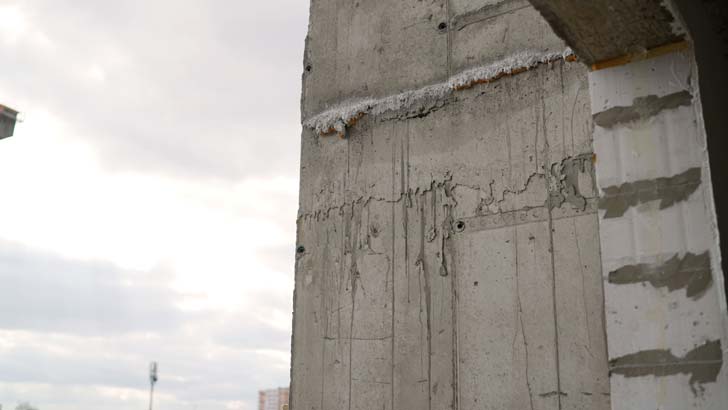
From concrete cancer and flammable cladding to dodgy builders going bust, Australia's residential construction sector is beyond notorious.
Are new homes in Australia compliant?
Zeher Khalil, veteran building inspector at Site Inspections in Melbourne, has seen it all.
"People say, 'Can you show us a video of a house that's actually compliant, so we know what good work looks like?' I tell them, 'Find one and I'll do the inspection for free'," he says.
Dressed in his SWAT-style Swiss-Army-Knife-like vest equipped with every tool of the trade, Khalil, the TikTok Inspector who goes around the country inspecting homes, has amassed an online following.
And his verdict?
"The percentage of new builds in Australia that are guaranteed non-compliant is 100%. I wish it wasn't true, but it is."
It's hardly a glowing endorsement of an industry now expected to pump out 1.2 million, potentially defective, new homes in five years, just as trust in the sector hits rock bottom.
Why do Australians distrust the construction industry?
Only one in three (32%) Australians has a positive perception of the construction industry, according to research by Equifax released in October 2024. Forty percent say their opinion has worsened since the year before and 20% say it will worsen over the next 12 months.
"After housing affordability, the biggest barriers to buying, building or renovating a property in Australia all relate to people's perception of the construction industry," says Brad Walters, head of product and rating services at Equifax.
Of course, this distrust isn't just a perception problem, but the result of years of non-compliance leaving its mark.
"We're talking about everything from non-existent water-stops in shower recesses, to completely defective frames that need to be demoed and started again," says Khalil. "The cause can be anything from builder oversight or laziness to criminal negligence."
The consequences are often more than cosmetic.
"Some non-compliant building elements can mean [a person's] home is literally not fit for occupation - in other words, dangerous," says Khalil.
"Down from there, you've got a lot of non-compliant items that mean the building is subject to flooding, leaks, mould, infestation, further damage... the list goes on, but they're all things that will - quickly or slowly - affect the consumer's enjoyment of their home."
The cost of non-compliance is eye-watering. In NSW alone, defects add up to $700 million a year. A multi-university study of 346 Australian construction projects found that over a period of six years, 19,600 rework events were needed to fix defects, costing, on average, 39% of the original contract value.
Why are so many Australian builders going bust?
Meanwhile, the industry itself continues to struggle despite costs bottoming out.
Cotality (formerly CoreLogic) data shows that home construction costs grew just 0.4% nationally over the March quarter, the slowest rise since 2010.
The slowdown follows two consecutive quarters of 1.0% increases, bringing the annual rise in construction costs to 2.9% over the 12 months to March 2025.
The annual change in home building costs has been tracking at or below the pre-Covid decade average of 4% since the September quarter of 2023.
But while growth has eased, Cotality's Tim Lawless says the cost to build a dwelling is still rising from an already high base.
"The 31.3% jump in construction costs since the onset of Covid-19 five years ago has created ongoing liquidity and feasibility challenges for builders," says Lawless. "Similarly, competition with the booming infrastructure sector for skilled trades is likely to persist for several years at least."
Furthermore, thousands of builders each year continue to go bust.
In FY2022-23, the collapse of big names put the issue on the front pages. Since then, another 6251 construction companies have folded, according to Australian Securities & Investments Commission data.
In a statement, Master Builders Australia said that the delivery of new homes has been obstructed by ongoing and overlapping challenges. Tradie shortages, planning delays, costly regulation, unfeasible lending practices and unfair risk allocation all compound to make projects unsustainable.
Khalil says it's no excuse for shoddy work.
"Compliance is meant to provide a minimum standard that builders need to meet," he says.
"We have the right to expect our homes to be safe and healthy to live in, and to last a good amount of time. Non-compliance generally refers to elements that threaten those aspirations."
Who's fixing the problems in the construction industry?
Government and industry haven't exactly stood by watching the construction industry's problems slowly collide with the housing crisis.
But reform takes time.
After a series of major fires, the Building Confidence Report was commissioned in 2017 to set out best practice for regulating the sector. Also called the Shergold-Weir report, it was published in 2018, laying bare widespread regulatory failure. It made 24 recommendations.
The Australian Building Codes Board then developed a national implementation plan, which was finalised in 2021. But because building regulation is a State and Territory responsibility, progress has varied wildly.
Victoria made the latest move, passing the Building Legislation Amendment (Buyer Protections) Bill 2025 into law in June.
Its headline act is a new one-stop shop watchdog, the Building and Plumbing Commission (BPC), merging registration, insurance and dispute resolution under one roof.
Khalil says that the bill hopes to address the State's "chronically underperforming and often totally impotent building regulator", which had been the Victorian Building Authority.
"It seems traditional for any government entity to justify their underperformance by saying they don't have enough powers, and thus this Bill gives them some more levers to pull on builders and developers in certain circumstances," he says.
"Some of the levers are undeniably useful for the regulator."
What changes are coming to the building industry in 2026?
Key changes kick in from July 2026:
- Builders must fix defects for up to 10 years, even if the home's been lived in.
- No occupancy permit until defects are fixed.
- Homeowners can claim insurance as soon as a defect is found, not just when the builder dies, disappears or goes broke.
That last rule is a big one. Right now, Khalil says, the system is designed to push homeowners into costly private litigation.
"You can only claim government-funded insurance if your builder dies, disappears or goes bankrupt," he says. "That actually means: if the builder's still alive, you can find him and he still has money, then it's up to you to sue him in civil litigation, at your own cost."
"Sometimes the builder goes bankrupt, but again, it's more likely that he's just buggered off and is still building 12 other projects and does not give two hoots about you and your house."
"In that case, insanely enough, the government will not help you. You have to sue the builder. And that's going to cost you hundreds of thousands of dollars, which you probably don't have - meaning the builder is off the hook."
Khalil says the amendment takes some of the responsibility back: "If the builder has been proven to have done non-compliant work, the regulator/insurer (now one body) will pay the homeowner to get the work fixed, and then the regulator will go after the builder instead of making the homeowner do it."
Developers will also have to post a bond of up to 2% of total construction costs for apartments, held for two years to cover defects.
What is the building industry saying?
Unsurprisingly, the industry hates it.
Master Builders Victoria (MBV) and the Housing Industry Association (HIA) slammed the law as unfair and unworkable, claiming it heaps too much risk on builders already facing high costs and skills shortages.
HIA executive director Keith Ryan called it "legislative madness and totally unfair".
"Where is the logic when under these new rules, a builder could potentially be at risk of being subjected to a rectification order a decade or more after they've finished the job?" he says.
But Khalil says we need to move the needle on consumer protections.
"Surely the bottom line of all of this is that what's been going on all this time is unacceptable," he says.
"There's an epidemic of non-compliant, defective, poorly built houses and apartments that thousands of homeowners are being lumped with every year, and a jellyfish regulator who isn't doing enough to protect them."
Many argue, however, that the problem isn't the laws, but the lack of enforcement.
"We're concerned that this legislation is being rushed through, when there is already a raft of existing consumer protections, albeit they are not always appropriately enforced and in a timely manner," says MBV chief executive Michaela Lihou.
On that point, Khalil agrees.
"The fact is that the authority has not been applying existing laws satisfactorily in many cases. We'll see if things change."
Is the building industry being overhauled in other states?
Of course, these aren't exclusively Victorian issues.
NSW is about to overhaul its building laws through the NSW Building Bill 2024, which aims to streamline nine existing Acts into one and provide clearer rules for builders and developers. It's expected to become law later this year.
However, the NSW government has also delayed some planned building-regulation changes, including raising the strata building bond from 2% to 3%, pushing them to next year.
In South Australia, the government has just completed community consultations on new rules for developers, calling it the biggest review in more than 20 years.
On July 2, the Western Australian government announced it will review its home-building contract laws to make sure residents are properly protected when building or renovating.
Khalil, who mainly works in Victoria, says broader reform is long overdue.
"From what I've seen and heard in other States, it's just as bad, if not worse. The specifics change a little depending on what scope the local authority has, but the big picture is that the building industry in every State is poorly regulated."
What do homebuyers need to know?
For buyers, Khalil says ineffective government regulation means that the backstop they think they have does not always exist.
"Your average buyer or homeowner assumes there's a government safety net underpinning everything, so that if a builder does something unconscionable, dodgy, fraudulent, negligent or dishonest, the regulator will have the homeowner's back," he says. "This is just not the case."
"The regulator's behaviour, in these cases, is often to triage the homeowner's complaints through a neverending labyrinth of bureaucracy that goes nowhere, or even worse, to completely ignore them. And in cases where they do investigate an issue, they tend to either wrap it up quickly and say 'nothing to see here', or drag it out for so long, the suffering of the homeowner is magnified."
Khalil says buyers should assume that no one is coming to save them.
"They should do their due diligence at every single step of a process (buying, building, renovating), get the relevant inspections, legal advice and so on along the way, and cover their arse in case it all goes pear-shaped."
"My last tips: don't pay the builder too much too early and learn the basics of negotiation."
Get stories like this in our newsletters.


 Reply
Reply