The TikTok Inspector exposing Australia's building flaws




TikTok Inspector Zeher Khalil is exposing hidden building defects that cost Australian home buyers thousands, and revealing why paperwork alone is not protection.
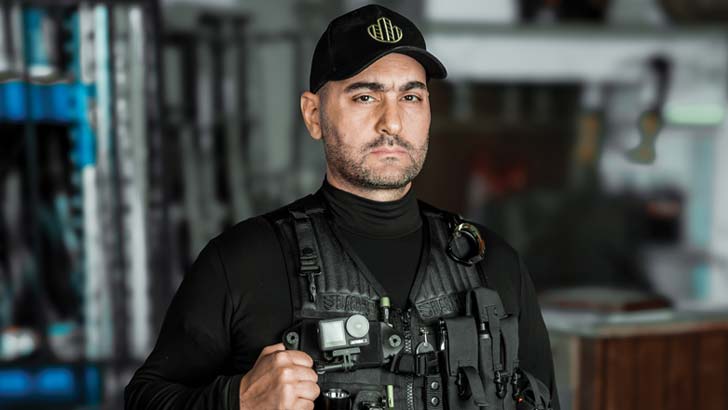
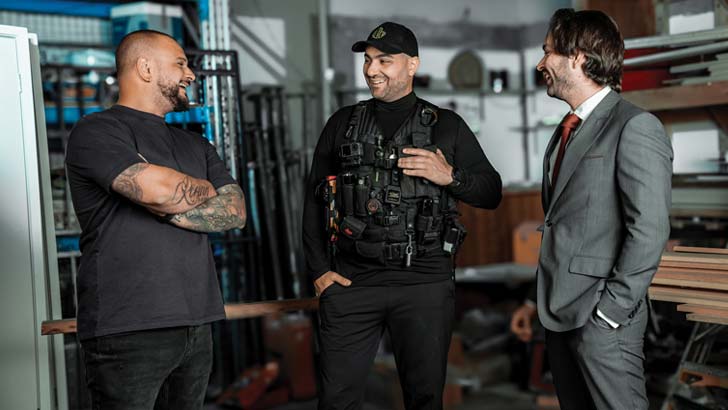
Amid Australia's home building boom, Zeher Khalil has become its most recognisable critic. Founder of Site Inspections and better known as the TikTok Inspector, he roams construction sites in a SWAT-like vest bristling with tools, drones buzzing overhead, calling out defects to an audience of millions. He has catchphrases, merch and a social media following that would make lifestyle influencers jealous. But behind the viral moments is a meticulous operator, calling out bad actors who exploit consumers and chip away at trust in Australia's most cherished asset, the family home.
Australia's home construction industry is, to borrow Zeher Khalil's favourite word, a shemozzle. You wouldn't know it from the paperwork. Compliant. Within tolerance. Approved for handover. Those were the words on the independent inspection report for one of Khalil's own builds, a verdict that should have reassured him. Instead, it left him unsettled.
He had expected scrutiny and to be made to defend his actions, but the bloke was just ticking boxes. "I found myself questioning the findings," he says. "It said the work was compliant, but I thought it hadn't gone hard enough."
For Khalil - a licensed builder with an engineering background - the issue was the lack of accountability. If compliance could be signed off without interrogation, what exactly was being verified? If the inspector was not looking into the detail, who was?
"That's when I realised the inconsistencies and knowledge gaps weren't just happening on building sites," he says. "They were happening during inspections too."
@siteinspections This $900,000 home dropped to just $175K after major defects were uncovered. The certifier approved it without key compliance certificates. The builder lawyered up and sent his own inspector who claimed everything could be fixed for ~$7,000. The insurance company quoted over $80,000 just to cover part of the repairs. Then the council gave the family 30 days to fix it or vacate. We weren't buying it, so we paid the builder a visit and uncovered one of the most shocking property investigations we've ever done. Watch the full story and learn how to protect yourself. #thetiktokinspector #building ♬ original sound - The TikTok Inspector - Site Inspections
Why Australia's building inspections fail buyers
Khalil began to assess every door, nail and waterproofing membrane, and traced each defect he found back to a specific clause in the relevant code or Australian standard.
"I treated it like detective work," he says. "If something was wrong, I wanted the exact why and the exact rule."
Soon after, he qualified as a building inspector - the expert prospective homeowners rely on to identify any faults before they put in an offer to buy. However, it wasn't until he turned the camera on the inspection process, and on himself, that everything changed.
Inside a building inspection with the TikTok Inspector
The drone rises slowly above a half-finished home in Preston, Melbourne's north. From the street, it looks complete. Timber frames are up and the roofline straight. Tiles neatly laid. But from above, something's not quite right.
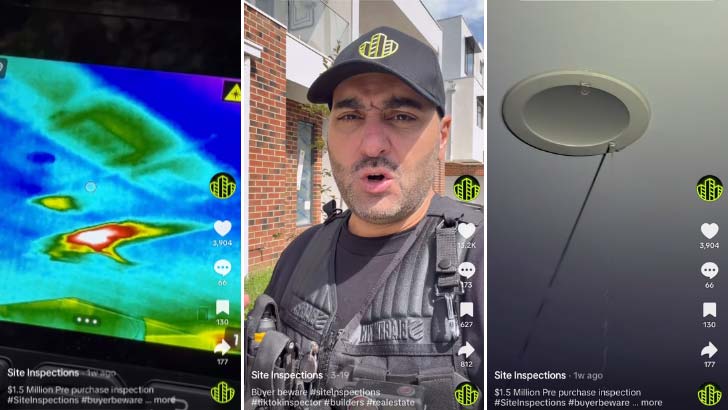
The TikTok Inspector zooms in. Wedged into the roof structure is a length of timber that doesn't belong - greyed, cracked and visibly aged. The wood appears weathered, inconsistent with the new structural framing surrounding it. Yet the stage had already been signed off by a registered building surveyor.
"You've got to be kidding me," the TikTok Inspector says. "Good from far but far from good."
The footage pans across the site. Nearby, a wooden fence is missing boards.
For the homeowner, who had engaged Khalil for an independent inspection, the moment crystallised a fear that many buyers carry: that the biggest problems in a home are often the ones you can't see.
About 70% of existing homes have building quality problems, according to the Australian Housing and Urban Institute.
In NSW alone, the cost of non-compliant home building is estimated at $700 million per year. Another study of 346 Australian construction projects found that over six years, builders had to redo work 19,605 times to fix defects, costing about 39% of the original contract value.
Why trust is risky when buying a home
For most Australians, a home is the largest financial decision they will ever make, and one largely built on trust. Trust that their home is built to standard and not by rotting wood taken from an old fence out back. Trust that the sign-offs carry meaning.
Khalil had no intention of becoming the TikTok Inspector, only to restore this trust. "None of this was planned," he says. "I had zero intention to build a following or become a public figure."
Social media entered the picture almost by accident when a family member suggested he post videos during the Covid slowdown. Khalil was sceptical. "I thought TikTok was just dancing videos and stuff," he says. "But let's see what happens."
His early posts - voiceovers explaining compliance issues - went largely unnoticed. The information was there but the messenger was not.
"So, one day I thought, let's get uncomfortable," he says. "I turned the camera on myself and explained what I was seeing in my own words."
He uploaded the video and went to bed. "Overnight, the video had tens of thousands of views," he says. "I couldn't believe it."
"The attention was overwhelming. It felt out of control, and honestly, it scared me to the point where I deleted the video," he says.
How TikTok turned inspections into public accountability
The reaction forced him to reflect on something much older than social media.
"I grew up in a family who worked with their hands and took pride in doing things properly," he says.
"There was an unspoken rule in our house: if you're going to do something, do it right, even if it takes more time or effort."
That instinct had shaped his work as a builder. Now, it was shaping something larger. The video took on a life of its own. "I thought the attention was a one-off. But it turned out it wasn't."
Pushback from builders and growing support from homeowners
He kept filming. Each inspection became a form of public documentation, identifying defects, explaining why they mattered, and showing how they could be fixed.
The reaction was immediate, and divided. "There was a lot of criticism - online abuse, trolling, people trying to intimidate me," he says. "I'd never experienced anything like it."
Some of the pushback moved offline.
"There have been many attempts by builders to limit our access to the site," he says. "Some have tried to lock us out. Others have tried to make homeowners sign contracts that exclude me specifically."
@siteinspections A builder tried to stop our inspections and have our video removed. After documenting what happened on a Melbourne job site, an Intervention Order (IVO) was filed against us. The order restricted us from returning to the property and forced the video offline while the matter went before the court. We contested the application. The court has now dismissed the case, confirming that we are free to continue conducting inspections and publishing our reporting. In this video we break down: • What happened when we arrived at the site • Why access to the property was denied • The claims made in the court application • The legal arguments presented in court • And the final outcome of the hearing Our work exists to inform homeowners and raise standards in the building industry. When something goes wrong on a construction site, transparency and accountability matter. Now that the matter has concluded, we can finally share the full story. Watch the inspection that started it all. @The TikTok Inspector @Bastion Legal #siteinspections #tiktokinspector #builders #building ♬ original sound - Site Inspections
Access, however, ultimately sits with the homeowner.
"So long as the homeowner has given the builder a heads-up, the builder isn't legally allowed to deny that access. So, we always get to inspect eventually."
While there was resistance, there was also support. "Homeowners, trades, even people inside the industry were saying, 'Keep going, we need this'."
As the audience and Site Inspections grew, Khalil realised the videos were doing more than attracting attention, they were restoring clarity in an opaque market.
"I treated my camera like a tool to make invisible problems visible and help people understand what they're actually buying," he says. "If I was going to keep filming, it would be to share knowledge. And if attention came from it, that's fine, but it's not the goal."
The tools behind the TikTok Inspector persona
Despite the online persona, Khalil insists the inspections remain the bedrock of the business. His videos come later, often late at night.
"At the end of a long day of inspections, I'd go home, write reports and study. Then, at midnight or later, I'd think, okay, I need to explain this to people," he says.
Much of the early production was improvised. Editing, graphics and voice-overs were self-taught. Some recordings were made in his car, parked in the garage after his four children had gone to bed.
But as time went on and the views and scrutiny snowballed, the operation became more professional.
"Not to chase views, but to make sure what we were putting out was accurate, measured and in the public's interest," he says.
"The inspections drive the content, not the other way around. Social media is a tool. The technical rigour, the standards and the evidence come first."
Khalil does not see himself as an influencer but a part of a correction.
"The goal has always been to build a better system," he says.
Site Inspections is developing educational tools to help homeowners and industry professionals better understand compliance and risk. He expects it to be helping consumers soon.
"If there's a next chapter, I hope it's about moving from highlighting problems to helping the industry solve them at scale," he says. "That's where the real impact is."
What home buyers should do before signing a contract
After inspecting thousands of homes, Khalil's advice to buyers is to not rely on appearances. "Don't rely on how the home looks. Verify what it actually is," he says.
Before signing a contract, ensure the approved plans, the contract and the finished build align. Many of the most serious defects, he says, originate in the gaps between those stages.
"If something doesn't line up or if the answers you get are vague, hit pause," he says. "Asking hard questions early is a lot cheaper than discovering issues after settlement day."
He also warns buyers to pay particular attention to inspection clauses. "Most buyers don't realise that the words 'subject to building inspection' are meaningless if it's not properly defined," he says. "If you don't define what standards apply or what qualifies as a major defect, you're often locked into a dispute after the fact. Get clarity before you sign anything."
Is accountability improving in Australia's building industry?
Khalil is measured about the future. "I do think accountability is improving, but very unevenly."
Builders, he says, anticipating independent scrutiny often adjust behaviour pre-emptively.
"That tells you that accountability responds quickly to visibility."
Regulators have strengthened enforcement in parts of the country. But structural reliance on trust remains.
"Mistakes are always going to happen," he says. "But there's no consistent mechanism catching patterns early."
Until education, verification and accountability align, not only in documentation but on site, he believes defects will continue to surface post handover.
"There's clearer recognition these days that poor workmanship has long-term consequences for consumers and the industry as a whole," he says.
Which brings the story back to paperwork. Compliant. Within tolerance. Approved. These words are supposed to guarantee something. They should be more than a box to tick, they should mean a safe home that shelters the next generation of Australians.
"Anything less is a shemozzle."
Get stories like this in our newsletters.