Why your tax refund disappears so fast




For many Australians, tax refund season feels a bit like winning a prize.
At H&R Block Australia, we often see taxpayers eagerly awaiting their refund after lodging their return. There's often a sense of anticipation as we wait to see whether the Australian Taxation Office (ATO) is sending money back. When the refund finally lands in our bank account, it can feel like a bonus, a reward for a year's hard work, or even "free money".
The problem is that it isn't.
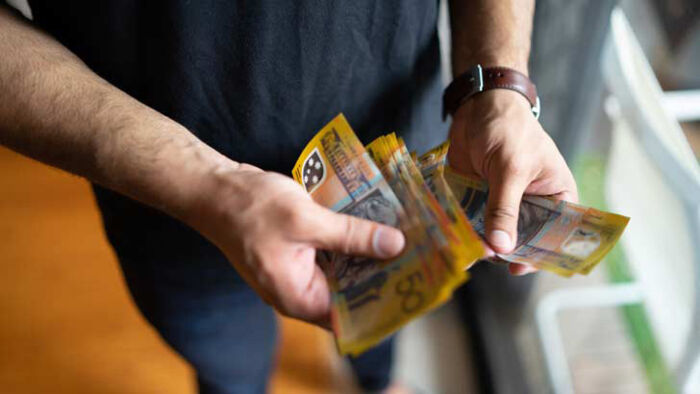
A tax refund is simply your own money being returned after you've paid more tax during the year than was ultimately required. Yet behavioural economists have long observed that people treat tax refunds very differently from regular income, and that often leads to poor financial decisions.
Understanding the psychology behind tax refunds can help Australians make smarter choices and turn what feels like a windfall into a genuine opportunity to improve their financial position.
Why refunds feel like free money
One of the most powerful concepts in behavioural finance is something known as "mental accounting".
Rather than viewing all money as equal, people tend to place money into different psychological buckets.
Your salary goes into one bucket. Savings sit in another. A tax refund often occupies a completely separate category.
Because the refund arrives as a lump sum and wasn't part of your regular weekly budget, your brain may classify it as unexpected money. As a result, you're often more willing to spend it on discretionary purchases than you would be if the same amount had arrived through your normal pay cycle.
A $3,000 tax refund might quickly become a holiday, a new television, a wardrobe upgrade or a series of impulse purchases that seemed justified at the time.
If that same $3,000 had been earned through several months of work, many people would think much more carefully before spending it.
The reward effect
Tax refunds also tap into another psychological bias: the reward effect.
Lodging a tax return can feel like completing a long and sometimes frustrating administrative task. Once it's done and the refund arrives, there's a temptation to celebrate.
Many people unconsciously view the refund as a reward for enduring the tax system rather than simply a correction of their tax position.
This helps explain why refund season often coincides with increased discretionary spending. The money feels emotionally different from ordinary income.
Unfortunately, emotional spending decisions rarely align with long-term financial goals.
Bigger refunds aren't always better
Another common misconception is that receiving a large tax refund is inherently a good thing.
Many people proudly talk about receiving a substantial refund each year. Yet from a purely financial perspective, a large refund often means you've effectively provided the government with an interest-free loan throughout the year.
While nobody wants an unexpected tax bill, consistently receiving very large refunds may indicate that too much tax is being withheld from your pay or that financial arrangements could be structured more efficiently.
The ideal outcome for many taxpayers is to have tax withheld as accurately as possible throughout the year, allowing them to access their money sooner rather than waiting for refund season.
The opportunity cost of spending
Before rushing out to spend a tax refund, it's worth considering the opportunity cost.
Every dollar spent today is a dollar that can't be used elsewhere.
For Australians facing rising living costs, higher mortgage repayments and persistent inflation pressures, a tax refund can provide a valuable opportunity to strengthen their financial position.
For example, a $4000 refund could be used to:
- Reduce high-interest credit card debt
- Build an emergency fund
- Make additional mortgage repayments
- Increase superannuation contributions
- Invest for long-term wealth creation
While these options may not provide the same immediate excitement as a holiday or new gadget, they often deliver far greater financial benefits over time.
A practical framework for using your refund
Rather than viewing a refund as spending money, consider adopting a simple allocation strategy.
One approach is the 50-30-20 method:
- 50% towards improving your financial position
- 30% towards medium-term goals or savings
- 20% for enjoyment
For example, someone receiving a $5000 refund could allocate:
- $2500 towards debt reduction or mortgage repayments
- $1500 into savings or investments
- $1000 for discretionary spending
This approach allows you to enjoy part of the refund while still making meaningful progress towards your financial goals.
Importantly, it helps avoid the common scenario where the entire refund disappears within a few weeks and leaves little lasting benefit.
Automate before temptation strikes
One of the simplest ways to make better decisions is to remove emotion from the process.
Research consistently shows that people make different choices when money is automatically directed towards savings or debt reduction before they have the chance to spend it.
If you're expecting a refund this year, consider setting up transfers in advance.
Arrange for part of the refund to move automatically into a savings account, investment account or mortgage offset account as soon as it arrives.
By making the decision before the money reaches your everyday spending account, you're less likely to fall victim to impulse purchases.
Conclusion
Tax refunds occupy a unique place in our financial psychology. Even though the money belongs to us all along, many people treat it as a windfall and spend it far more freely than they would their regular income.
Understanding concepts such as mental accounting and the reward effect can help explain why this happens.
At H&R Block Australia, we encourage taxpayers to pause before making major spending decisions when a refund arrives. Instead of asking, "What can I buy?", consider asking, "What financial problem can I solve?"
A tax refund may not be free money, but used wisely, it can be one of the most valuable opportunities each year to improve your long-term financial wellbeing.
Get stories like this in our newsletters.