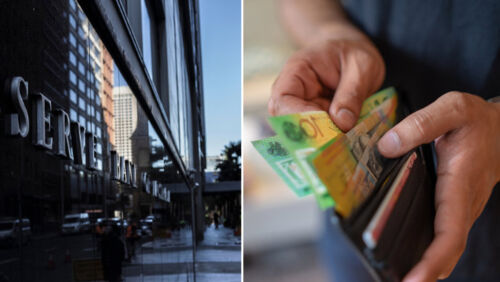
Aussies set to save $1.2 billion a year on card costs




Pesky card surcharges look set to be a thing of the past.
The Reserve Bank of Australia (RBA) is pushing to scrap debit and credit card surcharges - a fee that businesses can apply each time you pay with EFTPOS, Mastercard and Visa cards.
It's a move that will see consumers save $1.2 billion annually, equal to about $60 per card-using adult each year.

What are surcharges?
Card surcharges are a small fee, typically 0.5-1.5% of the value of a purchase, that can apply whenever you pay using a credit or debit card.
They exist because businesses face costs for processing card payments - an expense passed onto consumers.
Back in 2003, the RBA allowed businesses to levy card surcharges in the hope it would encourage consumers to choose the cheapest way of paying for purchases.
The idea was that shoppers who wanted to avoid a surcharge could opt to pay with cash. This was seen as particularly important at a time of rapid growth in the high-cost credit card market.
Why is the RBA thinking about dumping card surcharges?
The RBA's call to scrap surcharges is no sudden backflip.
The system has been in place for over two decades with various tweaks along the way.
But the RBA acknowledges that what worked in 2003 isn't working today.
That's mainly because the way we pay for purchases has changed radically, and card surcharges are no longer an incentive to choose a cheaper payment option.
As a guide, one in three Australians don't even carry cash in their wallets anymore, making card surcharges harder to avoid.
Businesses are probably grateful when we don't pay by notes and coins. One industry report found it costs twice as much for businesses to accept and handle cash compared to managing card payments.
Long story short, the RBA is proposing that the EFTPOS, Visa and Mastercard networks will be able to ban surcharges by mid-2026.
Who will wear the cost?
Even if surcharges are banned, businesses will still face interchange fees.
These are fees that banks and payment service providers charge merchants to process customers' card payments.
The risk is that these fees will be passed over to shoppers through higher prices.
The good news is that the RBA is looking at lowering the maximum that can be charged in interchange fees, which is expected to save businesses around $1.2 billion each year.
When will card surcharges be scrapped?
The RBA's proposed changes are set to take effect from July 2026. However, the central bank is accepting feedback on the proposals until August 26, and will publish a timeline of changes by the end of 2025.
Get stories like this in our newsletters.