Australia's under-16 social media ban: what you need to know




Australia will introduce the world's first nationwide social-media age restriction later this year, with under-16s banned from creating or keeping accounts on major platforms from December 10, 2025.
The rules don't penalise young people or their parents. Instead, platforms must block under-16s or face fines of up to $50 million.
The move follows a government review finding seven in 10 Australian children have encountered harm online, while the eSafety Commissioner reports 95% of caregivers say online safety is a significant parenting challenge.
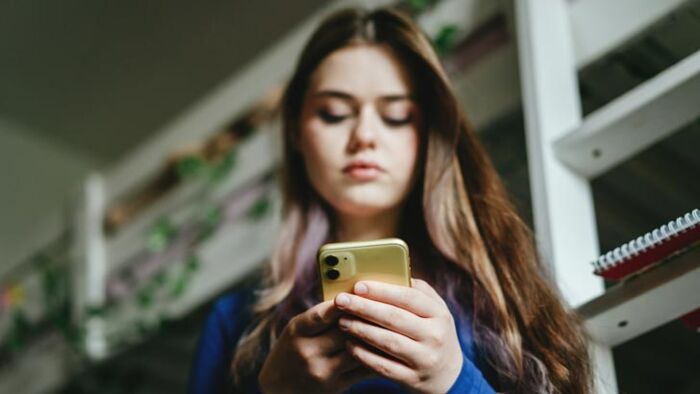
But critics argue the ban will be ineffective due to loopholes and could cause more harm than good even if it works.
What's changing?
Parliament passed the Online Safety Amendment (Social Media Minimum Age) Bill 2024 in late November. It requires platforms to take steps to make sure account holders are at least 16.
Prime Minister Anthony Albanese says the ban won't fix everything immediately.
"We have laws such as people can't buy alcohol if they're under 18 and, from time to time, that can be broken. But those laws set what the parameters are for our society."
The legislation has bipartisan support, making major changes unlikely during an election cycle.
Opposition communications spokesperson David Coleman called the law "the right thing to do", and said the aim is to ensure "strong legislation" without loopholes.
@albomp With two weeks until our social media ban for under-16s, here's what you need to know. #socialmedia #socialmediaban ♬ original sound - AlboMP
Which platforms are affected?
The platforms currently defined as age-restricted include: Facebook, Instagram, TikTok, Snapchat, X (Twitter), YouTube, Reddit, Twitch, Kick and Threads.
Young people are already shifting to alternatives such as Locket Widget, RedNote, Coverstar, Discord, Lemon8 and Yope, though these may also fall under the rules.
The eSafety Commissioner has advised the latter two operators to self-assess.
Communications Minister Anika Wells said all platforms are "on notice", acknowledging the "whack-a-mole nature" of social media.
"It's a dynamic, evolving industry... We also must be dynamic and agile as we respond," she said. Wells pointed to LinkedIn, currently exempt, but warned that status could change.
"If everybody ends up on LinkedIn, and it becomes a place where there is online bullying or algorithms targeting 13- to 16-year-olds, then we will go after LinkedIn."
How many teens use social media?
Almost all of them.
Roy Morgan data shows 99.6% of Australians aged 14-15 use at least one platform in a four-week period.
An ABC survey of more than 17,000 young people produced similar findings, with YouTube the clear favourite, followed by the controversial gaming platform Roblox, which is not currently banned.
Most young respondents told the ABC they plan to keep using social media regardless, and many believe the ban won't work.
What will platforms have to do?
Platforms must take "reasonable steps" to stop under-16s from holding accounts. They do not need to identify every underage user, and it is not an offence for young people to bypass the ban.
"Reasonable steps" means platforms must:
- check a user's age, or
- be confident an age check isn't required.
Crucially, companies do not need to verify a user's exact date of birth. They only need to make a well-informed assessment.
The rules apply only to logged-in use. Under-16s can still access limited content in a logged-out state - it just means the experience won't be personalised to their account.
How will platforms check age?
Each company will use a mix of approved methods:
Age verification (ID checks)
Users may upload government-issued ID such as a driver's licence. ID cannot be the only method offered.
Facial-age estimation
AI tools estimate age from facial features. Accuracy varies, particularly for users close to 16.
Age inference
Platforms can infer age from account history, behaviour and networks. Privacy rules prevent excessive data-matching, and information must be deleted after use
Each platform is using a different mix of methods and service providers.
Meta, for example, is using a third-party partner called Yoti to verify ages either through providing government-issued IDs or a video selfie.
Snapchat will use Connect ID to connect user's banking apps while TikTok says it will use a variety of measures.
@abcnewsaus Children as young as 15 were repeatedly misidentified as being in their 20s and 30s during government tests of age-checking tools, sowing new doubts about whether the teen social media ban is viable. The ban for under-16s is due to take effect in December. By ABC Specialist Reporting Team #ABCNews #SocialMedia #SocialMediaBan ♬ original sound - ABC News Australia
Could scammers exploit the changes?
Yes. Already one in four teens have fallen victim to scams on social media, and age verification creates new opportunities for scammers to impersonate platforms, government agencies or verification services.
According to the eSafety Commissioner, common scam types include:
Fake age-verification requests
Scammers may ask users to click links or upload ID documents, video selfies or login details. Some may falsely claim young people must "pay a fine" for being underage on a platform.
Fake ID or bypass services
Scammers may offer counterfeit IDs or "verified accounts" to help users dodge the ban, then steal personal information or money.
Impersonation messages to parents
Scammers may pose as a teen using a new number and request ID documents to regain access to their account.
There are also concerns about VPN scams, where teens attempting to bypass restrictions accidentally download malware or data-harvesting tools.
Will the ban work?
Experts are divided.
Self-reported age has been unreliable: 84% of Australian children aged 8-12 already use social media despite the current minimum age of 13.
International experience is mixed. Countries including China, South Korea and France have introduced restrictions, but teens often bypass limits using VPNs or alternative platforms.
Researchers also warn the ban could restrict positive online experiences, including social support and peer connection for marginalised groups.
In the ABC survey, one respondent said: "Many autistic teens, such as me, use social media to make friends. This ban will just prevent them from socialising, especially if they do not have any other means of contact."
Some experts say under-16s may shift into less regulated online spaces, increasing risk, or hesitate to report harmful incidents if they fear losing access entirely.
For example, many teens are already migrating to platforms such as RedNote, which has been linked to online shopping scams.
UNICEF Australia supports the focus on child safety but argues the ban alone will not address core issues.
"Social media has a lot of good things, like education and staying in touch with friends," it said. "We think it's more important to make platforms safer and to listen to young people to make sure any changes actually help."
Where to get help
The eSafety Commissioner provides FAQs and guidance on how the new rules work, along with advice for parents and young people.
Support is also available from:
Kids Helpline: 1800 55 1800
Lifeline: 13 11 14
Beyond Blue: 1300 22 4636
Headspace: headspace.org.au
Get stories like this in our newsletters.