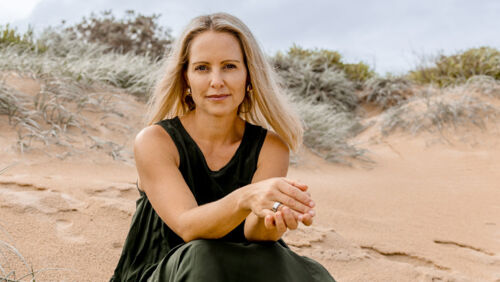
Charli Walters sold a $70 million business, then felt nothing




She scaled a family business fast and sold it. But instead of feeling on top of the world, Charli Walters says success left her questioning money, purpose and who she really was.
From a young age, Walters was more into Batman than Barbie. She wanted to be one of the boys, or at least have the advantages boys seemed to enjoy.
"Was success in my mind defined by being a boy?" she says.
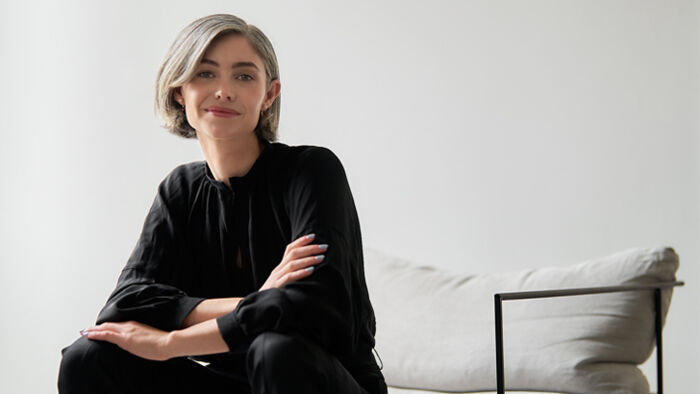
"I was just a young kid aware of the obvious: boys ruled the world. I was desperate to be someone else so maybe I too could rule the world."
She remembers her first week of primary school. Desperate to join the boys' group, she agreed to their terms.
"You can join us," they said. "But first you have to lick your shoe, put it in the dirt and lick it again." She did it.
"And they still didn't accept me," she says.
Years later, she told the story to a mentor who said, "Never lose that chip on your shoulder."
Walters carried that chip into adulthood.
The moment that shaped her ambition
She became fascinated with branding and the stories products tell.

Eventually, that same scrutiny turned back on herself.
She had been given the name Christine at birth, but says, "My name didn't match up to what I wanted to achieve. I wanted an androgynous name. People kept saying, 'You're a Charli'. It stuck, so I officially changed it years later."
Her father's reaction was brisk. "I called you Christine because I thought you would get called Chris anyway," he quipped.
By then, Walters had finished a finance degree and was weighing up what to do next.
Her father was running the Australian arm of a New Zealand food business and, she says, was an "old-school salesman", importing products and selling them to local supermarkets.
"He didn't really care about brand identity one way or another," says Walters. "He's very much a trader."

She realised she wasn't building her own story
When the company needed "an extra pair of hands" in marketing, she was offered the job.
She was quickly drawn to brand management, from pricing and sourcing to positioning and the customer journey.
She noticed a range of products the company wasn't promoting, so asked if she could turn them into household names.
"Sure, if you think it's necessary," she was told.
Walters went ahead, building brands including Toscano, Bare Bakers and Hart & Soul, which would later become central to KJ&Co.'s bakery, dessert and ready-meal business.
"I gave them identities and all the things brands need to be resilient over time," she says.
It was an early sign of her commercial instinct: selling stories, not just products. Still, not forging her own way bothered her.
"I thought, what am I doing working for my father? This is not my story," she says. "It just felt like the easy path."
A brief break for independence
She moved into strategy at a branding agency, advising companies such as Kellogg's on repositioning and growth.
It was a bid for independence that lasted six months.
Then the New Zealand business called, they wanted to sell off the brands she had built up. She was asked if she could come back and "tie them up in a pretty bow".
"I was 25 and had never sold brands," she says. "But I got it done."
And the person who bought them was her father. KJ&Co. was born.
The pressure of being the boss's daughter
It was 2015 and Walters was back working with her dad, but this time in a family-owned business. Within two years, she was running it.
"Earning the trust of a team while being the CEO's daughter is tough," she says.
"And I get it. I didn't have to climb a ladder, fight for an interview or hustle through office politics. There are many people who should have earned positions before me."
Her answer was to pile herself into her work.
"I was first in, working very long days for five years. I sacrificed a lot of my 20s," she says.
"Earning the team's respect was just so important."
Building a business while becoming a mother
She still speaks warmly about what her father gave her, even if he wasn't exactly a textbook manager.
"He gave me the opportunity to fail, but also to succeed," she says. "He didn't micromanage me or treat me any differently."
"Still, I like the story of the challenger brand or the underdog, but I don't think that's my story, given the leg-up I had."
Privilege or not, the business thrived under Walters.
From 2015 to 2020, KJ&Co. grew from $20 million to $70 million, about 30% compound growth over five years.
This was also when Walters became a mother. Her first son, Willem, was born in 2017.
"Willem was a surprise," she says. "There was no plan to interrupt my career, and we were growing. Momentum was on."
The village behind working mothers
She went back to work after a week. A nursery was set up in the office. Her mother came in every day for six months so she could breastfeed between meetings.
"Willem literally grew up in the office. People would bounce him on their desks and walk him in the pram on their lunch break."
Walters sees it as proof of the village around working mothers.
"Don't be ridiculous enough to think one person can fill every role for that kid," she says. "The village is everything."
Selling up and the emotional aftermath
In December 2020, SunRice made an offer to the Molloys for KJ&Co. The $50 million business was growing and profitable. On paper, the decision made sense.
"My parents said to me, 'Charli, you run the business. It's up to you.'"
Selfishly, it was also a chance to not be defined by the family business, a chance to get out, she says.
But what made sense commercially felt messier personally.
"I remember sitting in my office on the day it settled. I was by myself because of COVID. I thought it should feel like elevation and joy, and I felt nothing."
When success feels more complicated
Over time, that numbness gave way to guilt.
"The family business gave the family conversation, connection, time together, a purpose that united us," she says.
"My parents ended up divorcing a few years afterward. They're amicable now, but I believe the business was keeping them together."
"Would life have been easier for everyone if we had kept the family business? I'll never know."
After the sale, Walters stayed on to lead the integration into SunRice. The move into listed company life was "a rude shock".
"We were very agile at KJ&Co. Then you come into a publicly listed company where time slows.
"There are many layers, hierarchy, process. It was a very different environment."
Rethinking what leadership looks like
For years, she had imagined the corporate ladder as the obvious next chapter. But she began to question the purpose of climbing it.
"The purpose piece is challenging. You feel like a cog in the wheel at times," she says.
One of her sons is neurodivergent, and Walters says raising him changed the way she thinks about career success.
"He's taught me a lot about perspective. Someone else might perceive the world differently to how I see it," she says.
"That's taught me a lot in leadership, how to connect, how people approach problems, how they think, how they interpret information."
Earlier in her career, Walters thought authority came from what she now calls the more traditionally masculine traits: confidence, force and decisiveness.
Traits that may help you ruthlessly climb the corporate ladder, but to what end?
"That only gets you so far," she says.
"The long-term game of leadership is the softer traits: empathy, perspective, emotional intelligence. They didn't come naturally to me, but my son taught me that."
Why Koh felt like the right next step
That insight helps explain why Koh made sense. In 2022, Walters invested part of her proceeds from the sale of KJ&Co. into the Australian eco-cleaning brand she now runs.
Founded in Bondi in 2016 and sold at local farmers' markets, Koh already had a loyal following, with refillable products and a strong online presence.
Walters saw room to grow.
"My mum had always been a customer. I looked at the business and thought, wow, they've gotten so far with so little, and there's so much left on the table."
So she sent the founders a message on LinkedIn.
Purpose, identity and building a brand
"If I were working for a business that didn't align with my goals or help make the world better, I'd be asking, who am I doing this for and why? What reason am I in the office away from my children? Koh isn't that."
She is under no illusions about the category. Cleaning products are not exactly glamorous.
"We're an e-commerce brand competing with fashion brands that seem more interesting than cleaning products."
Still, she is clear on what gives the brand its pull.
"The environment is why people care about our brand. Making sure they're not leaving the planet worse off than they found it."
She says there was no single fix at Koh, just consistency: building the brand, setting guardrails, and taking certifications seriously in a market crowded with greenwashing.
"It comes back to identity: knowing who you are, what you stand for, what's important and what's not."
Coming back to who you are
It is also why she keeps returning to Oscar Wilde's line: "Be yourself; everyone else is already taken."
For Walters, that has meant changing her name, reckoning with privilege she could not undo and deciding that the only honest response to it was responsibility: to work harder, lead with purpose and try to do something worthwhile with the opportunity she had.
"I wish I could tell that little girl many years ago that you don't have to be anyone else.
"It's okay to be you."
Get stories like this in our newsletters.