Has crypto lost its magic? Investors rethink 'digital gold'




Bitcoin built its reputation on a simple promise: buy and hold, and you will be rewarded. Right now, that belief is being tested.
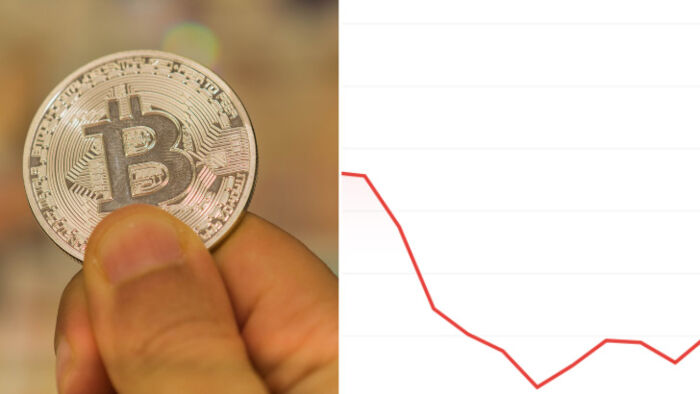
After one of its sharpest falls in recent years, about half of Bitcoin holders are sitting on a loss.
Millions who were told crypto was the future are now watching their investment trade below what they paid. That is easy to accept when prices are rising, much harder when they are not.
If enough investors start questioning the story, confidence can quickly turn to panic. And if that happens, the risk of a broader sell-off rises.
A sell-off without a scandal
Last week, Bitcoin recorded its worst weekly decline since the collapse of FTX in 2022. This time, there was no major fraud, no exchange failure and no obvious trigger. The market simply sold off.
That alone should give investors pause.
For years, crypto advocates pitched Bitcoin as digital gold, a hedge when inflation rises or uncertainty hits. But during the latest bout of geopolitical tension, gold moved higher while Bitcoin fell sharply.
Even believers are pulling back
Billionaire investor Mark Cuban, once one of Bitcoin's strongest backers, says he has sold most of his holdings. His reasoning is simple.
When the pressure came, Bitcoin did not behave the way it was meant to.
That raises a bigger question. If it does not rise with inflation or hold up in times of stress, what role does it actually play?
The new money magnet: AI
There is another force at work. Capital that once flowed into crypto is now shifting to artificial intelligence.
Investors can back listed companies building AI software, data centres and semiconductors.
The momentum and excitement that once powered crypto is now being redirected. Money tends to chase the next big story and right now, that story is AI.
So what now?
Bitcoin has survived sharp downturns before and recovered each time. Long-term believers will say this is just another volatile chapter.
But the debate is changing. Investors are no longer just asking how high Bitcoin can go. They are asking whether the original story still holds.
Best and worst-performing sectors this week
Consumer staples led the market, up more than 6%. Consumer discretionary followed, up more than 5%, with healthcare up more than 3%.
Technology was the weakest sector, down more than 4%. Materials fell more than 3%, while financials slipped just under 0.5%.
In the ASX 100, Steadfast Group jumped more than 30%, followed by CSL, up more than 9%, and Coles, up more than 8%.
At the other end, Greatland Resources fell more than 12%, Capricorn Metals dropped more than 11% and Newmont declined more than 10%.
What's next for the Australian sharemarket?
The All Ordinaries Index showed resilience this week, despite worsening global conditions linked to the US-Iran conflict.
By Thursday's close, the index was down just over 0.2%. Over the same period, the S&P 500 fell almost 2.5%. That divergence matters.
Investors stepped in again around 8700, a level that also held during the sell-off in late May.
This now looks like the market's line in the sand. As long as the index holds above 8700, the bullish view remains intact.
A clear break below could open the door to 8600 or lower.
Defensive shift underway
Sector moves are also telling a story. Consumer staples, discretionary, healthcare and real estate led gains. These are typically more defensive areas.
At the same time, technology and materials lagged. That is notable given both sectors have rallied strongly in recent weeks.
When money rotates into defensive sectors, it often signals rising caution.
For investors who have benefited from the recent rally, the focus may need to shift. It is not just about buying well. It is about knowing when to sell.
Get stories like this in our newsletters.