How US postal changes will cost you more money




Shoppers and small businesses are being caught out by sudden changes to US import rules, and entrepreneurs like Sydney clothing designer Heidi Cummins are on the frontline.
Cummins and her sister Daisy Bell built their bohemian label Ulu Lounge on Instagram and Facebook, where American shoppers now make up 70% of their customers.
Until last week, they could send their orders for about $30 a parcel through Australia Post.
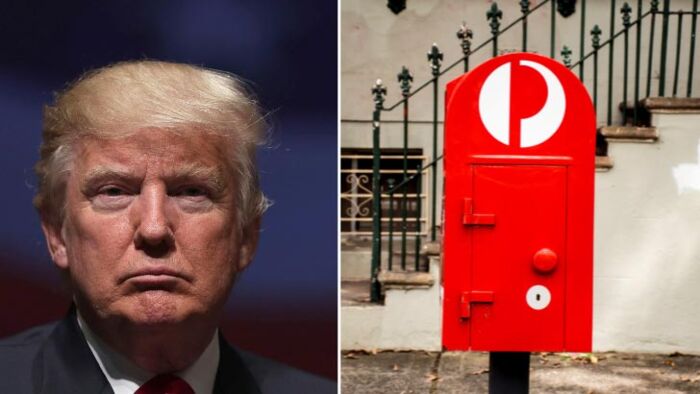
Now, the service has been suspended, leaving orders piling up, customers facing surprise fees, and business owners like Heidi having to change plans.
"It's been a crazy week," Cummins says, "We've really had to pivot."
"We didn't want our customers buying something and out of nowhere there's a tariff on top, so we've been swallowing the cost ourselves."

Why can't Australians send packages to the US?
The change comes down to a little-known US import rule called de minimis, which until now allowed parcels worth under US$800 (about A$1230) to slip through without tariffs.
From August 29, that exemption vanished after it was announced in July.
Low-value goods now face steep duties - in some cases more than US$80 per parcel - and postal carriers must collect the charges before packages land in America.
Postal carriers weren't given much notice, and Australia Post says it simply doesn't have the systems in place yet to handle the new rules.
That's why it has suspended most parcels to the US, a move mirrored by postal services in Norway, Sweden-Denmark, Belgium and Taiwan. Only letters, documents and small gifts under $150 can still go through.
"We're disappointed we've had to take this action," says Gary Starr, Australia Post's executive general manager for parcels.
"However, due to the complex and rapidly evolving situation, a temporary partial suspension has been necessary to allow us to develop and implement a workable solution for our customers."
For small retailers who rely on Australia Post's Business Contract or MyPost Business to reach overseas customers, the fallout has been immediate.
With no way to send their products, Ulu Lounge has had to temporarily switch off US ads and they worry about losing their American buyers.
Why Trump's tariffs are to blame
The tariff sting traces back to US President Donald Trump's July announcement of new trade duties.
While the White House sells tariffs to bring manufacturing back home, in practice it means imported goods cost more.
Ulu Lounge has covered those tariffs on existing orders to keep customers happy, but Cummins admits there have been "sleepless nights" working out how much the business can absorb.
For now, she's using global shipping giant DHL.
Although DHL is typically more expensive than the government-run Australia Post due to its commercial pricing model, it offers built-in systems for managing tariffs, which simplifies international shipping.
"DHL pay the tariffs, and we pay DHL," Cummins explains.
Her longer-term plan is to bulk-ship to a US warehouse, which will then dispatch orders domestically.
That workaround may create some American jobs, which might seem like proof Trump's tariff strategy is working.
"Jobs and factories will come roaring back into our country, and you see it happening already," the US President previously had boasted. "More production at home will mean stronger competition and lower prices for consumers."
But Ulu Lounge's dresses and jumpsuits are not made in America, but ethically produced in small batches in Bali, Portugal and India.
If Heidi moved production to the US (like Trump wants), the cost of labour in the United States is so much higher than India, that it would inflate the price anyway.
This was the reason globalisation flourished to begin with.
"I think his deep motivation is to get more manufacturing happening in the US. But the trouble is, it's so expensive to do that," Cummins says.
Furthermore, Ulu Lounge works with certified ethical garment manufacturers in Bali and Portugal.
"Any new fabrics we use are natural fibres or sustainably sourced eco fabrics," she says.
So even if the cost of labour wasn't comparatively expensive, they would still need to import these materials - incurring tariffs all the same.
"Trump can't stop people from buying from other countries. People need and want to buy from other countries, whether you're a business or customer."
Who really pays?
While the White House pitches tariffs as a path to cheaper, home-grown goods, the reality is consumers will pay more.
Americans will now fork out higher prices for imports, and Australian exporters like Heidi may be forced to raise prices across the board, raising the price for Aussie shoppers.
"We will raise prices, which is a shame but hopefully just for US customers," says Cummins. "I don't think Donald Trump thought this through."
Australia Post says it is working with a US-approved partner, Zonos, to resume services as a top priority.
"Australia Post continues to work with US and Australian authorities and international postal partners to resume postal service to the US as a priority," Starr says.
For Cummins, the priority is keeping her customers in fashionable boho clothing, not caught up in political red tape.
"I just want to keep sending dresses," she says. "At the end of the day, customers don't care about tariff rules - they just want their order to arrive on time and at the price they expected."
Get stories like this in our newsletters.