How Year13 is fixing the school-to-work gap




Will Stubley, age 33, is the co-founder and current co-chief executive of Year13 - a digital education platform aimed at helping young people transition from school to further education and work. Raised on Sydney's Northern Beaches, Stubley continues to reside in Sydney.
When Will Stubley reached his teenage years and started thinking about life beyond school, he wasn't certain what he wanted to do.
Well, he had an inkling.
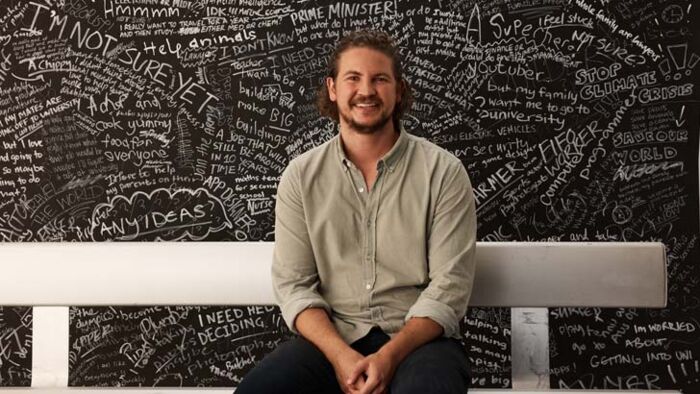
"Growing up, I was always building Meccano sets, Lego sets, model ships and planes and I liked being outdoors. So I probably would have liked doing a carpentry or building apprenticeship.
"In hindsight, my natural instinct was quite accurate. But then there's the proverbial pathway to success, which is different to that."
By Will's own account, he went to a school - Barker College in Sydney's Northern Suburbs - that was geared to guiding students towards university. At least, that was his perception as a student in the mid-2000s.
So when he did better than anticipated in his final year of school, he felt a certain amount of pressure to do what was expected.
"I was a mid-tier student, but I knuckled down in Year 12 and ended up doing really well. Everyone said, 'Don't waste your ATAR. If you want to be a builder, why don't you become a civil engineer instead? It's pretty much the same thing, but you get paid a lot more.' "
Will took the advice and enrolled in engineering at The University of Sydney. In many ways, his transition from high school to university was relatively smooth.
The tragic catalyst behind Year13's mission
For Saxon (Sax) Phipps - Will's future business partner - the road was bumpier. Will and Sax knew each other at Barker, where Sax had been a few years above.
"In his own words, he [Sax] felt super lost and disorientated about leaving school because he wasn't going to uni and all his mates seemed to know what they wanted to do," says Will.
"It wasn't until he travelled and met photographers and web developers who were travelling the world, making money and having these amazing lives that he was like 'Why isn't this talked about in school?' "
Although Will and Sax had been friends at school, the age gap meant they hadn't been super close. That changed after the death of a mutual friend.
"Where we linked up was after one of our mutual friends - who had a particularly hard transition out of school - ended up taking her own life. It wasn't just her. We had a bunch of other friends who were struggling in one way or another."
It was with these experiences front of mind that Will and Sax decided they wanted to do something to showcase the conventional and non-conventional pathways they knew - with the benefits of hindsight and a few years out of school - were out there for school leavers.
The idea that grew from that was digital education platform Year13.
How a blog became a Gen Z career platform
The two registered Year13 as a business in 2011 and launched it in 2012, at which point Will was still at university and Sax was studying at TAFE and travelling.
"Year13 started as a blog talking about what all our friends were doing. Some friends were travelling, some were doing ski and surf seasons and some were studying. We were just talking about it.
"Our original brand positioning was to be the cool older brother or sister who had travelled the world, done a whole bunch of different things, studied everything and made a bunch of screw-ups."
To their surprise, the blog was a hit. It resonated with the emerging Gen Z cohort who were just beginning to make the transition out of school.
Over the next few years, Year13 evolved into a fully fleshed-out website, offering articles, advice and content on study, work, travel and gap years.
Bootstrapping a business with purpose
It was even starting to bring in advertising dollars, which was good news for Will and Sax who had bootstrapped the business from the get-go.
"Sax took out a loan from a family friend and I took out a loan from the bank," says Will.
"Our expenditure back then was very little. In 2014 we would only have needed $7000 a month in revenue to be profitable. So we ran Year13 on the smell of an oily rag, and whenever we had revenue come in we just reinvested it back."
Will recalls it wasn't until 2017 that he and Sax felt they had a real business on their hands - one that needed larger scope.
Revolutionising the school-to-work transition
"Around 2016 we set out our mission: to revolutionise the school-to-work transition. We had gone through that journey ourselves and we knew there were many dislocation points where there were drop-offs. That's where our friends had struggled.
"So we realised there was a bigger opportunity not just to put out information about what you can do after school, but facilitating that process."
To do this, the business needed to pivot - to be more than a media brand. To match up students with study and work opportunities, they needed to invest in technology.
"We thought it was an easy problem: we have these people that want to, for example, get an apprenticeship, so we need to connect them from A to B. Neither Sax nor I are really technical, so it was a much harder problem than we thought.
"But we did end up adding the infrastructure that allowed students to connect from A to B: we had an apprenticeship platform, a gap year platform and a schools platform."
Building tech to bridge the career advice gap
Today, Year13 is a fully-fledged educational technology platform with government contracts and a presence in more than 1200 high schools. It reaches close to 1.6 million people each year.
"Now we're much more of a technology business. We're a weird - but, I think, cool - intersection between media and technology," says Will.
In fact, Year13 has been hiring tech talent left, right and centre in recent years including a number of senior, ex-Atlassian employees. All up, the business now has more than 70 staff.
As the business has evolved, Will has come to appreciate that helping students can have positive ripple effects.
That, of course, is no cheap exercise. Interestingly though, the only capital raise the business has been through was in 2020 when Future Now Capital invested $10 million. Although that could change soon.
Why helping students helps the whole economy
"We've only ever raised money to pursue a growth opportunity," says Will. "We've been either neutral or profitable for most of our life.
"We're just entering a period where Australia is back to being slightly profitable, and we're now looking at our options to fund an expansion in the US, which we've already got some significant interest in."
"One of the things we've learned as we've grown is that the student is the common denominator of the entire school-to-work ecosystem. And what I mean by that is that if the student wins, everyone wins.
"Universities have a 30% drop-out rate in the first year.
"The lifetime value is about $100,000 to $250,000 per student, so you're talking about millions of dollars of economic opportunity in the university sector alone, if you can help a few more students figure out exactly what they want to do."
Can AI Fill the career counsellor shortage?
The challenge is being able to provide students with individual support.
In Will's opinion, traditional content can only go so far and, in an ideal world, young Australians would have greater access to human support in the form of career advisers.
"You're never going to beat the human experience, but the issue is that many people don't have access to it. The ratio in Australia is 580 students to the one full-time career counsellor. So it's an impossible job for one person, and that's where we step in."
Last year Year13 launched its very own AI-powered career coach, which Will hopes can go some way to meeting the needs for personalised advice.
"Imagine if every single student had a 10-star career coach who understood them and knew what different job opportunities were coming up.
"Someone who could engage with students and find out if they liked cooking, sport or history and then asked them if they had thought of these sorts
of occupations.
"If every student had the ability to understand who they are, what they find interesting and what they might be interested in, in terms of pathways, that would be a big step.
Seeing the impact
As far as the business has come, it's clear that Will is still intent on keeping focus on the initial idea that inspired Year13: that there are so many pathways for younger Australians to go down after school, no right or wrong direction to take and no rush to take it.
For Will, this is why one of the more encouraging parts of his journey over the years has been hearing from people Year13 has helped.
"I was speaking on a panel a little while ago about further education and training. It went to audience questions and the second one was from a young girl.
"She stood up and said, 'This isn't so much of a question, but this is the first time I've seen Will, so I just wanted to say, thank you, because if it wasn't for you guys and Year13 I wouldn't be here today.'
"Basically, Year13 was her support network through a tough period. It was almost like I'd planted her there, because it was just the most powerful thing."
Get stories like this in our newsletters.