Could oil really hit $200 a barrel?




Crude oil is trading around $75 a barrel, up more than 30% this year, and tensions across the Middle East are once again dominating headlines.
The question now is whether this is just another short-term spike or the beginning of something bigger?
To answer this question, let's wind back to the early 2000s. Following September 11, 2001, oil was trading near $17 a barrel. As conflict spread across the Middle East and global demand surged, prices climbed relentlessly to $147 by 2008.
Much of that move happened relatively quickly between 2005 and 2008, when oil surged by around 170%. If crude oil were to make a similar move from today's level near $75, it would push prices close to $200 a barrel.
Since 2008, oil has struggled to stay above $100 a barrel during crises, and this is important. A major reason has been the rise of U.S. shale production, which tends to increase supply whenever prices surge.
However, that ceiling only holds when supply chains remain intact, and right now, spare oil production capacity is quite healthy. This fact alone raises the argument for $100 being the ceiling for oil, but here comes the big what-if?
Could weakening global supply chains push crude oil higher?
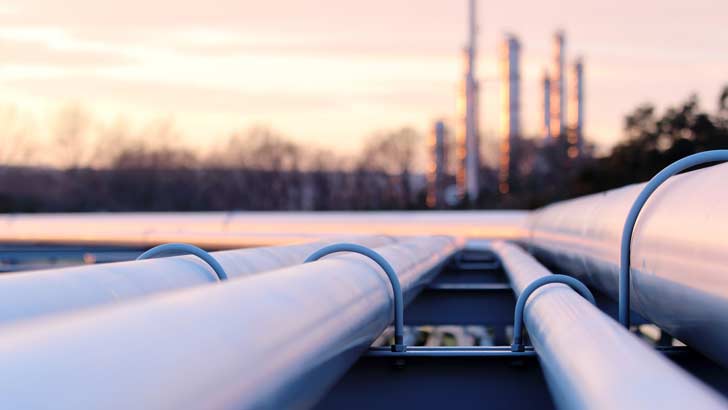
The world's biggest supply route, the Strait of Hormuz, is under serious threat. This narrow shipping lane carries about 20% of the world's oil supply. Maritime insurers have begun pulling war-risk coverage for vessels operating in the Gulf as tensions escalate, leaving many tankers unable to move through the region.
At the same time, energy infrastructure is increasingly becoming a target. Iranian drones recently struck Saudi Arabia's Ras Tanura refinery, the kingdom's largest oil processing facility and a major export hub. Add to that Venezuela's production constraints, Ukraine's attacks on Russian energy infrastructure, and the possibility that China may need to compete for Iranian barrels on the open market, and suddenly, global supply looks far thinner than many assume.
From a technical perspective, crude appears to be breaking out of the downtrend that has dominated the last few years, and if the price can hold above $80 a barrel, a move back to $100 per barrel is entirely realistic if tensions persist. Reaching $200 would require a major supply disruption, but history shows that when geopolitics collides with energy supply, prices can move faster than most people expect.
For Australians, higher oil prices feed directly into petrol, freight, and food prices, and into inflation, which can keep pressure on the Reserve Bank to hold interest rates higher. For investors and traders, however, volatility in the energy market creates opportunity, particularly in energy stocks, which have lagged the market for years and may now be entering a powerful macro cycle. So, stay tuned.
What are the best and worst-performing sectors this week?
The best-performing sectors include Energy, up more than 7%, followed by Consumer Staples, up under 1% and Communication Services, down just more than half a per cent. The worst-performing sectors include Consumer Discretionary and Materials, both down more than 4%, followed by Real Estate, down more than 3%.
The best performing stocks in the ASX top 100 include Ampol Limited, up more than 13%, followed by Whitehaven Coal, up more than 11% and Santos Limited, up more than 8%. The worst-performing stocks include Life360, down more than 12%, followed by Eagers Automotive, down more than 10% and Challenger Limited, down more than 9%.
What's next for the Australian stock market?
This week, sellers took control, pushing the All-Ordinaries Index down 2.8% by Thursday's close. It marks the sharpest pullback so far this year, as rising fears of a prolonged conflict with Iran weighed on investor sentiment. The decline comes just one week after the market printed a fresh all-time high of 9435 points, with the index now trading back near the 9100 level and potentially heading toward support around 9,000.
Most sectors are lower for the week, although Energy stood out as the clear exception. Surging oil and gas prices lifted the sector, with related areas such as uranium and coal stocks also benefiting from the move higher in energy markets.
You may have seen headlines claiming that "billions have been wiped off the market" or that the stock market has "crashed"; however, context matters. The entire Australian share market was worth roughly $3.34 trillion as of January 2026. So, when media reports highlight $70 billion lost in a day, it sounds dramatic, but it represents only a small fraction of the total market value.
From a technical perspective, the current pullback is not yet cause for concern. The market appears to have simply retraced back toward the natural upward momentum that has been in place since the November 2025 low. As long as that level holds, particularly above 9000, the broader outlook remains constructive. Should the index break below 9000, the next major support sits around 8800. On the upside, a move back above 9400 would be the next step toward reopening the path to the 10,000 level by year-end.
As I've said before, 2026 is shaping up to be a trader's market. Active investors who focus on sectors and individual opportunities are likely to outperform passive strategies. This year, the tide won't lift every stock, so staying selective, following price action, and ignoring the noise from headlines will be key to staying ahead of the crowd.
Get stories like this in our newsletters.