The hidden cost of your fast fashion haul




It's hard to scroll social media these days without stumbling upon a 'Shein haul' - influencers gleefully unpacking piles of clothes bought for next to nothing from the controversial Chinese retailer.
The allure is obvious: mass-produced pieces mimicking the designer runways of Paris ordered with a tap and delivered within days at a fraction of the price.
This might seem like just another internet fad or a way to democratise fashion - a continuation of the 'dupe' culture where consumers opt for cheap knockoffs of luxury items. But what's the real cost of this hyper-consumption?
How much is Australia spending on fast fashion?
Australia buys more clothes per person than any country in the world, even more than the US, according to The Australia Institute's Textiles Waste in Australia report.
Each year, Australians add close to 1.4 billion new garments to their wardrobes, averaging 56 new items per person - and most of it doesn't stay around for long.
About 200,000 tonnes of clothing are thrown away every year, about the weight of four Sydney Harbour bridges.
"The over-production of the fast fashion model means that billions of garments are never sold or worn," says Nina Gbor, director of circular economy and waste at The Australia Institute. "Many go straight to landfill or are incinerated."
When did shopping become entertainment?
The problem isn't just over-consumption, it's acceleration. Social media platforms, such as TikTok and Instagram, have turned shopping into entertainment. Reels tagged #GRWM (Get Ready With Me) or showing off hauls have normalised bulk buying for online engagement and likes.
Where fast fashion pioneers such as Zara and H&M took around a month to get runway looks into stores, ultra-fast players like Shein and Temu can design, produce and deliver items in just a week. According to The Australia Institute, Shein uploads up to 7200 new products daily.
As recent research from RMIT Australia puts it, "Having seven trending items over two high-quality outfits, makes more sense to Gen Z consumers in the digital age."
For a generation living much of their lives online, the need to constantly update their image can feel inescapable.
What about the cost of living crisis?
Cost-of-living pressures only make it worse. ASIC data found 82% of Australian Gen Zers, representing young people 18 to 26 years of age, feel financially stressed and have more personal debt than other generations.
For many, ultra-cheap fashion seems like the only way to stay current without blowing the budget.
But therein lies the cognitive dissonance; the attitude-behaviour gap that shows young people simultaneously care about the environment and contribute to fast fashion.
"There's this perception that young people are all about climate action and sustainability," says Gbor. "But when you look at the data, they're also the main demographic buying from ultra-fast fashion brands."
She's quick to clarify this isn't a criticism, but rather an observation of a generation caught between ideals and reality.
"At that age, you tend to do what the culture dictates, the trend. This is not to say they don't care about the environment - they do. But not enough to boycott or use their voice strongly in a meaningful, purposeful way. If they did, that would shift the status quo around ultra-fast fashion."
What is a fast fashion tax?
In June this year, France took a bold step to curb ultra-fast fashion. Its Senate backed landmark legislation targeting giants such as Shein and Temu, and the digital ecosystem that fuels them.
The proposed laws would give every item of clothing an eco score based on emissions, resource use and recyclability. Poorly rated items would cop escalating penalties: €5 ($8.91) per garment from 2025, rising to €10 ($17.82) or 50% of the retail price by 2030.
"That's critical, because these companies rely on highly targeted digital advertising and influencer marketing to move product," says Gbor. "If they can't show up in people's feeds, they won't sell."
In contrast, Australia has stopped short of any such tax or fast fashion ban. Gbor says we need it even more than France does. "Unlike France, which has an established fashion and textiles sector, our industry is still emerging. And many local Australian brands are struggling to stay open."
What is Australia's fashion stewardship scheme?
Last year, the Australia Institute called for stronger action.
Months later, the Federal government helped fund Seamless, Australia's first national stewardship scheme for clothing. Launched in July 2024, the program asks participating brands to pay a levy of 4 cents per garment (3 cents if they meet design standards aimed at recyclability).
The money funds better design, collection, reuse and disposal of garments in Australia. If 60% of the industry signs up, the scheme could raise $36 million annually, which could be used to promote a circular fashion economy.
One year in, Seamless chief executive Ainsley Simpson says progress is underway.
"Together with 56 responsible brands and over 120 supporting organisations, we've embraced action," she says. Founding members include Big W, Cotton On, David Jones, Lorna Jane, Rip Curl, R.M.Williams and The Iconic.
But critics say the scheme doesn't go far enough.
"Four cents per garment isn't sufficient," says Gbor. "Think about what happens after garments are collected - sorting, transporting, warehousing, decommissioning. That all requires significant infrastructure and labour. Even with volunteers, which shouldn't be the case, the levy falls short."
The Australia Institute recommends a 50-cent levy and that the scheme be mandatory.
"Corporations rarely uphold environmental standards without regulation. There's a lot of greenwashing in this space," she says.
Even Seamless concedes its voluntary model is a limitation. Its own website states: "Seamless has been designed as a voluntary scheme, which was the condition of the government funding ... However, feedback from industry and evidence from similar schemes around the world builds a compelling case for the introduction of co-regulation."
Minister for the Environment and Water Murray Watt backs the initiative but hasn't committed to tougher rules. "We continue to encourage the clothing industry to support the scheme."
In terms of a fast fashion tax, the Albanese government has so far avoided announcing any new measures, though Watt has his finger on the global pulse.
"Australia will be keenly watching international efforts to reduce fashion waste to see the results," he says.
"It's the responsibility of businesses, governments and consumers to work together to build a more sustainable industry and limit the extraordinary amount of textiles that end up in landfill every year," says Watt.
What is deinfluencing?
On that last point, Watt may be right: tackling fast fashion isn't the job of the government alone.
It's a shared responsibility between policymakers, industry and all of us who fill our wardrobes. But just as TikTok hauls fuel the churn, there are growing online movements pushing back.
The emergence of the underconsumption core on TikTok and the rise of de-influencing, where creators actively tell their followers to buy less, is reshaping what it means to be stylish.
According to RMIT researchers Marian Makkar and Amanda Spry, this shift presents a rare opportunity to flip the script on fast fashion.
"It is time to re-engage with social media content creators in different ways that educate consumers, promote responsible behaviour and advocate for changed regulations and business practices," they wrote.
"This might include tried-and-true tactics such as influencer endorsements and haul videos that are refocused on more sustainable options - like online second-hand retailers."
Gbor has been making this case for years.
"One of the biggest points of pushback I hear whenever fast fashion taxes are raised is, we're in a cost-of-living crisis - we can't afford alternatives. And I get it," she says.
"But I've personally avoided buying new clothes since I was 15, and I've been organising clothes swaps for about 14 years."
Gbor recommends these swap meets - which are free and organised within communities among friends, schools and workplaces.
"You can find great-quality items without spending a cent. Anyone can host or join one - and it's as simple as searching online for how to start one."
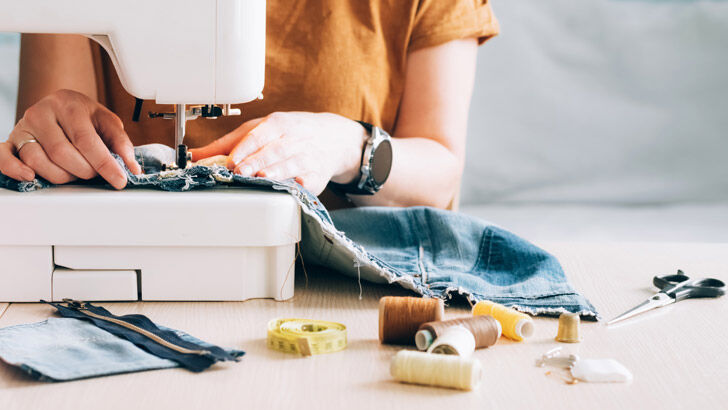
She also encourages learning simple repairs and rethinking how we use what we already own.
"Many local councils run workshops, and online tutorials are abundant. Learning how to fix and freshen up your wardrobe extends the life of your garments."
Gbor has run local workshops on how to 'restyle' - a method she teaches to help people creatively rework their wardrobes.
"It's all about finding fresh ways to wear your existing clothes through layering and accessorising ... It helps people fall back in love with what they have so boredom doesn't lead to buying."
Change starts with government and industry, but consumers aren't powerless. By buying less and reusing more, you can shift the story.
Next time you're at the online checkout, ask: 'Do I need this? Is it sustainable? Could I borrow, swap or repurpose instead?'
And if your feed is filled with Shein hauls, shift the algorithm by searching for sustainable trends instead.
Get stories like this in our newsletters.