The ultimate guide to share buybacks in Australia




Let's start at the beginning. Share buybacks - where a company purchases its own shares from shareholders - are used to support and increase a company's share price.
Buybacks are most often conducted on-market, where the company buys its shares from shareholders who choose to sell in the course of the normal trading day on the ASX. However, they can also be conducted off-market and or be open to only some shareholders.
More importantly, they have become more common in Australia in recent years, which has an impact on all shareholders.
How common are share buybacks in Australia?
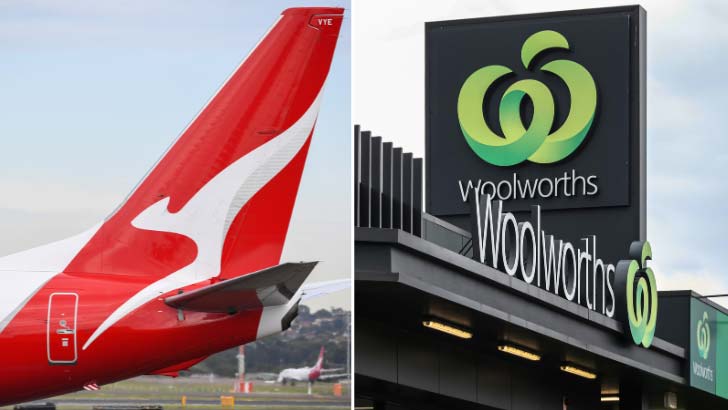
The major banks spent about $20 billion on share buybacks between 2021 and 2023: Woolworths announced a $2 billion share buyback in 2021 after it sold its hotels and liquor business; and biotech giant CSL bought back 29% of its shares on issue in the nine years to 2017, when it ended the program to fund capital expenditure and make acquisitions instead.
Buybacks have become a more common feature of Australia's equity market, with 47 ASX 200 companies buying back $14 billion worth of stock last year, research from broker MST Marquee reveals.
By contrast, in 2016 just 13 companies undertook buybacks worth just $2.8 billion.
Simon Scott, head of markets and managing director on corporate advisory for MA Moelis Australia, the corporate advisory division of MA Financial Group, says real estate investment trusts (REITs) have traditionally been the strongest users of buybacks, thanks to the regular six-monthly valuation updates of their net tangible assets (NTA).
"Those trading at sustained discounts to NTA regularly assess buybacks providing their gearing allows for one, particularly as REITs don't tend to generate large franking credit balances to warrant paying special dividends," he says.
Do buybacks pay off?
Corporate Australia has relatively low debt levels, which provides companies with the capacity to undertake buybacks.
This, combined with the two-strike rule that gives shareholders more power to express dissatisfaction with a company has tended to focus boards' and executives' minds on supporting their share prices.
Then there are the results. Most companies that announce a buyback then enjoy share price outperformance, says broker MST Marquee. The median outperformance - how much better the shares perform compared to a benchmark share index - is 10%.
"Generally high-quality companies do buybacks and high-quality companies tend to outperform over time," says MST senior research analyst Hasan Tevfik.
What does a share buyback signal to the market?
Companies buy back their own share over months or years. The main reason they do this is to avoid a share-price spike due to a large and rapid rise in demand for the stock.
Executives know their company best, so launching a buyback can be a signal that they believe their shares are undervalued.
Paul Basha, an equity strategist and data analyst at broker Bell Potter says, "Share buybacks can be a big reflection on the company. It's essentially them betting on themselves."
A company might choose a buyback over other ways of returning capital to shareholders for several reasons. One of those reasons is that buybacks can be turned on and off as the company's capital management needs change.
For companies themselves, a decision to undertake a buyback is weighed against other uses of the cash, such as making an acquisition or investing in a growth opportunity.
What do buybacks mean for shareholders?
Buybacks are an alternative to paying regular or special dividends as a way of returning money to shareholders. But the shareholders who hold onto their shares are the ones who will benefit from any price appreciation following a buyback.
A successful buyback reduces the number of company shares on issue, so its earnings are spread over a lower number of shares and the earnings per share should rise.
"The theory would suggest that, all else being equal and all other factors not impacting your shares, you should get some level of share price appreciation," says Jane Shoemake, client portfolio manager on the global equity income team at Janus Henderson.
But there are times when the shares can rise by more than the theory would suggest.
Sometimes, says Shoemake, when companies announce a share buyback, the knowledge that they're generating enough cashflow to fund it results in a valuation expansion.
A buyback is, of course, only one consideration when making decisions about stock allocations.
But when comparing two similar companies, one of which is returning capital to shareholders and one that isn't, gravitating towards the company that is makes sense.
How is a share buyback funded?
Scott says buybacks can be funded with the proceeds of asset sales.
They can also be funded by taking on more debt. This only works if the gearing levels after the buyback are consistent with the company's and the market's assessment of sustainable leverage ratios.
"A buyback should be used as a capital-management tool for adding to the intrinsic value of the company, not a short-term boost to a share price," says Scott.
Buybacks of companies below their intrinsic value should lead to a sustained increase in the per share value of the company over time, in particular if the company earns a reputation as an astute manager of capital.
What do companies need to consider?
Companies that undertake buybacks generally have a cleaner balance sheet, less debt and generate more cashflow than those that don't.
And by undertaking a buyback, they are also highlighting the maturity of their capital allocation process, whereby they will consider investing in their own shares alongside considering capital expenditure or acquisitions.
Which sectors pose risks for companies using buybacks?
The riskiest thing a company can do with its capital, in Tevfik's opinion, is greenfield capital expenditure. That is when they invest in a new facility hoping it will generate revenue in three to four years' time.
This type of project can face challenges such as labour shortages or engineering challenges.
The second riskiest action is an acquisition, which can involve paying too much for a company, a lack of due diligence, problems with integrating two different business and underestimating costs.
So the least risky action is a buyback. The board knows the company best and has a fair idea of its intrinsic valuation. Depending on the share price the company offers and the cost of the capital needed for the buyback, it should generate an adequate return.
What are the alternatives to a share buyback?
Companies that don't use buybacks and instead issue new shares to fund an acquisition have historically underperformed the market by 8%, MST research reveals.
On the other hand, while MST hasn't looked at what happens to companies' share prices more than 12 months after a buyback, Tevfik expects that they continue to perform strongly because of the quality of the company.
When are buybacks unpopular?
While shareholders and investment professionals often welcome buybacks, they are not always so welcomed by others who question whether they come at the expense of growth and innovation.
The Council for Economic Development says investors have become more focused on short-term returns and notes that gross expenditure on research and development in Australia has fallen over the past decade, with negative consequences for productivity and living standards.
Last year it stated that Qantas has spent more than $1 billion on buybacks since 2021 despite having a rapidly ageing fleet of aircraft. And it said that the major banks' buybacks came at a time when they needed to invest billions of dollars upgrading their IT systems.
The US can be considered the home of the buyback, being the only sharemarket in the world where companies pay more money to shareholders via buybacks than via dividends.
Ironically, it is also where they are most controversial. A common criticism is that they can be used by management to game the remuneration system, by artificially inflating earnings per share and as a result hit their executive bonus targets. There are also concerns that companies might be tempted to take on too much debt to fund a buyback.
Investors and advisers in Australia are aware of these concerns and they mostly welcome buybacks as an opportunity for investors to increase the value of their shareholdings.
What happens when buybacks go wrong?
While many buybacks lead to share price appreciation, not all do and not all go smoothly.
In 2023, payments company Zip announced it would buy out many of its small shareholders, using a provision that allows companies to buy back small and unmarketable packages from shareholders.
Many of Zip's 78,000 small shareholders said the company hadn't made it clear to them that they needed to opt out of the buyback to retain their shares. They felt this was unfair, as the buyback came after two Zip directors bought more shares in the company, signalling they believed its prospects were good.
Shares in the company closed at 66 cents before the buyback was announced in October 2022, and in late July 2025 were approaching $3 each.
Get stories like this in our newsletters.