What the Iran war could mean for investors




With Iran under attack - and retaliating - from joint strikes from the United States and Israel after talks over nuclear capabilities broke down, the price and availability of oil is at stake once again.
Janus Henderson global head of multi-asset Adam Hetts says the current situation has the potential for escalation beyond the relatively short-lived recent conflicts between Israel and Iran seen in April 2024 and then 12 days of war in June 2025.
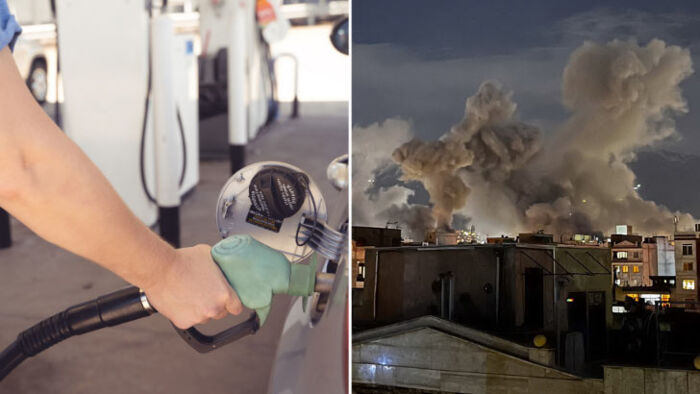
"From an investing perspective, the main focus is on the impact on the price of oil. Iran produces around 3-4% of global oil supply, but the regional spillover is already accelerating," Hetts says.
"Perhaps most notably, the strikes have led to what is essentially a halt of traffic through the Strait of Hormuz. The Strait of Hormuz is an oil transportation bottleneck in the Middle East through which roughly 20% of the world's oil supply passes."
Hetts says oil prices were expected to rise but that levels should be maintainable.
"These moves are meaningful but not yet particularly worrisome in the broader scheme of investment implications. A continued increase to US$80 would be consistent with the June 2025 conflict, and US$90 consistent with April 2024, when global markets were able to largely shrug off the price rises as the conflicts were resolved in relatively short order," he says.
"As a rough proxy for a major conflict, the Russian invasion of Ukraine in early 2022 brought oil prices above US$100 for a prolonged period with brief peaks above US$120. Oil prices as they stand are pricing in a limited conflict of relatively short duration."
Hetts says should uncertainty persist, investor sentiment could be suppressed which can weigh on risk-assets globally.
"This would likely make global developed market sovereigns, including US Treasuries, and safe-haven currencies more attractive. In a prolonged period of uncertainty, increases in oil prices could generate a global inflationary scare, which in turn may reduce the likelihood of interest rate cuts by the US Federal Reserve, currently expected for later this year," he says.
Principal Asset Management chief global strategist Seema Shah says any further escalation, particularly that which disrupts key energy supply routes or threatens the Strait of Hormuz, would likely have meaningful implications for energy markets and broader global financial conditions.
"Geopolitical shocks are inherently difficult to forecast. Although uncertainty can spark sharp market reactions, history suggests that equity sell-offs driven by geopolitical events are typically short-lived," Shah says.
"Over the past six decades, most geopolitical crises have led to temporary market drawdowns, with a median peak-to-trough decline of around 7%. Markets have typically needed around three weeks to bottom and another three weeks to recover. After three months, equities have historically been about 4% higher."
However, Shah says exceptions occur when geopolitical events materially alter economic fundamentals, trigger a policy response from central banks or coincide with periods of broader macro vulnerability.
"In this context, oil prices are the most important transmission mechanism from geopolitics to the real economy," she says.
"From a supply-demand perspective, oil markets currently appear reasonably well supported. Global supply is running ahead of demand, several Middle Eastern producers increased exports last month, and OPEC+ has agreed to lift production. Inventories, therefore, provide some buffer, though they are leaner than before Russia invaded Ukraine, and spare capacity within OPEC+ remains uneven."
Shah says currently the global economy appears capable of absorbing a moderate, temporary rise in energy prices.
"US growth remains robust, capital expenditure is strong, and household energy spending as a share of income is near historic lows. Corporate profit margins also remain elevated, providing a buffer against higher input costs," Shah says.
"Europe is enjoying a tentative growth revival, while Asia remains a key engine of global expansion, driven by AI-related investment, resilient tech exports, and healthy domestic demand."
Shah says it is important investors avoid making dramatic portfolio shifts in response.
"While our constructive medium-term macro outlook remains intact, the unpredictability of the current episode reinforces the importance of diversification and resilience," she says.
"Portfolios should remain positioned for continued global growth, but with sufficient exposure to assets that tend to perform well during periods of heightened risk aversion.
This article first appeared on Financial Standard
Get stories like this in our newsletters.