13 questions to ask before you invest in 2026




Investing is essentially all about deferring present-day consumption for a future period of time.
It can be characterised as saving money for a 'rainy day' or to meet some future goal, meeting future income requirements, enabling money to compound over time, and as a means of ensuring that inflation does not erode the purchasing power of our money.
We've all seen the scourge and magnitude of inflation over the past few years. And it has been a major focus for the Reserve Bank of Australia (RBA) in setting monetary policy (interest rates) to try to get the inflation rate back to the 2%-3% target band.
The impact of inflation
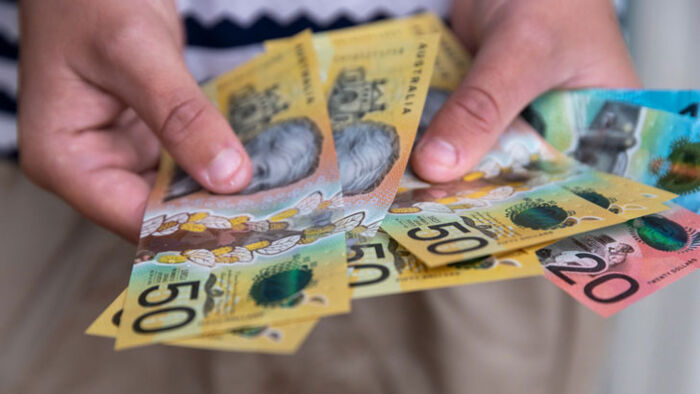
Inflation has been unavoidable since the dawn of time. To illustrate the cruel reality of inflation diminishing $100 over time, let's take a $100 polymer note issued by the RBA that has not been invested, even at the bank.
One hundred dollars from 25 years ago would only be worth around $50.46 today. In other words, inflation has eroded almost half of what $100 was worth at the turn of the century.
Inflation can be viewed as a hidden tax because it diminishes the value of our money. In the past few years, after more than 30 years of very low inflation, the 'inflation genie' had been allowed to escape the bottle and caused quite painful cost-of-living pressures for many Australians.
To preserve the monetary value of their assets, investors typically look to opportunities and financial products that can at least keep pace with inflation's erosive effects.
Principles of investing
What are the critical principles around investing $10k?
While people have different investment needs, the starting point is almost the same for everyone.
It begins by asking a series of important questions:
- What is my ultimate goal?
- What is my time horizon?
- What are the costs involved?
- What is my risk profile or appetite for risk, given that different types of assets (equities, property, gold, crypto etc) have varying degrees of variability in their returns over time?
- What assets or financial products do I invest in?
- What types of risks am I being exposed to and do I have the requisite information to be able to make the investing decisions I need to make with confidence?
- Do I need expert advice to formulate my investment approach and execute the strategy?
- Are any investment recommendations appropriate for my situation?
- Do I understand the fine print clearly?
- Have I been able to sufficiently diversify my assets in the event of a major economic calamity?
- Am I unnecessarily financially exposed to unscrupulous intermediaries?
- How liquid (the speed and cost of converting assets to cash) are my investments, and how important is this feature, given the investment approach I have decided to adopt?
- What kind of tax might my investment strategy attract?
While diversification is one of the most important aspects of investing, it is the old adage of 'time in the market, not timing the market' that matters.
Empirical research shows that even the most savvy, professional and well-informed experts have a great deal of difficulty in truly forecasting what the winning (or losing) investments next year will be, including whether we are at the top or bottom of the investment cycle.
And not all assets perform the same.
Assets have different risk profiles and different return features, including that not all assets provide income (such as dividends or interest) and not all assets or investment products have capital appreciation (for example, bank deposits).
Some assets are perceived as speculative (such as cryptocurrencies), while others are considered as 'safe' (such as short-dated Treasury notes that pay periodic interest or perhaps gold).
In terms of investing $10,000, there are two popular approaches suitable for investors with various levels of expertise. First, investment in exchange traded funds (ETFs) is popular and useful for implementation purposes, as ETFs are an efficient way to provide broad diversification benefits with a relatively low amount of capital invested.
The other approach is to invest a proportion of the $10,000 (say half) today, then to 'drip feed' the remainder of the assets over a period of time (say $1000 every six months or over five regular purchases).
It's an approach known as 'dollar-cost averaging', which helps ensure that the whole amount is not invested potentially at the very top of the market cycle. In other words, a staggered investment approach ensures an average price point that will be lower than a fixed point in time at the very top of the market.
One final noteworthy point: past returns are not necessarily an accurate guide to what future returns might be.
WHERE TO INVEST $10K: Why Michelle Baltazar backs EV ETFs
Get stories like this in our newsletters.