How big Aussie retailers are turning into online marketplaces




Australians shopping online are learning that a familiar brand logo no longer guarantees a familiar experience.
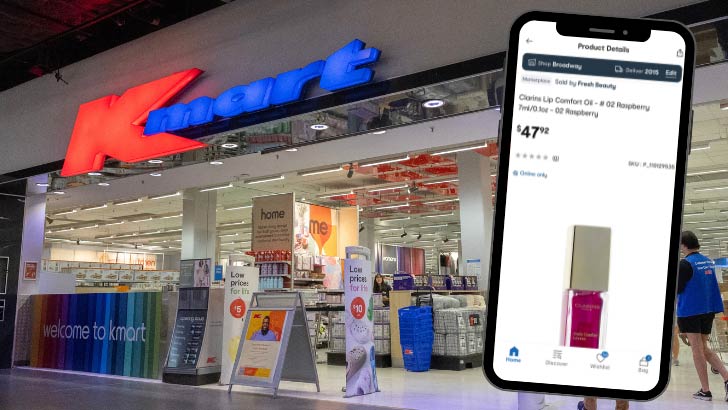
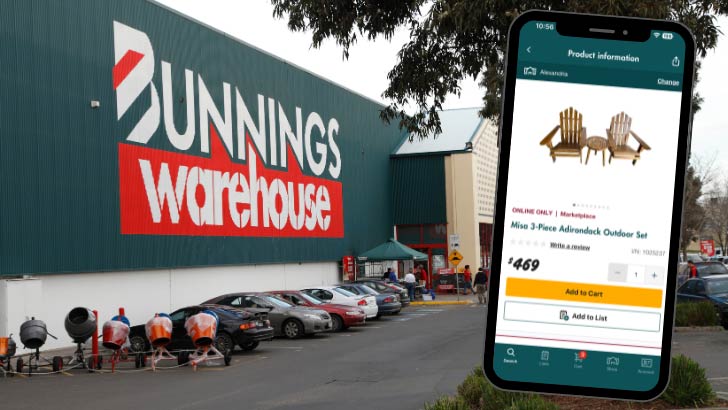
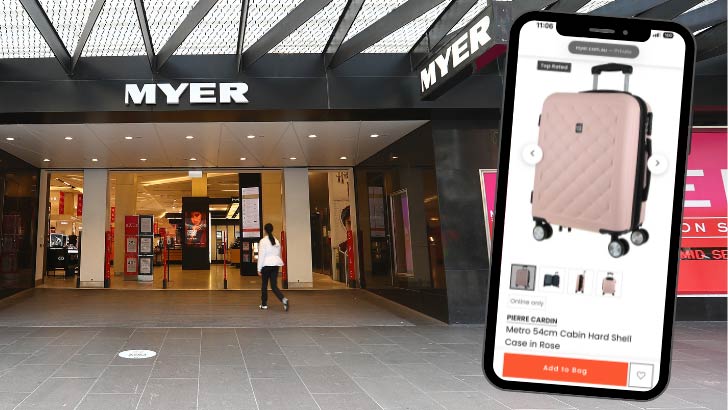
On big-name sites, such as Bunnings, Kmart and Myer, the products on your screen may not be sold by the retailer you trust, but by a third-party merchant operating through an online marketplace.
Based on the 'endless aisle' philosophy, where a store's product range extends well beyond its physical borders, the model offers unparalleled choice.
But for some shoppers, the cost is confusion and a growing sense that the rules around returns, delivery and quality have shifted without warning.
So is this endless aisle of millions more products a paradise of possibility or the enshittification of shopping online?
What happens when a marketplace purchase goes wrong?
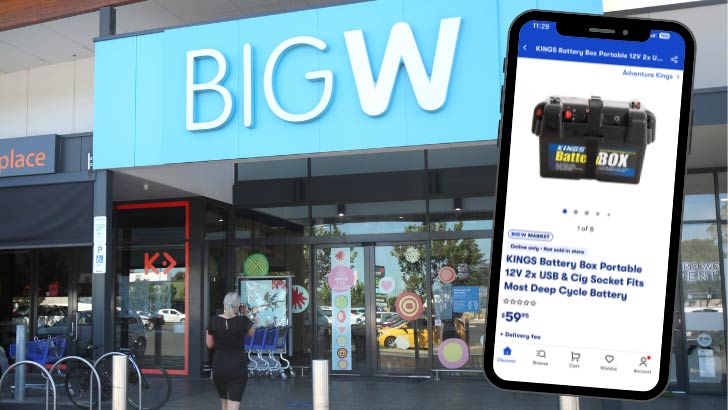
John* learned the difference the hard way, after buying a $60 battery box online.
Scrolling through what looked like Big W's site, he assumed the retailer's familiar 90-day change-of-mind returns policy would apply.
It didn't.
The item was sold via Big W Market, where the seller offered only a 30-day policy. When the battery box turned out to be incompatible, John discovered it could not be returned in store.
"I drove 30 minutes to Big W and was told I had to post it back to the seller," he says.
That was just the start.
The seller demanded video evidence uploaded to a third-party site, then asked for photos of an unopened box, despite the product already being used. After escalating the issue, John was allowed to return it, but at a cost.
"They wouldn't cover return shipping and a 30% restocking fee was deducted," he says. "For a $60 item, I was getting hosed."
Similar complaints appear across online reviews about these marketplaces, with shoppers pointing to split shipments, extra fees and inconsistent delivery timelines.
But as Merline McGregor, managing director of ecommerce consultancy Pattern Australia, puts it: late or split deliveries "don't just frustrate customers, they undermine trust and loyalty".
Why shoppers often don't realise they're buying from a third party
Most shoppers understand the deal when they buy from traditional online marketplaces.
When you purchase through platforms such as eBay, Amazon, Temu or Shein, it is clear the transaction is with a third-party seller and that any problems will be handled through that seller rather than the platform.
Pattern Australia's research shows those expectations are well established. About 60% of Australian shoppers bought from Amazon in the past year, 51% from eBay, 47% from Temu and 30% from Shein, as table 1 shows.
According to Pattern's research, only 39% of consumers are aware Big W operates a marketplace. Awareness drops to 36% for Woolworths and 33% for Bunnings and Kmart (see table 2 below).
More than one in four respondents was unsure which major retailers operate marketplaces at all, while 6% believed none of them did.
Are marketplace products safe and covered by Australian standards?
Many consumers don't realise they've crossed from retailer to marketplace, and that gap in understanding is where confusion and risk creep in.
Beyond returns and delivery, consumer advocates warn that this expectation gap can expose shoppers to lower-quality or unsafe products.
Andy Kelly, director of campaigns and communications at Choice, says testing by the organisation continues to raise serious concerns across major marketplaces.
"Last year, we found that all 15 products we purchased from Temu failed to comply with at least one requirement of Australia's button battery mandatory standards," he says.
Kelly says marketplaces run by well-known retailers such as Bunnings and Big W are becoming more common because they allow retailers to add more product lines, but without the same obligations to consumers.
"Consumers may trust the well-known retailer, but the ultimate responsibility for the product lies with the third-party supplier, not the retailer," Kelly says. "If something goes wrong and the product causes an injury, the consumer may find themselves having to pursue an overseas company, which can be very difficult."
Why major retailers are embracing marketplaces despite the risks
That mismatch raises an obvious question: if marketplaces are catching some consumers off guard, why have Australian retailers adopted them so quickly? The answer lies in how the benefits
and risks are distributed.
For third-party sellers, marketplaces offer instant access to large, established audiences under trusted household brands, without the cost of building a standalone website or payments system. The trade-off is responsibility: sellers remain on the hook for fulfilment, customer service and remedies under Australian Consumer Law.
For retailers, the appeal is scale without stock. Marketplaces allow rapid range expansion without owning inventory or warehousing products. The risk sits elsewhere, in brand exposure when sellers underperform and more complex customer journeys when something goes wrong.
Consumers sit somewhere in between. They gain broader choice and a single checkout experience, but often face different delivery terms, return processes and quality standards once a purchase moves beyond the retailer's own products.
"Shoppers increasingly expect broad product choice, competitive pricing, fast delivery and reliable returns in one place," says McGregor.
"Traditional online retail models built around a single retailer's in-store stock often struggle to meet those expectations."
Pattern's research shows it is not any single feature that draws shoppers, but the combination.
"It's not just about having more stock," says McGregor. "What matters is how that breadth is organised, surfaced and delivered."
Are Australian retailers becoming Amazon-lite?
That integrated approach has been refined most successfully by Amazon, which remains the benchmark marketplace in Australia.
"Consumers go to Amazon because they trust the experience and know what to expect," says Pattern Australia's Merline McGregor.
Pattern's research shows one-third of Australians now turn to marketplaces primarily for ease of use and delivery speed. A further 44% would choose Amazon over China-based Temu even if the product cost more, because Amazon can deliver faster. That expectation has pushed logistics from a backend function to a point of difference.
Rather than relying purely on third-party sellers shipping products from wherever they are, Amazon increasingly brings marketplace inventory into its own local fulfilment network. Third-party items are often stocked in Australian warehouses, allowing the platform to control delivery times, costs and reliability.
Amazon already operates a 52,000-square-metre fulfilment centre in Victoria. It has also committed a further $490 million to two new fulfilment centres in Western Sydney, scheduled to open by early 2026.
That scale gives Amazon far greater control over delivery speed, cost and reliability than most Australian retailers can match.
And where items are still shipped directly by third-party sellers, Amazon retains a layer of accountability. Its A-to-Z guarantee allows customers to request a refund if an item does not arrive on time or arrives in an unsatisfactory condition, provided the seller fails to resolve the issue within two business days.
In other words, even when Amazon does not fulfil the order itself, it remains responsible for the outcome.
"Product quality sits with the supplier," says McGregor. "But accountability sits with the marketplace.
"Platforms control the customer experience. They have the power to enforce standards across thousands of sellers, and consumers expect them to step in when those standards aren't met."
That enforcement, more than scale, price or range, is what turns convenience into trust. Without it, consumers may have more choice than ever, but a shopping experience enshittified compared to what came before.
And while Amazon is far from perfect - it, too, failed Choice's product-safety investigation - it may be the part of the model Australian retailers are still learning to master.
What rights do consumers have under Australian Consumer Law?
For consumers navigating online marketplaces, the ACCC says the law has not changed, but who you need to deal with often has.
"Under the Australian Consumer Law, goods supplied to consumers automatically come with consumer guarantees," an ACCC spokesperson told Money. "These include that goods must be of acceptable quality, match any description provided and be fit for a particular purpose."
If they are not, you are entitled to a refund, remedy or exchange. Those rights apply whether a purchase is made in store, online or through an online marketplace. But responsibility usually sits with the business that supplied the goods. That is why the regulator stresses disclosure.
The regulator says businesses should be clear and upfront about whether a product is being supplied by a third party, and consumers should check who the seller is before buying. In most cases, that information appears on the product page. If something goes wrong, consumers should first contact the supplier of the product. If a third-party seller does not resolve the issue, shoppers can then approach the marketplace operator to see if it can assist.
Where disputes remain unresolved, consumers can contact their State or Territory fair trading agency for help, or report concerns directly to the ACCC.
Get stories like this in our newsletters.