New or used? How to buy the right car for your life




Budget and lifestyle play a massive role when it comes to deciding what vehicle to buy, and needs will typically outweigh wants.
If you need seven seats, a five-seater isn't going to cut it. Want a 10-speaker stereo but the car that better fits your needs has eight? You'll have to settle.
Be honest with yourself about what you want the car to do for you. You don't have to buy a vehicle that will tow up to 3.5 tonnes if your caravan is only 1800kg.

And spending $100,000 on a hardcore 4x4 dual-cab ute, just to go down an unsealed track to your favourite campground? Think about your actual lifestyle, not the life you'd like to live. It could save you heaps.
Then there's the budget. Most of us won't walk into a dealership with $60,000 cash. Instead, we'll investigate weekly repayments, finance options or leasing.
Car brands and dealerships regularly run promotional finance deals, and sharp rates could help your hip pocket substantially.
Fuel, upkeep, maintenance, tyres, insurance and parking should all be built into your budget. Don't just focus on the sticker price or minimum monthly payment.
Resale is the biggest cost for almost all vehicles, and it's common for new cars to lose more than 30% of their value after three years. Some do far worse.
Buying an electric vehicle (EV) might feel like a bigger gamble due to misconceptions around battery reliability and repair costs. But if you're shopping second-hand, you could pick up an absolute bargain.
Most new cars now come with a base level of safety tech, and almost every vehicle has a touchscreen media system.
However, technology becomes outdated quickly. Make sure you're happy with what's on board today, rather than worrying about what the next owner might want in five years' time.
New versus used: which is right for you?
New is exciting. Shiny. High-tech. Enviable. But it can also be nerve-racking and exhausting. Months of research, weekends spent trying to find trustworthy salespeople, then running the numbers and tackling the paperwork, that shine can wear off fast.
There are, of course, some clear upsides. Being the first person in the seat is a big one, and the bragability factor is real. New-car warranties, along with deal sweeteners such as free roadside assistance or capped-price servicing, can also make it easier to budget your running costs.
Technology is another major drawcard. Cars are effectively computers on wheels now, and newer models are often loaded with tech. That said, not all new cars are really new. Some have been on sale for a decade or more and aren't as cutting-edge as rivals. Examples include the Suzuki Vitara and Mazda CX-3, both launched in 2015.
Buying used can be a more affordable way into a 'new to you' experience and, in many cases, is the smarter move. If you're considering an EV, it's especially worth checking used listings first. You could save as much as $30,000 on a used or demo car with only a few thousand kilometres on the clock, sometimes more if there's been a model update.
"When you choose a demo or used vehicle, it allows you to dodge the instant depreciation of buying new," says Feann Torr, managing editor at Carsales. "Most brands offer longer warranties than they used to, and they're transferable. Lower upfront government fees and reduced insurance costs also mean demo or used cars are often the savvy choice."
Older used cars need more consideration. They may be out of warranty, increasing the risk of expensive repairs. Older tech can also be an issue, from outdated infotainment systems to slow EV charging speeds or old plug types.
Find the right size car for you
Small cars
Small cars are usually cheaper, more fuel efficient, easier to park and often more fun to drive. The trade-off can be lower safety scores compared with larger vehicles.
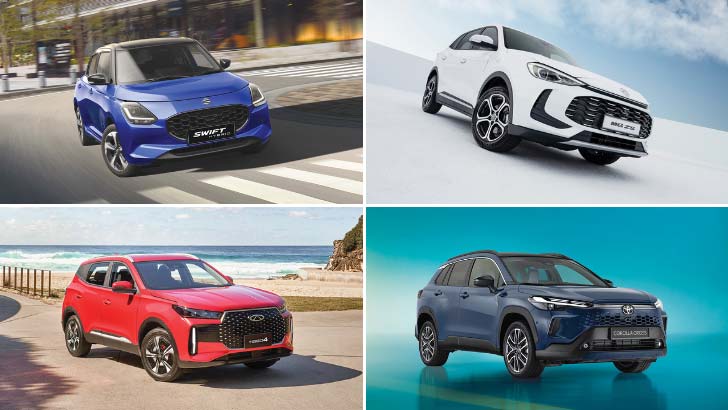
The Kia Picanto is a standout for budget buyers, starting at just over $22,000. It's tiny, but more practical than you'd expect. The Suzuki Swift is another popular option, with a fun personality and pricing under $25,000. The Skoda Fabia is also worth a look, offering clever interior space, European styling and a seven-year warranty for under $30,000 drive-away.
While traditional small cars have declined in number, the small SUV segment has boomed. Despite rugged looks and higher ride heights, many are essentially hatchbacks underneath.
Options that blur the lines include the value-focused Chery Tiggo 4 from $23,990. If you want a bit more space, the MG ZS or Suzuki Fronx are solid choices. For hybrids, the Toyota Corolla Cross is a great bridge between a hatch and a medium SUV, while the Hyundai Kona hybrid offers strong value. Prefer a sedan? The Hyundai i30 hybrid is ultra-efficient.
Medium family SUVs
Step up a size and you gain more boot space, five seats as standard, and usually more performance. Powertrain options are broad, including petrol, diesel, hybrid, plug-in hybrid and electric.
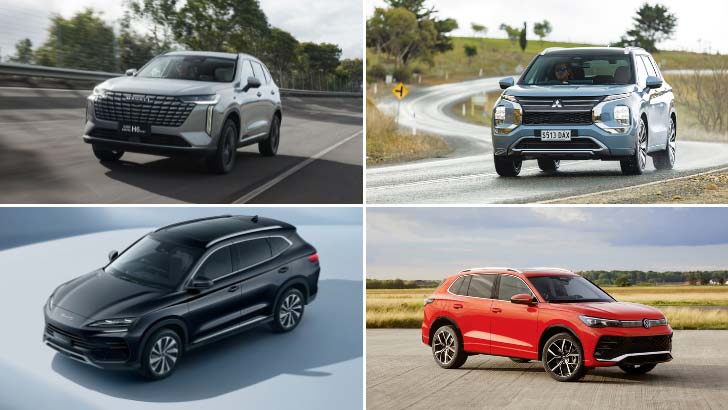
Our recent Best of the Best awards highlighted several standouts. The GWM Haval H6 hybrid starts from just over $33,000 drive-away. The Mitsubishi Outlander offers five or seven seats and front or all-wheel drive. The VW Tiguan is another polished option, particularly for urban drivers.
If plugging in appeals, the Chery Tiggo 8 Super Hybrid comes in under $50,000, offers three rows of seats and can drive nearly 100km on EV power alone. The BYD Sealion 6 is another strong option if you only need two rows.
Large SUVs
Big families often need bigger vehicles. While large SUVs can be harder to park and sometimes compromise boot space, hybrid options have helped rein in fuel bills.
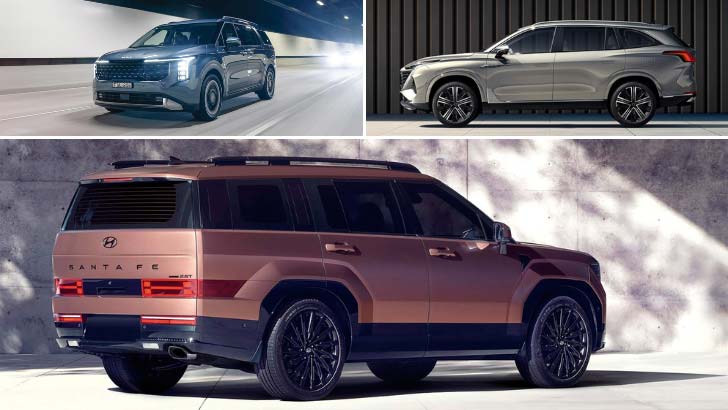
One of the best people movers isn't an SUV at all. The Kia Carnival offers eight seats and loads of luggage space, with petrol, diesel and hybrid options available.
The Hyundai Santa Fe seven-seater has multiple variants, generous standard features and a choice of hybrid or turbo-petrol power. If you're trying to stay under $50,000, the MG QS offers three rows, bold styling and up to 10 years of warranty if serviced with MG.
Dual-cab utes
If a dual-cab ute suits your needs, there's no shortage of options. Just remember many are built on ladder-frame platforms, which can mean a firmer, less refined drive. Most are still diesel-powered.
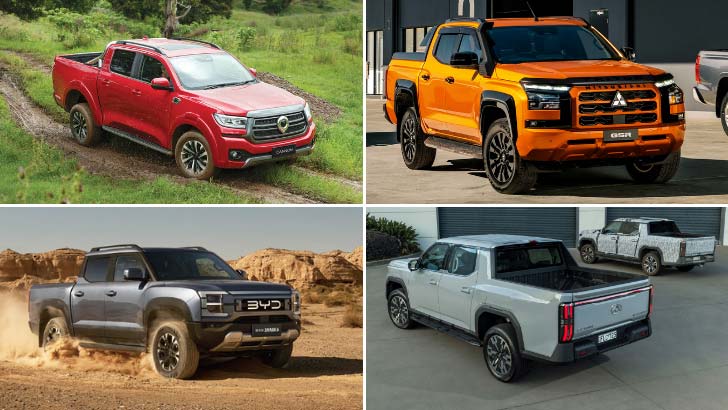
Standouts include the GWM Cannon, which starts under $40,000 and offers strong value. The Mitsubishi Triton remains a solid mainstream pick, with up to 10 years' warranty when serviced with the brand. The LDV Terron 9, related to the MG U9, impresses with comfort and features.
For lifestyle buyers, the BYD Shark 6 stands apart. Its plug-in hybrid setup offers around 100km of EV driving and suits family buyers better than traditional work-focused utes.
Electric vehicles and plug-in hybrids
EVs can be brilliant, as long as you choose wisely. Range, charging speeds and tech-heavy cabins require adjustment. If you can charge at home, especially with solar, ownership costs can be significantly lower.
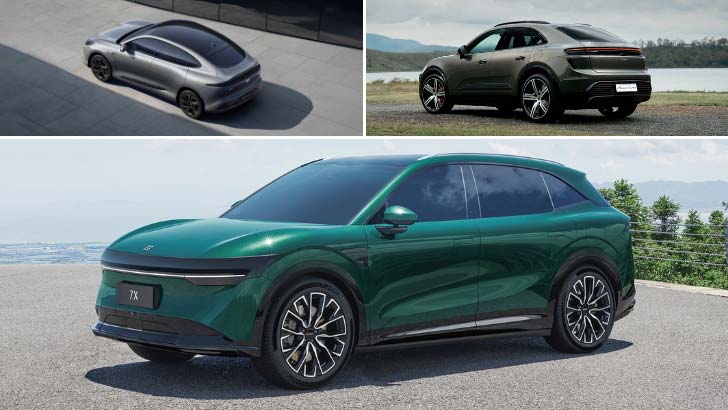
Choice has exploded in recent years, with China leading on tech, value and features. The Zeekr 7X offers luxury, comfort and more than 600km of range in mid-spec form for around $65,000. The MG IM6 delivers plenty of wow factor from just over $60,000. For a premium driving experience, the Porsche Macan EV sets the benchmark from about $130,000.
Eight things to check on a test drive
1. Comfort and driving position: If you're not comfortable the moment you adjust the seat and wheel, you never will be. Trust your first impression.
2. Blind spots: Check visibility past mirrors and pillars, and make sure shoulder checks feel natural.
3. Ride quality: Drive on the rough roads you use every day, not just smooth showroom routes.
4. Noise levels: Ask the salesperson to stay quiet and listen for tyre and road noise.
5. Parking ease: Test parking cameras, sensors and mirror visibility in real-world situations.
6. Cabin usability: Make sure storage, phone placement and charging options suit your habits.
7. Tech responsiveness: If the screen frustrates you in the showroom, it will frustrate you at home.
8. Safety features: Understand which alerts can be adjusted or turned off, and how easy that is to do.
Get stories like this in our newsletters.