The $0 air-con setting that can slash your summer power bill




Homeowners $82,000 richer, cut your aircon bill by 10% and tax dodgers banned from leaving the country. Here are five things you may have missed this week.
1 in 2 Aussies give aircon a miss to cut power bills
We're only halfway through summer, and already millions of Australians have sweated through some of the hottest days in years.
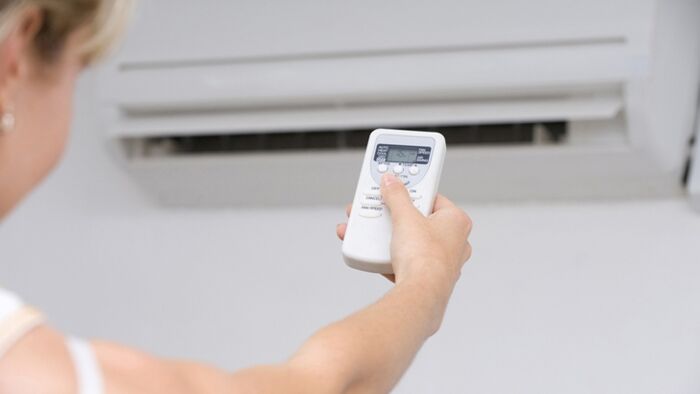
Despite temperatures topping 40°C across large swathes of the country, one in two Aussies plan to cut back their use of air conditioning in a bid to combat rising electricity prices.
That's according to Compare the Market research, which found 56% of us also plan to switch off unused appliances at the wall, while 23% will seek to utilise more solar-generated energy during the day.
Rather than sweltering this summer, it's worth shopping around for a more affordable electricity plan.
Yet it's a step only one in three (34%) Australians have taken over the past 12 months, which Compare the Market's Chris Ford says is far too low considering there are likely cheaper options available.
"Retailers often change their plans and rates, so if you haven't compared in a while, chances are you may be paying more than you need to."
It also helps to be energy smart. Ford advises setting aircon thermostats to 25-27°C.
"Each degree cooler can increase your running costs by as much as 10%," he says.
Homeowners end 2025 $82,000 richer
2025 will go down as a year to remember for homeowners, with the median home price surging 8.8% nationally, according to PropTrack.
Based on these figures, homeowners have an extra $82,200 in home equity compared to this time last year.
Cotality takes a slightly different view, reporting an 8.6% rise in values last year, adding an extra $71,400 to the national median dwelling value.
Either way, the gains are nothing to sneeze at.
The outlook for property in 2026 isn't as buoyant says Cotality, though the ongoing shortage of new homes is expected to offset uncertainty around inflation, interest rates and declining housing affordability.
Meanwhile, buyers looking for a more affordable home may want to expand their search to include properties near railway lines.
Sure, it's not a feature that tops every buyer's wish list, but Domain research suggests home buyers could score a discount of up to 8% if they're willing to live next to a train line.
Grounded: Tax dodgers banned from leaving the country
If fines and penalty interest aren't a good enough reason to stay on top of our tax bills, the Australian Taxation Office (ATO) has just announced that people with hefty tax debts - and the means to pay - can expect to have their overseas travel plans disrupted.
The ATO is slugging tax dodgers with a departure prohibition order (DPO) as part of a push to claw back the $50 billion owed in unpaid taxes.
Just recently, a taxpayer who the ATO says deliberately avoided paying a solid tax debt, was hauled aside and prevented from boarding an international flight out of Australia in the early hours of the morning.
"Taxpayers with significant debts to the ATO that think they can skip the country without paying what is owed to the community should think again," says ATO Assistant Commissioner, Anita Challen.
It's not just unpaid income tax that can see taxpayers grounded. Employers who dodge their employee super contributions can also be slugged with a departure prohibition order.
Christmas credit card purchases could be due for payment now
The festive spending hangover is back for another year.
Canstar estimates Australians will collectively put $87 billion on their credit cards from November 2025 to the end of January 2026 on the back of a silly season spendathon.
It's seeing card issuers rake in an estimated $9.4 million in daily interest charges, making it even harder for consumers to get on top of card debt.
"The post-Christmas 'debt hangover' is a decade-long certainty: personal credit card debt has climbed every January since 2015, as shoppers fail to beat the clock on their interest-free days," says Canstar's Sally Tindall.
Most credit cards give customers 44 to 55 days to pay back purchases interest charges apply. But this hinges on where you are in the billing cycle.
If your card offers 44 interest-free days, and a purchase is made on the first day of a 31-day billing cycle, you may have 44 days to pay the purchase back before interest applies.
However, if a purchase was made on the last day of the cycle, you may only have 13 days to pay up. It means purchases put on the plastic on Christmas Eve, could be due this week.
If you have an ongoing card debt, interest-free days fly out the window until the card is paid off in full.
Can you return gifts without a receipt?
From those novelty 'naughty or nice' boxer shorts to a book you've already read, you may have received festive gifts that didn't hit the mark.
But can you ask for a return, exchange or refund?
The University of NSW explains that Australian consumer law generally doesn't require retailers to accept returns for change of mind alone.
So, if you simply don't like the gift, that's not enough under the law to be able to ask for a refund of the cost.
If a business has a "change of mind" returns policy, they have to honour it. That said, stores usually have a list of exceptions, including underwear, beauty products, food and more - so check their rules.
All retailers will want to see some proof of purchase, though not necessarily the original receipt. Other types of proof of purchase can include:
- A warranty card showing the date and place of purchase
- Receipt number or reference number given over the phone or internet
- The serial number, if this is stored in the store's computer system
The law doesn't specify exactly what proof of purchase is sufficient. The consumer just needs to be able to reasonably prove they bought the item.
The bottom line is that if the item was a gift, you're likely to need some help from the gift-giver. If that doesn't feel comfortable, there's always re-gifting next Christmas.
Get stories like this in our newsletters.