Will emergency oil reserves cut petrol prices?




Will 400 million emergency barrels of oil push pump prices down? The new reform set to benefit one in six workers, and street trees - value add or fire hazard? Here are five things you may have missed this week.
Emergency oil supplies released - will we see lower prices at the bowser?
Topped up your car this week? Chances are you're aware of the soaring price of fuel.
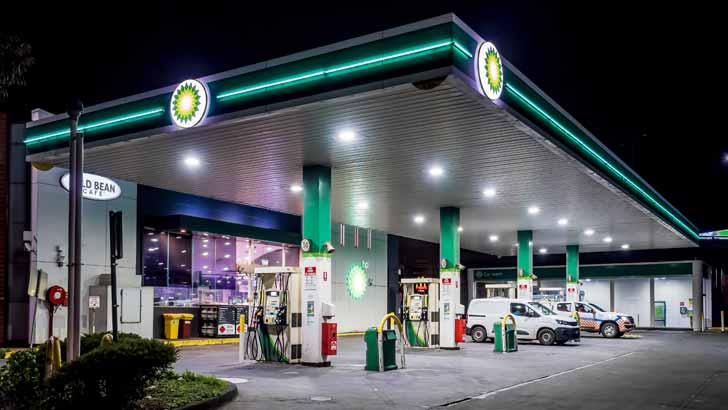
In the last few days global oil prices have surged to almost $120 per barrel, dropped to $80 per barrel, then climbed back up to over $90 per barrel.
It was around $60 at the start of 2026.
However, relief - of sorts - may be in sight.
This week the International Energy Agency (IEA) agreed to sell 400 million barrels of oil from its emergency stockpiles of over 1.2 billion barrels, to address disruption in the Middle East.
It's only the sixth such release in the IEA's 52-year history.
Will it soften pump prices in Australia?
Shadow Defence Minister James Paterson believes it will have only a "modest and temporary impact".
Chances are, he's right.
Under normal circumstances, around 20 million barrels of crude oil flow through the now-blocked Strait of Hormuz each day.
That makes the emergency 400 million barrels a relative drop in the ocean, and as the IAE notes, "options for oil flows to bypass the Strait of Hormuz are limited".
As for price gouging service stations, the federal government has jacked up penalties to a maximum of $50 million - five times higher than they were previously.
New super reform will leave one in six workers better off in retirement
Two proposed super reforms are a step closer to becoming law after the Greens agreed to back the changes this week.
The first reform is the expansion of the Low-Income Superannuation Tax Offset (LISTO).
The LISTO refunds the 15% tax paid on before-tax super contributions by depositing the tax back into a low-income worker's super fund after they file a tax return.
In this way, low-income earners pay no more tax on super contributions than on their take-home pay.
From July 1, 2027, workers earning up to $45,000 annually, up from $37,000 at present, will be eligible for the LISTO.
In addition, the maximum LISTO payment will be raised from $500 to $810.
It's good news for the 1.3 million additional Australians who will benefit from the offset.
CBUS Super CEO Kristian Fok, says, "If you're on a low income or just starting out, you might be paying a higher super tax rate than someone with a significant balance. That's not fair.
"This is a simple change that will have a significant benefit for younger workers, helping to set them up for financial security by boosting their super savings."
The second reform will raise the tax on investment earnings from 15% to 30% for super balances over $3 million, and to 40% on balances over $10 million.
Only one in 200 Australians with super are expected to be impacted by the higher tax, compared to 1 in 6 who will benefit from the expansion of the LISTO.
Do trees increase or reduce your home's value?
Street trees can play a valuable role keeping our suburbs cooler, adding privacy to homes and creating a more pleasant outlook.
But it's a fine line - literally, as to whether they add value to a home.
Research by the University of Technology Sydney (UTS) found street trees can boost house prices by $30,000.
However, if a tree is too close to a property - that is, within 10 metres of a home, it could reduce the selling price by more than $70,000.
That's because of concerns about roots causing structural damage, the potential fire hazard, and safety concerns around falling branches.
The UTS results were based on Sydney house prices.
Even so, every Australian capital has adopted tree planting strategies, with many cities aiming for 30-40% canopy cover in coming decades.
It could be worth hanging around with a tape measure when the local council plants trees in your street.
Fees outrank interest rates when choosing a savings account
As rates rise, Aussie savers are laser-focused on getting value from their savings accounts.
Surprisingly though, the interest rate on deposits doesn't take top billing.
A survey by Finder shows 64% of Australians rank zero account fees as the most important factor in a savings account, compared to 61% who say the interest rate is their top priority.
Finder's Sarah Megginson says, "In an era of cost-of-living pressure, savers are unwilling to tolerate fees that erode their returns.
"People have worked too hard for their money to watch it get chipped away by unnecessary charges."
If you're looking for a savings account with zero account keeping fees, and a high rate without deposit or withdrawal restrictions, AMP (4.60%) and Easy Street (4.55%) could be worth a look.
Australians missing billions in insurance benefits following key reforms
Back in 2019, two key changes were made to super.
Life insurance in super was cancelled on accounts that had been inactive for 16 months, and default life cover was scrapped for under-25s and anyone with an account balance below $6000.
Fast forward to 2026, and those reforms, while well-intended, have seen 5,000 Australians die each year without the support of life insurance.
Impacted families have collectively missed out on about $670 million in death benefits each year.
The changes to life cover were designed to stop premiums eating away at account balances.
However, the Association of Super Funds Australia (ASFA) says around 5 million individual accounts lost insurance as a result.
ASFA's Chief Policy and Advocacy Officer, James Koval, says, "These laws were meant to protect balances, and that intent was sound. But the mechanism was too blunt.
"Insurance was switched off by default, often leaving people unaware it had happened. Our research now shows the scale of that consequence."
ASFA is suggesting policy changes to stem the loss of life cover.
In the meantime, it's a cue for all working Australians to check the insurance they have through super.
Get stories like this in our newsletters.