Enshittification: Why you're paying more for less




Why do streaming services have more ads, subscriptions cost more and products seem worse than they used to be? Author Cory Doctorow explains "enshittification", the trend he says is reshaping everything from Amazon and Uber to everyday consumer brands.
Cory Doctorow coined the term 'enshittification' in 2023 and has spent much time in the intervening years identifying the phenomenon in modern life.
The author, blogger and activist says he now feels like a "father confessor" to anyone who's noticed a product has become worse, while still consuming as much of their time, effort, money and attention as before.
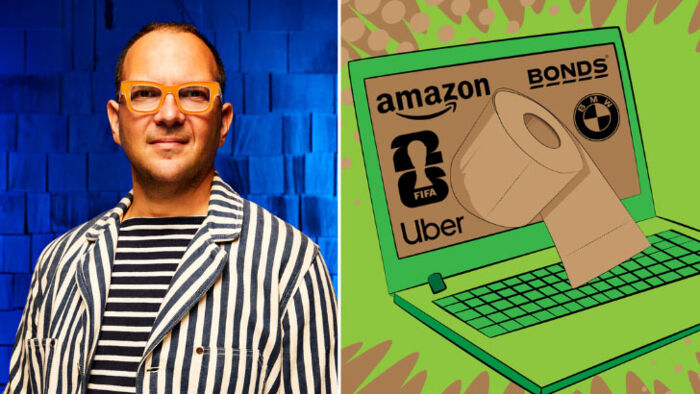
"Every time someone either is pressurised by their boss to enshittify something or encounters that enshittification in the wild, I get an email," he tells Money.
What is enshittification?
In simple terms, enshittification describes the process where a product or service becomes worse for users over time while becoming more profitable for the company behind it. Consumers often notice this through higher prices, more advertising, lower quality products, reduced customer service or new fees and charges.
Announcing it as its Word of the Year in 2024, the Macquarie Dictionary defined enshittification as "the gradual deterioration of a service or product, brought about by a reduction in the quality of service provided, especially of an online platform, and as a consequence of profit-seeking".
In an article for Wired the year before, Doctorow identified how the phenomenon was underpinned by the ability of digital platforms like Amazon and Facebook to build powerful monopolies.
These companies, he said, then leverage this guaranteed access to products and consumers to win over users and suppliers, respectively.
Once both parties are relying on the platform to communicate, shop, live and do business, it turns on both parties for its own profit.
"Surpluses are first directed to users; then, once they're locked in, surpluses go to suppliers; then once they're locked in, the surplus is handed to shareholders and the platform becomes a useless pile of shit."
Where is enshittification happening in 2026?
According to Doctorow, it's happening everywhere.
On his own phone, he's seen platforms that were once novel and interesting, but now everyday tools, being increasingly tweaked to please the financial interest of owners and investors.
Video platforms are a key example.
"Streaming companies decided to start squeezing [and] stopped buying as much new content. They needed a way to demonstrate to Wall Street that people would be happy to watch old stuff," Doctorow says.
"[So] the companies set as their key performance indicator: you must successfully recommend [older] videos.
"Suddenly, if you touched any part of your screen, you'd be watching something else... there was no back button. It was as easy as anything to go from watching one video to another, but nearly impossible to go back."
Beyond these aesthetic changes, streaming platforms have been accused of tightening their squeeze on consumers in other ways.
In June, the ACCC announced it was taking global giant Amazon to court for hiding unfair terms in its Prime Video contracts and then relying on these to spring extra charges on customers.
The consumer watchdog says customers who had paid $79 to sign up to Prime, expecting it to be ad-free, were suddenly told they had to pay an extra $2.99 per month to keep their viewing from being disrupted by commercial breaks.
Doctorow says such actions are prime examples of enshittification, pointing to the "proliferation of ads" in subscription streaming services as proof of an old adage: "Once you're a captive audience, there's no reason to treat you well."
Beyond entertainment platforms, enshitment allegations have been flung at all manner of global companies accused of misusing market dominance.
From FIFA's introduction of dynamic ticket pricing and extra ad breaks during the recent World Cup, to BMW's decision to play movie trailers on the display screens of its cars in some countries, companies have been accused of burdening consumers with costly or irritating extras for nothing valuable in return.
Closer to home, local mainstay underwear brand Bonds has been accused by Reddit users of "enshittifying an Australian icon" by continuing to charge higher prices for products alleged to be of worse quality.
Convenience vs cost: what we're paying for enshittification
If companies being able to build monopolies provides the foundation from which to enshittify, the convenience of engaging with these businesses on our own devices whenever we like could be accelerating the process.
Doctorow says services like Uber have led people to become used to the idea of personalised pricing or, as a worker, even being paid more or less than someone else doing the same job.
"Platformisation means that every consumer and worker enters the marketplace in an atomised way," he explains.
"Taxi drivers can find out, for example, if their bosses pay them differently because they can talk with one another," he explains. "But if you drive Uber, you are isolated from everyone."
As more businesses ape the Uber model and society becomes more platformised, Doctorow adds, individuals face greater forces encouraging them to get used to the idea of paying more for goods and services while potentially receiving less for their labour.
The ability of companies to collect large amounts of detailed consumer data, he adds, ensures these price offers can be ruthlessly personalised and targeted to each of us.
How can we fight back against enshittification?
Doctorow says laws protecting digital platforms prevent any quick technical fixes to improve price or wage discrepancies across different apps and platforms.
And the monopolies global companies have across multiple brands can mean boycotting one enshittified product for another can send you back into the arms of the company you're trying to avoid.
"You can't do much about this as a consumer, I'm afraid," Doctorow admits. "Shopping your way out of a monopoly is like recycling your way out of a wildfire."
Doctorow says anyone wanting to push back against enshittification should be prepared to get politically organised.
"If we really want to do something about these companies, we have to unwind their mergers, block predatory pricing [and] pass and enforce meaningful privacy regulation," he explains.
"Those are the actual measures and you get them out of your policy makers, which means that you're going to have to join a polity, which is a pain in the arse."
"A boycott isn't thinking hard about what you're going to shop for. A boycott is an organised movement... so stop thinking of yourself as a consumer and start thinking of yourself as a member of society."
Cory Doctorow appears at Sydney's Festival of Dangerous Ideas from August 22-23 and Melbourne's The Capitol on August 25, presented by The Wheeler Centre and Now or Never.
His new book, The Reverse Centaur's Guide to Life After AI, published by Verso, is released August 4 and available for pre-order now.
Get stories like this in our newsletters.