Falling divorce rates hide a harsher truth for women




Australia's falling divorce rate looks like good news, but it hides a harsher reality for women.
While fewer marriages are ending, women who separate continue to face far greater financial insecurity, housing risk and social stigma than men.
According to the Australian Institute of Family Studies, Australia's divorce rate fell to 2.3 per 1,000 people in 2023, the lowest level since the mid-1970s.
Divorce and divorcees are accepted as a part of modern life, and Australians are marrying less and being more intentional with who they choose to marry.
Yet women continue to carry the burden of the social stigma associated with marriage breakdown. Just like the women of the generations before them, they are also the ones most likely to be financially bereft following a divorce.
Divorce has never been equal for women
From the 19th and early 20th centuries, exclusion was the name of the game for divorced women.
Shunned from social circles and left without financial support, women who were brave enough and determined enough to obtain a divorce frequently lost custody of their children and were left destitute, as few worked outside the home.
For most of the population, especially women, divorce was close to impossible to obtain.
Laws overwhelmingly favoured men, who could divorce their wives for adultery in Victorian England. Women, on the other hand, were required to provide proof of adultery plus another transgression such as cruelty, incest or desertion.
Things did not improve through the mid-20th century, when divorce was widely viewed as a ruinous event for women. In countries where it was permitted, divorced women were judged, shamed and left financially and socially vulnerable.
In the lead-up to the introduction of no-fault divorce in 1976, which also happened to be the year marriage dissolutions peaked, women were in a stronger position to support themselves.
Women were more prevalent in the workforce and able to own property, vote and achieve financial independence.
However, women were still not spared the stigma of divorce. Viewed with suspicion and even regarded as a threat to married women, divorced women were often depicted in popular culture as pitiable, lonely or desperate for remarriage.
Why modern divorce still hits women harder
Today, divorce is commonplace, yet women continue to disproportionately carry the stigma attached to relationship breakdown.
Common tropes persist, with women accused of taking half of everything or labelled callous "gold diggers" who deliberately keep children from their fathers.
AIFS data shows the reality is very different. The social and financial divorce penalty still bites women harder.
Following separation, women's standard of living falls significantly, with women and children far more likely than men to experience financial hardship after divorce. Repartnering remains a key pathway out of financial difficulty for many divorced women and their children.
Divorce and separation frequently lead to homelessness for women, particularly older women, who are now the fastest-growing cohort of homeless Australians.
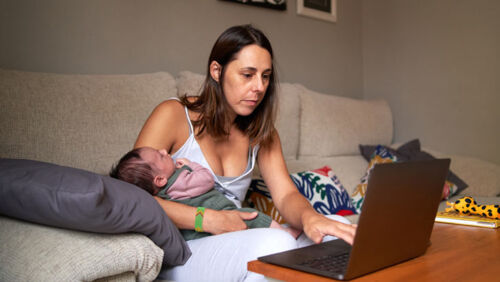
Those who have spent time out of the workforce raising families are often left in a precarious position after a marriage breakdown.
At every stage of life, women are more likely to be financially disadvantaged after divorce. Against this backdrop, the low divorce rate of 2.3 per 1000 people must be viewed in its broader social and economic context.
Low divorce rates do not mean happier marriages
The stigma once attached to blended families, second marriages and de facto relationships has largely faded, and fewer Australians are getting married in the first place.
Women are more independent than ever and increasingly expect equality within their relationships. As elsewhere in the world, the average age of marriage has risen.
Globally, divorce rates have plateaued or declined, from the United States to Sweden and Denmark, once described as "divorce capitals".
But fewer divorces do not necessarily mean happier marriages.
Australia's housing affordability crisis, combined with inflation, stagnant wages and persistently high living costs, has placed a prohibitive price tag on separation.
Domestic, family and sexual violence further compounds this reality. Countless women remain in harmful, unsafe or unfulfilling relationships because they feel they have no viable alternative.
Separation is often the most dangerous period for a woman escaping violence, raising the stakes and reinforcing the sense that leaving is simply too risky.
The real financial cost women pay after separation
At face value, divorce can appear to be largely about legal fees.
In reality, an underfunded court system burdened by delays, combined with the housing crisis and cost-of-living pressures, discourages many couples from separating at all.
Because women are more likely to have interrupted careers due to caregiving, they tend to have lower superannuation balances, less career capital and fewer advancement opportunities.
After divorce, men are more likely to remain in full-time work, while women juggle part-time employment with ongoing childcare responsibilities.
The numbers are stark. Women's household incomes fall by up to 29% following divorce, compared with around 5% for men. Men are also far less likely to fall below the poverty line.
Divorce can still represent freedom for women escaping unsafe and harmful relationships, but the system extracts a heavy and gendered price.
As primary caregivers, many separated women lose income security, housing stability and retirement prospects. Too often, they and their children lack adequate support to recover from trauma.
As a society, we must recognise that falling divorce rates do not always equate to good news. Systemic barriers must be dismantled, and meaningful support provided to those who would otherwise escape unsafe relationships.
Until it is genuinely safe for women to leave, Australia's low divorce rate should be seen for what it is, a reflection of the inequality that continues to define divorce for women.
Get stories like this in our newsletters.