Thinking about a home battery? Waiting could cost you $9000




Australians considering a home battery may have only weeks left to lock in the current federal discount, with the Clean Energy Regulator (CER) warning that the installation date, not the contract date, determines how much support a household receives.
From May 1, the federal subsidy underpinning home battery discounts will change, reducing support for larger systems and potentially adding thousands of dollars to installation costs for some households.
The CER says it will apply closer scrutiny to battery retailers and installers during the transition.
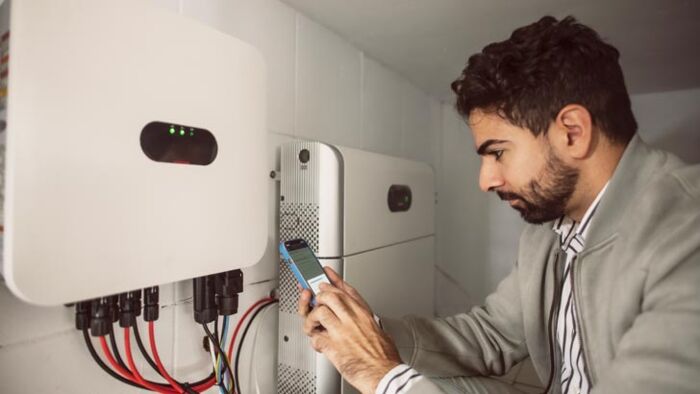
"The advice to customers is to confirm that the installation will be possible and the price quoted will be honoured," says Carl Binning, executive general manager at the CER.
"We will be watching the industry carefully during these changes."
Why batteries are in focus
While millions of Australian households have installed solar panels, much of the energy generated during the day often goes unused.
Attention has since turned to home battery systems, which store excess solar energy for use at night or during low-sunlight periods.
In December, the federal government announced it would expand the Cheaper Home Batteries Program from $2.3 billion to $7.2 billion over four years.
The expansion is expected to help more than 2 million households install a battery by 2030, adding around 40 gigawatt-hours of storage capacity.
However, the government says the discount formula has been adjusted to reflect "declining battery costs".
How the discount works
The subsidy works through small-scale technology certificates (STCs). In simple terms, when an eligible battery is installed, it generates a set number of certificates under a federal scheme.
Those certificates are usually assigned to the installer or retailer, who sells them and passes the value on as an upfront discount on the customer's bill. STC prices can vary, but they are commonly valued at about $40 each.
Until April 30, the discount remains more generous, particularly for larger battery systems.
According to Energy Matters, under the current settings a 10kWh battery attracts about $3110 in support, while a 50kWh system can receive about $15,550.
What changes on May 1
From May 1, the rules will change in two key ways.
The certificate factor will fall, and the discount will shift to a tiered model, with the strongest support applying to the first portion of battery capacity and much lower support applying to larger systems.
Under the new settings, batteries of up to 14 kilowatt-hours (kWh) will continue to receive the full discount, which the government says is designed to be worth about 30% off the upfront cost.
For batteries sized between 14kWh and 28kWh, the discount falls to 60% of that level. For batteries between 28kWh and 50kWh, it falls to 15%.
Using the CER's solar battery STC calculator, a 50kWh battery system installed on April 30 would generate 420 STCs. Installed a day later, on May 1, the same system would generate only 174 STCs.
Based on current market settings, that would reduce the upfront discount on a 50kWh system to about $6470 - more than $9000 less than under the current rules.
The discount does not disappear, but it becomes far less generous for households considering medium to large battery systems.
Is it too late to install a battery?
According to the latest SunWiz data, published by SolarQuotes, a record 1.2 gigawatt-hours of home batteries were registered through the Cheaper Home Batteries Program in February.
SolarQuotes also reported that two battery installers said their teams were booked out well into May.
"Our main constraint is installer capacity - we'd love to hire another qualified electrician, but finding the right person is tough."
Another bottleneck is accreditation. Only installers certified for battery systems under Solar Accreditation Australia (SAA) can carry out rebate-eligible installs.
Many electricians are accredited to install solar panels, but fewer are accredited for battery systems.
Consumers can check whether their installer's accreditation is current on the SAA website.
Regulator warns retailers to do the right thing
Binning says the CER is writing to solar retailers to remind them of their obligations to customers.
The CER says deceptive or misleading behaviour will not be tolerated, and retailers that fail to meet their obligations may be referred to fair trading bodies.
"Check your quotes, ensure they are not out of date, and communicate the price changes to customers," Binning says.
The Smart Energy Council, which advocates for the renewable energy industry, says the changes are not just about the value of the rebate.
"They are about maintaining trust, delivering on commitments, and ensuring safety across the industry," says David McElrea, acting chief executive officer and chief advocacy officer at the Smart Energy Council.
The bottom line
For consumers, the key point is simple: to receive the current discount, the battery must be installed by April 30, 2026. Signing a contract before then is not enough.
For households considering a larger battery, the difference could be substantial.
Waiting until May 1 or later could mean paying thousands more for the same amount of storage.
Get stories like this in our newsletters.