How millions of Aussies could get free electricity




Millions of Australians will soon access free solar power - even without rooftop panels - under a new federal energy initiative.
From July, the government will launch Solar Sharer, a retail electricity offer providing at least three hours of free power during midday, when solar generation peaks.
The scheme will be part of the Default Market Offer (DMO), the regulated electricity price available in New South Wales, south-east Queensland and South Australia.
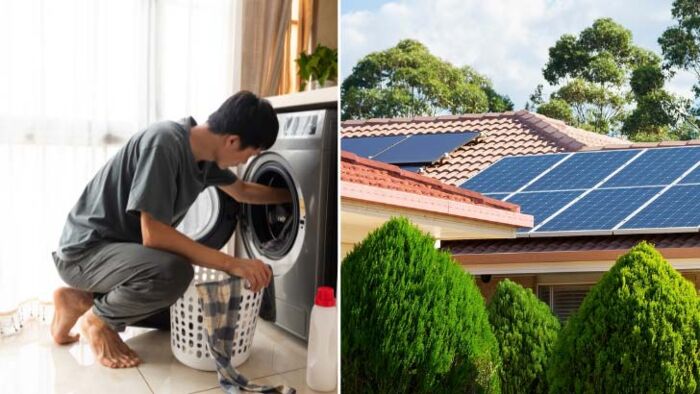
Climate change and energy minister Chris Bowen says the reform is designed to help households shift energy use to when solar is abundant, regardless of whether they rent or own, or have solar installed.
"People who move electricity use into the zero-cost power period will benefit directly," Bowen says. "The more people take up the offer, the greater the system benefits, lowering costs for all electricity users."
Why is free solar power being offered?
Australia leads the world in rooftop solar adoption, with over 4 million installations nationwide.
In some states, such as South Australia, rooftop solar can meet 100% of electricity demand during peak sunshine hours.
But solar energy must be used as it's generated, or it's wasted. That's why midday solar often has zero or even negative market value.
"In the middle of the day, our grid is humming with cheap solar," says Francis Vierboom, CEO of Rewiring Australia. "The underlying price of that electricity is often zero or negative."
How Solar Sharer will work
The Solar Sharer plan encourages households to shift energy-intensive tasks to the free midday window.
"That's enough time to heat up a hot water tank, blast the air conditioner to cool a home on a hot day, run a pool pump, or charge an EV," Vierboom says.
"Each one of those could mean hundreds of dollars of savings per year."
Vierboom says the reform also could reduce evening peak demand, which drives costly grid upgrades.
By smoothing out usage, the grid becomes cheaper to maintain lowering costs for everyone.
The Australian Energy Regulator will regulate the Solar Sharer Offer. The government says this is to ensure customers also get a fair deal outside of the free power period.
Who can access Solar Sharer?
From July 2026, Solar Sharer will be available to households in NSW, SE QLD and SA. The government plans to expand the scheme to other states by 2027.
Participation will require smart meters, which are expected to be installed in 100% of homes by 2030.
How consumers can save more on solar
Australia's energy transition from coal to renewables is unlocking new ways for consumers to save - including solar feed-in tariffs, government subsidies, virtual energy networks, and apps that offer access to wholesale electricity prices.
Jeff Sykes, CEO of Solar Choice, says Solar Sharer is a "great step forward" but urges Australians to adjust their habits to maximise savings.
"Even small behaviour changes, like doing laundry or charging devices midday, can add up to meaningful reductions over the year," Sykes says.
"In my personal experience with an EV, this type of plan has saved me thousands of dollars annually."
This approach is part of a broader shift to off-peak energy systems.
Vierboom says Australia first started using off-peak systems back in the 1950s, when we ran hot water tanks to balance the grid for coal power stations that couldn't turn off overnight.
"But the new off-peak is midday, when we're making free energy on our own rooftops. This update will save Australians money and keep our electricity system strong."
What else is changing?
Alongside Solar Sharer, the government says it will reform the Default Market Offer to strip out unnecessary costs and improve its role as a safety net.
According to the government, these changes will:
- Set a clear objective for the DMO to deliver a fair, trusted and reasonably priced electricity option
- Reform or remove costs unrelated to electricity provision, such as marketing expenses and competition allowances
- Be subject to AER consultation before implementation
Rewiring Australia is calling for further support to help Australians switch to all-electric appliances and vehicles.
"Over 100,000 people have already used the Cheaper Home Batteries subsidy," he says. "We should expand it to cover standalone batteries and smart EV chargers that can use Solar Sharer plans.
"We should also keep expanding flexible finance options and set minimum standards for rental homes to require electric appliances when gas ones break down."
How to have your say
The government is inviting public feedback on the proposed reforms, including:
- Tariff design
- Consumer impacts
- Interactions with other reforms
- Consumer protections
- Opportunities and risks
Submissions close at 5pm on November 21. To provide feedback, visit the Have Your Say portal.
Get stories like this in our newsletters.