How to earn Qantas frequent flyer points without flying




Earning frequent flyer points when you're not a frequent flyer sounds like a challenge, but the good news is that, according to Qantas data, two-thirds of Qantas frequent flyer (QFF) points are now earned on the ground.
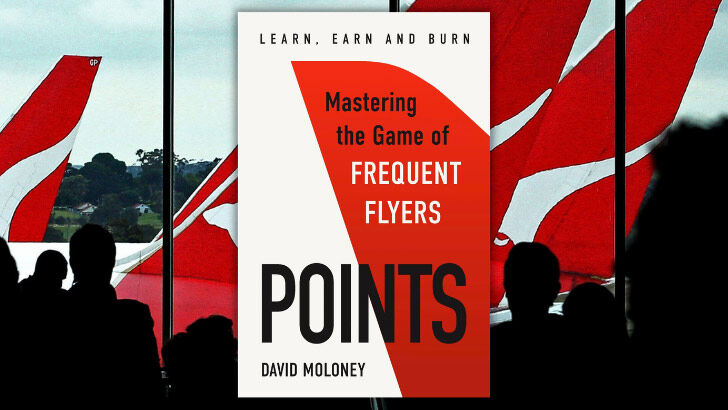
In his book Points: Mastering the Game of Frequent Flyer Points, author David Moloney reveals how to earn points quickly and easily by systematically pursuing the highest return with the lowest level of effort, no jet lag required.
Here's how to get started.

Fishing for points
To start, you need to figure out what kind of point-netter you are, from a 'passive fisher' to a 'pointaholic'.
For every type of points fishing, I'll share several strategies, some of which you can (and should) implement instantly.
We'll start in shallow water with the OG of points earning: travel and accommodation.
Passive fishing
With a little setup, these strategies will reward you handsomely for very little effort.
Flying high and double-dipping
The 'easiest' way to earn points is by booking flights and staying at hotels within the QFF program. Qantas readily displays the points and status credits for every flight on its website, along with the pricing options within the flight. It even provides a points calculator to speed up the discovery process.
All you need to do is make sure your QFF membership number is entered into every one of your partner accounts, such as hotels, cruise lines and hire-car companies, and in any reservations you make outside the Qantas website. Easy!
You may have heard the phrase 'double-dipping', the idea that you can get two sets of points for the one transaction. For example, some hotels will allow customers to gain points on the hotel's program and the Qantas program, if you link your QFF account. (At the time of writing, this works for Accor hotels.)
If you pay for the hotel stay with a Qantas-linked credit card, then you can 'double dip' with little effort.
However, you should always be on the lookout for better alternatives. I purchase my hotel nights through Hotels.com because they almost always match the lowest price and deliver a guaranteed 10% 'cash-equivalent' credit for future nights, and I use my Qantas-linked credit card to pay to earn points. The 10% from Hotels.com is typically much more generous than the hotel awards, which can be lost when you book through a third-party platform such as Expedia.
Here are the numbers:
- $1 in Qantas Hotels equals three points.
- $1 in Airbnb through Qantas equals one QFF point, plus 500 bonus points for your first-ever booking.
- $1 in car hire (such as Avis or Budget) equals four QFF points.
Earning from your essentials
Your everyday shopping at places like Woolworths, Big W and Caltex also nets you points easily.
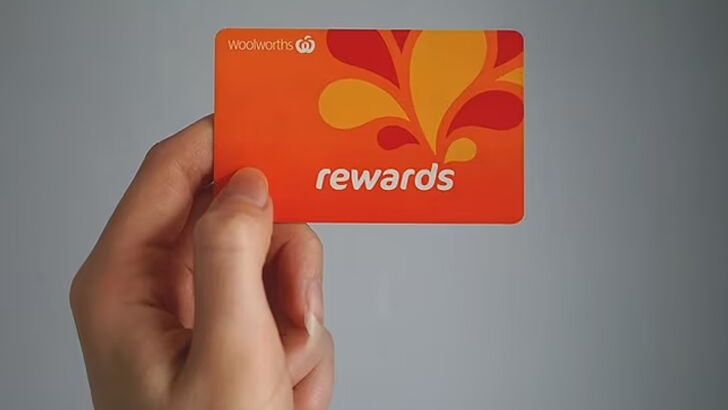
The Woolworths Everyday Rewards program allows you to earn points when you shop online and in-store at Woolworths and partner retailers, including BWS, Ampol and Big W.
You get one Everyday Rewards point per dollar spent, and this can be exchanged at an earn rate of 0.5, that is, 1000 QFF points for every 2000 Everyday Rewards points earned.
You need to reach 2000 Everyday Rewards points to convert them to QFF points, and, of course, you need to link your account.
If you use a Qantas-linked credit card for your shop, you also get points for that, with the exact number of points depending on the earn rate of the card.
It is worth noting that not all purchases at Woolworths earn points. The supermarket giant doesn't pay points for 'hazardous' products such as tobacco, lotteries and sometimes gift cards, unless one of its gift-card bonuses is running.
The branded credit card bonus
Qantas-branded credit cards earn you points on every spend automatically without you having to re-enter your Qantas card on every transaction.
At the time of writing, there are no less than 35 credit cards offered by 15 financial institutions in Australia that offer this, including American Express and the major banks.
Unless you spend much more than average on food and petrol each year, your spending will probably get you a Qantas Classic return economy flight between Sydney and Melbourne (at 9200 points per leg) once or twice a year, but not much more.
You can increase that slightly by looking for cards with a higher earn rate, such as the 1.5 points per $1 spent on the HSBC Platinum Qantas Card, but cards like this typically come with much higher annual fees and points caps, so do the maths on your total costs.
The sign-on bonus for the card can be an astonishing source of points for not a huge effort.
At the time of writing, the maximum bonus is an incredible 200,000 points, equivalent to 10 Sydney-Melbourne return economy tickets.
However, always use credit cards for temporary debt only. Revolving credit-card debt is not good for your financial health and will eclipse the value of any points you earn.
A family affair
With Qantas, you can 'recruit' almost any member of your extended family who has points but isn't interested in using them, and they can simply transfer their points to lucky old you.
You can transfer as few as 1500 points, with unlimited transfers and no transfer fees. But be careful: family transfers are not 'regenerative', which means you still need to redeem or earn points on your account to avoid expiry dates being triggered.
Qantas has a very generous definition of who counts as 'family'. It includes everyone from your partner to first cousins, so my advice is get to Granny early.
Also consider the QFF Joey Club. It's free to join and allows kids to earn Qantas points on flights if they have their own seat (non-infant fare).
You can then sneakily do a family transfer from their account to yours or help them grow this account like a trust fund.
It will cost you a Qantas transaction to their account at least every 18 months, so it might be better to tell them when they're older that you took the points because they would have expired or horribly devalued anyway.
Passionate fishing
If you are prepared to up your game and show some passion in your points pursuit, then the following strategies will get your points balance to cruising altitude.
Mileage malls and more
If you're willing to put in the effort to 'swap where you shop', I elevate you to the status of a passionate points fisher.
Shopping directly at Qantas Shopping, Qantas' online shopping hub with more than 450 partner brands, can give you many extra points per dollar spent.
Log on with your QFF details and enable cookies so the website can track your spending.
You can also link your credit cards to your QFF account and receive direct card offers via email or on the web, obtaining points by paying with a linked card.
Qantas Wine is another darling of point hackers everywhere. With their extensive selection and rotating array of offers, you can earn an astonishing 30,000 extra points per quarter for subscribing to a case per month.
Look out for cases that are both discounted and carry extra point bonuses.
The numbers pay off quickly:
- $1 in Qantas Shopping can get you up to seven points. These vary by brand and partner shop and have limited-time bonus offers.
- $1 in Qantas Wine gets you three points if you have a premium membership, or one point if you have a standard membership.
As part of my research for this book, I purchased less than $1000 worth of wine and received more than 35,000 points, worth at least $700 and, if I redeem well, a multiple more, making the wine effectively free.
As always, check the pricing of goods to make sure you are not paying for these points with higher prices than are available elsewhere.
Flash points
As your passion for points grows, so will your attention span, and you will realise there are points-related offers happening pretty much all the time.
Some bonus offers will come to you through AI-driven analytic engines. Others are best found by you through free points e-zine subscription services, online forums or the AI prompts later in this chapter.
They mostly consist of limited-time point bonuses applied to certain items, sometimes every day, like petrol with three-times point multiples and huge bonuses for businesses signing up to fuel cards, but more often items that are highly profitable or that customers do not buy as much of.
Point arbitrage
The next technique requires a little more effort.
Point arbitrage is when you buy points in another airline's program because either their point cost or their redemption cost, or the net of both, is lower.
You can do this with any airline when the price is right.
There are often significant differences in pricing and rewards offered by each airline. While Qantas is currently selling points for between 2.5 cents and more than 5 cents per point, Alaska Airlines is known for selling miles that can be redeemed for the same ticket at much lower levels of points.
To reap the rewards, you must be passionate enough to join the Alaska Airlines program (or others) and respond to their offers.
In Alaska's case, you also have to redeem Qantas and other Oneworld flights through the Alaska Airlines website, not Qantas'.
The same strategy works for the other two major airline alliances.
The promotions are usually tailored, so bonuses can vary from user to user. In 2022, they varied from 40% to 60% bonus miles.
On occasion, loyalty programs offer transfer bonuses, another way to multiply the power of your points, whether earned or purchased.
The partner of one of my school friends is a passionate points hacker, and she games Alaska Airlines' bonus-offer models by clicking on each link but ignoring their initial offers until they offer a substantial discount, then buying up big.
Qantas Wellbeing
If you're willing to really change your habits, you can sign up for the Qantas Wellbeing app. Armed with a smart wearable or your phone, you can track and log 'healthy' activities, from exercising to getting a good night's sleep, to earn points for good habits. You can earn up to 1000 points during the 28-day trial; after that, the earning rate is reduced.
You can also earn points by recruiting friends (currently 150 points per invite, up to a maximum of 20 friends or 3000 points).
Here are some of the activities and points listed:
- 30 minutes of running equals 12 points
- One round of golf equals 19 points
- Two hours of cycling equals 21 points
- 45 minutes of swimming equals 20 points.
Bear in mind that Qantas also runs a business in the wellbeing area: Qantas Insurance. Data on customer exercise behaviour is a great way for health insurance providers to find and keep lower risk customers.

Churn to earn
It's not only health insurance Qantas offers but also car, home and travel insurance. If you're willing to switch to a Qantas policy, it comes with enticing benefits:
- Health insurance - up to 140,000 points over six months (or more if you also use the Qantas Wellbeing app)
- Car insurance - up to 35,000 points
- Home insurance - up to 35,000 points
- Travel insurance - up to 25,000 points.
The same applies to mortgages, and this can be even more lucrative for points hackers.
The Australian Financial Review reported that one property investor switched all four of her mortgages to Qantas home loans and earns a whopping 400,000 points every year.
Obviously, the competitiveness of the mortgage pricing is critical, but if the mortgages are for investment purposes, any extra interest could be tax deductible, lowering what could be a high cost of point earning to something that could be profitable under better redemption scenarios.
Gift-card triple-dip
One of the simpler (although time-consuming) QFF strategies is 'triple dipping'.
Instead of directly shopping, buy gift cards when bonus offers are in place. You then use those gift cards to pay for your groceries at Woolworths, scanning your Everyday Rewards card as usual.
In effect, the same grocery spend generates three streams of rewards: first via the credit card, then via the supermarket loyalty program, and finally via the bonus points on the gift card.
It is not glamorous, and it requires a certain degree of organisation, buying gift cards in advance, keeping track of balances and linking accounts correctly, but for households with significant weekly grocery bills, the additional points can add up steadily.
One points hacker reported bonuses as high as 20 times on Everyday Rewards for Apple gift cards to purchase the same Apple phone they were going to buy anyway.
That's nearly 40,000 points, worth a decent chunk of the value of the phone itself if redeemed wisely.
Others report spending $200 on dog food at a pet retailer and netting 2950 points via a similar multiple-dip strategy.
As with most points strategies, the key is that the spending is ordinary and budgeted. The value quickly evaporates if the pursuit of points leads to overspending or interest charges.
Calendarised churn
Credit-card 'churning' refers to repeatedly signing up for new credit cards to collect their sign-up bonus points, meeting the minimum spend requirement, then cancelling or downgrading the card and moving on to another provider to do the same thing again.
This is still the biggest game in the points economy.
Brian Kelly, the US author of How to Win at Travel, admits to having 28 active credit cards and argues he is on the conservative side when it comes to credit-card points earning.
The card issuers are onto this gaming and are making it harder.
Rather than just signing you up and issuing you the points, they only issue them after you hit specified spending and tenure hurdles, with some splitting the bonus and only paying the total after two annual fees are paid.
It's also more important than ever that you never miss a payment. With comprehensive credit reporting, every late payment affects your credit score.
The best professional-level earners diarise their card churning so they align statement dates to never miss a payment and have the next round of applications in as soon as they have milked the full bonuses from their current cards.
Exploding vouchers
Exploding vouchers are time-limited and tend to come with a 'cliff'.
For instance, you need to spend a minimum amount of money to use the discount, and you'd better hurry because time is running out.
While Qantas doesn't currently use this strategy, you can use a Qantas-linked card to make these purchases.
Several cosmetics retailers do this in combination with points and status rewards, giving members who have reached a spend-based tier limited-time vouchers and discount coupons that require increasing minimum spends.
The strategy is designed to encourage repeat purchases and larger baskets, rewarding loyalty while creating a sense of urgency.
For the savvy points collector, these exploding vouchers can be a way to earn bonus points or hit status targets faster, but only if the purchases align with what you need.
Otherwise, the 'clock is ticking' pressure can lead to overspending, turning what looks like a deal into a costly impulse.
The key is to treat exploding vouchers as a tool, not a trap: plan ahead, spend within your usual budget, and only use them on products or services you were going to buy anyway.
The pointaholic
These 'pointaholic' strategies should be pursued only by the brave, dedicated and diligent. If implemented incorrectly, they can be detrimental to your financial health.
Third-party payment processors
There is a new pointaholic game in town for businesses.
Third-party payment processors have emerged, offering anyone with a business (and recently even consumers with big bills to pay) the opportunity to pay most of their bills, including payroll and, ironically, even tax, through a third-party process with a service fee in return for points.
In this way, they cleverly mirror the recently banished surcharge model used by merchants, which funds interchange, which funds points.
For anyone with a business, this third-party service fee becomes a business expense, an opt-in amount of approximately 1% to 1.8%, depending on the number of points you want to be rewarded with and whether they are paying for you directly or via your point-earning credit card.
The extra fee lowers the business's taxable profits but pays for the points.
If your business has expenses in the millions of dollars, then that's millions of points, an incredible new way to potentially lower the cost of your company's business flights and/or upgrade yourself to business class on the company's tab.
If you use these services through a business, the points will be owned by the business and so are to be used solely for business purposes, or they will be subject to fringe benefits tax.
Be careful, as the ATO has reported it is actively investigating businesses where employees accumulate more than 250,000 frequent-flyer points annually from business-related travel or expenditure.
It's not currently clear how these third-party payment processors will help their customers steer clear of this issue, so a little bit of compliance could go a long way, which is why this incredibly lucrative approach is a pointaholics-only strategy.
The gas gamble
This is what serious points collectors call 'stacking', layering multiple loyalty programs and promotions on a single everyday purchase so that one transaction earns rewards several times over.
Petrol is one of the most common examples because it's a regular household expense and several programs intersect.
Once your Everyday Rewards account is linked to a QFF account, you can begin stacking at eligible petrol stations.
First, scan your Everyday Rewards card when you fill up so the purchase earns Everyday Rewards points, which can later convert to QFF points.
Next, pay with a Qantas Premier Credit Card to earn Qantas Points again on the transaction itself.
Finally, use the Qantas app to activate or 'check in' to any available fuel promotions before you pay. These targeted offers can award bonus QFF points per litre on top of your base earn.
By applying all three layers, the points haul can be three or more times higher than normal, and even more for business customers with small fleets.
It is the level of complexity involved that elevates this to pointaholic territory.
You must calculate whether filling up with a certain brand of petrol, which may come with a premium price tag, is worth it for the points haul.
AI prompts to become a points master
As discussed, the points landscape is always evolving, and so your future strategies will have to evolve with it.
Following, you'll find specific actionable AI prompts I have developed with the help of ICG's AI team and Google Gemini Pro to help you maximise your points, whether you want passive-level help or professional-level guidance.
In each case, just type them into your preferred AI tool and substitute your details where suggested.
I encourage you to test them across as many platforms as you have access to and customise them for your context and use a prompt engineering tool if you have access to one.
Lastly, don't forget to open a new dialogue for fresh insights, as AI tools have a nasty habit of answering your next question in the context of your previous question.
AI points prompts for passive fishers
Here is a list of my typical monthly expenses (rent, utilities, fuel, entertainment, gym, groceries). Based on the current Australian market, map out a 'zero-to very-low-cost acquisition' strategy. Tell me exactly which free coalition loyalty programs I should join, which accounts to link and the optimal payment method to use for each expense to stop point leakage without paying high annual fees.
Passionate fishers
I have just been approved for a new rewards card. I have exactly 60 days to spend $4000 to trigger a 90,000-point bonus. I currently only have $2000 in planned organic expenses over the next two months.
Give me a list of 10 highly creative, legitimate methods to legally front-load my standard Australian living expenses (such as prepaying strata or council rates) to hit this target without going into debt.
Professional fishers
I am considering cancelling my current rewards credit card because the annual fee is due next month. I know banks use predictive churn modelling to intercept customers before they leave. Draft a script for me to use when calling the banks ...
Be prepared for turbulence
There are some unfortunate characteristics of points systems that I need to warn you about, especially if you're straying into the pointaholic category.
Unlike the dollars in your bank account, loyalty points don't earn interest and are therefore not compounding.
If you have no activity, QFF points will expire in just 18 months and, from time to time, like every other airline and points issuer, Qantas will adjust the value, almost always downwards.
Don't become complacent and always be prepared for your points to devalue.
Some of us witnessed the 2001 collapse of Ansett, one of Australia's major domestic airlines at the time.
Because frequent-flyer points are treated like unsecured debt, customers with Ansett points watched them vaporise with no compensation. Ouch!
Like most new challenges in life, it is good to start with some sort of achievable goal.
When you reach that points milestone, redeem those points with gusto before that flight or hotel costs you up to 20% more because of yet another devaluation.
My prediction? As Qantas devalued its points in 2004, 2019 and 2025 (by increasing the points required for its flights, to be fair, to align with the ravages of inflation), we should all be safe until at least 2029.
Of course, this is an estimate and so can't be relied upon.
Always be prepared for turbulence.
Remember: all points programs are a gamble, and the airlines and partners wouldn't take part if they weren't confident they could 'win'.
Know the risks, be prepared for the losses (which are not always obvious) and educate yourself. That's why you're reading this, after all.
How to protect your points
Hedging is a term points enthusiasts use to describe protecting the value of your loyalty points against changes in price, devaluations or program rules. In short, it means reducing the risk that your points will lose purchasing power before you use them.
You can do this in several ways:
- Diversify: Think about earning your points in different programs, typically one for each of the three major airline alliances. This reduces the risk of a single program devaluing or collapsing. The downside is that it's typically not helpful for maximising status or earning bonus points.
- Choose transferable programs: Ideally, choose a program that offers transferability. In Australia, American Express and HSBC offer points transferability to multiple carriers, and fortunately, airlines don't align their devaluations like banks when lowering interest rates.
- Know your net earn rate: Your 'net earn rate' from points is dependent on several factors, including payment surcharges (now only on charge cards), annual fees and the additional costs of your time and effort. Amassing a portfolio of millions of points is designed to make you feel rich, but it always comes with a risk, so don't ignore the hidden costs in the equation. This links to the next point...
- Don't overpay: The most dangerous hidden cost of all is the potential price inflation on a product if you only shop at a certain retailer because you 'need' the points from the purchase. Be careful, you may end up paying more for the goods because the price may have been inflated to cover the cost of those precious points you desire.
- Understand the points paradox: We all tend to overestimate our competence at the game of points. We routinely and systematically underestimate the cost of earning them.
That's why it helps to have a formula, which is your 'marginal earn cost per point'.
As a rule, in the old world of surcharging, you should have been aiming to earn points at no more than 1 cent per point.
With the banishment of surcharges, unless you are 'buying' points through a payment processor, earning points through product activation or retention bonuses, or using a charge card, points will appear free.
Even so, watch out for price rises to cover the cost of points, and the cost of any cards used to earn the points. Also look out for suppliers with more customers who ignore the loyalty program and who will helpfully (and likely unknowingly) subsidise your rewards.
This is an edited extract from Chapter 4 of Points: Mastering the Game of Frequent Flyers (Major Street, $34.99). Enter now for your chance to win a copy!
Get stories like this in our newsletters.