Why overtourism is sparking protests around the world




Water pistols in Barcelona are just the start. Here's what's driving the backlash against mass tourism, and what it means for travellers.
You're sitting in a restaurant in Barcelona. Your beer and tapas are on the way. It's sunny. You're on holiday. Life is good.
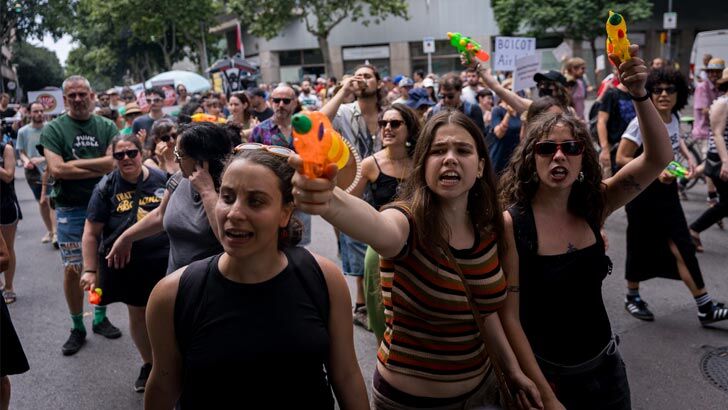
Then you look up and see a group of water pistol-wielding protestors.
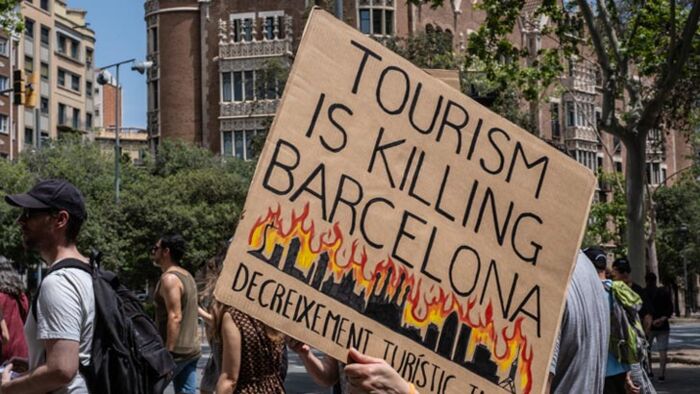
This was the experience of some travellers in the Catalonian capital during the European summer who found themselves face to face with locals fed up with the impact of overtourism on their lives.
Where locals are pushing back against overtourism
Barcelona residents are not the only ones who have been making their frustrations known.
In recent months locals in Genoa, Lisbon, Mexico City, Milan and Venice have hit the streets in protest over everything from the over-abundance of cruise ships to housing availability and affordability concerns.
Closer to home, popular destinations for Australians, such as Kyoto and Bali, have seen local pushback against anti-social and disrespectful behaviour from tourists.
Why overtourism is sparking global protests
Over the decades, international tourism has boomed. In 1950, there were 25 million international tourist arrivals, according to the United Nations World Tourism Organisation. In 2024, there were 1.47 billion.
Tourists don't spread themselves evenly across destinations, with research from consultancy firm McKinsey showing that 80% of travellers visit only 10% of the world's tourist destinations. And it's in some of these tourist hot spots that tensions are reaching breaking point.
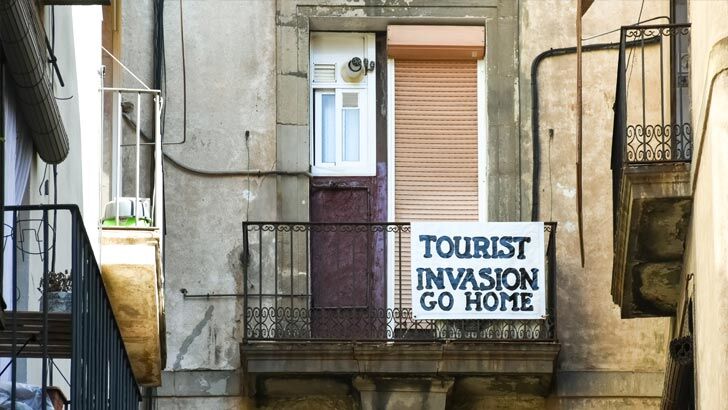
Alan Pomering, a tourism and sustainability researcher, says that overtourism can put pressure on infrastructure and the environment, plus it can promote grievances among locals who feel like their customs aren't being respected. Perhaps the largest issue, however, is housing.
"The big thing with overtourism that's been highlighted recently is the move from private or commercial accommodation towards semi-commercial accommodation through online platforms such as Airbnb.
"This has got a lot of criticism because it takes housing capacity out of inventory, which means that available supply for purchase or rent goes down and prices or rents go up for locals in these tourist locations."
Beyond the impact on locals, Pomering suggests that overtourism isn't good for visitors or the local tourism industry.
"If a location becomes synonymous with overtourism its reputation can become tarnished, which can happen very quickly now with social media.
"Tourists can become dissatisfied if they're having to queue up to get into restaurants and museums or stand 10 deep to get a glimpse of the Trevi Fountain. That's when people start looking for alternative places to spend their time and money."
Tourist taxes and fees: What you need to know
While some locals are clearly looking for more action from authorities to curb the impact of overtourism, measures are being introduced - some of which directly impact tourists' hip pockets.
"Some places are putting on fees and taxes. Venice, for one, now has access fees of €5-€10 for day-trippers during peak periods," says Pomering.
"Venice also has a tourist tax on overnight stays that gets added to your hotel bill, although this is common throughout Europe."
Some of the most famous World Heritage sites are adopting similar methods to control visitor numbers. For instance, travellers will need to pay a US$200 fee ($303) to visit the Galapagos Islands and a ¥4000 fee ($40) to hike up Mount Fuji.
Brett Mitchell, ANZ managing director at Intrepid Travel, believes that tourist taxes and entry fees are just one tool for authorities to use.
"When the funds are transparently reinvested into local infrastructure, conservation and community projects, they can make a real difference.
"Taxes alone won't solve overtourism, but combined with thoughtful business practices, government support and travellers making conscious choices, we can create a far more positive impact."
Perhaps the textbook example is Bhutan, which has adopted a 'high value, low impact' tourism model where most visitors are charged a US$100 fee ($151)
for every night they stay in the country (separate from other costs).
Aside from being used to put downward pressure on numbers (and attract wealthier tourists), the fee goes towards education, healthcare and environmental conservation in Bhutan.
Climate change could create new overtourism hotspots
The headlines may be focused on the likes of Barcelona and Venice for now, but if international tourism continues to grow it's likely that new destinations will also come under pressure from the tourist crush.
Pomering believes that colder destinations could start to feel the effects of overtourism because of climate change.
"It's already getting harder to ski in parts of Europe as temperatures have risen and the snow line has moved - you're getting diehard skiers and other tourists cramming into the higher altitudes where there just isn't as much space.
"Arctic areas like Iceland and Spitsbergen in Norway could also be affected. These places have traditionally been protected by seasonality, but as they're becoming more popular, more tourists are trying to crowd into that summer window."
There are signs that some travellers are adapting their plans to avoid the crowds.
"This year, for the first time, more than half of our travellers from Australia and New Zealand headed to Southern Europe outside the traditional June-August peak, chasing fewer crowds, better value and cooler weather," says Mitchell.
"We're also seeing Australians branch out more and the numbers speak for themselves. Bookings to the 'Stans' [Kazakhstan, Kyrgyzstan, Tajikistan, Turkmenistan and Uzbekistan] are up 131% year-on-year."
Get stories like this in our newsletters.