Why Samsung is beating Apple in the AI boom




The artificial intelligence story is shifting from application to infrastructure build-out, creating a compelling investment case that spans multiple sectors and geographies.
Apple vs Samsung is a rivalry most consumers will understand. Apple shares have returned about 10% over the past 12 months, while Samsung is up more than 200%.
For many retail investors, that feels counterintuitive.
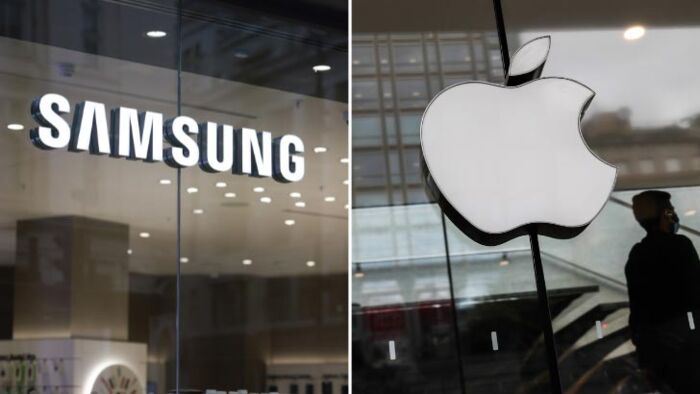
Apple has a towering ecosystem and brand, while Samsung is often viewed purely as a producer of smartphones and consumer electronics.
But this simple comparison is a useful prism for understanding how the artificial intelligence (AI) story has evolved, and where capital may be heading next.
The first phase of the AI trade was concentrated in the United States, where the big players included a handful of AI chip designers and hyperscalers as demand for model training and inference surged, even as global supply chain leaders such as TSMC, ASML and Samsung underpinned the hardware build-out.
That made sense in the early innings of a technology cycle as investors sought pure-play compute exposure and the platforms enabling it.
But AI has moved beyond borders, and global equity markets in 2026 are reflecting this shift.
Today, the value creation is playing out across Asia as well as the US, with companies like Samsung at the centre of crucial components such as high-bandwidth memory (HBM) and advanced packaging.
Capital is rotating into markets like South Korea, Japan, Taiwan, China, and India as investors look for the next beneficiaries in the supply chain and the infrastructure required to scale AI.
Other names worth noting are include SK Hynix, Taiwan Semiconductor Manufacturing Company (TSMC).
Why Samsung is outperforming Apple in the AI build-out
The so-called "SaaSpocalypse" isn't just about AI displacing software features.
It's about the repricing of duration risk. Higher US real yields, and even a reset higher in Japanese yields, have lifted hurdle rates.
Software-as-a-service (SaaS) models, which are often valued on long-dated cash flows and steep terminal growth assumptions, are mechanically more exposed to higher discount rates.
By contrast, many hardware and infrastructure names monetise nearer-term cash flows backed by tangible capacity additions.
In this context, Samsung's leadership in memory and packaging sits closer to cash-flow immediacy and capital certainty than a long-duration software multiple.
Until recently, the AI story has been largely about compute.
We paid a premium for the designers of the most advanced GPUs and the platforms that provisioned them.
Now the second phase is being driven by constraints, which is broadening the opportunity set.
We're seeing tightening in memory supply, a sharp rise in storage requirements, and a step-function increase in electricity demand for data centres that the existing grid was not designed to handle.
The second phase of AI: From compute demand to system constraints
These aren't isolated pain points.
They are signals that AI is transitioning from a pure compute story into a full-stack infrastructure build-out spanning semiconductors and the physical plant that powers them.
Apple's recent softness reflects a mix of factors from macro duration repricing weighing on long-dated growth assets to the market's reassessment of where the next incremental AI dollar is earned.
Apple remains a formidable platform company, but the centre of gravity for AI monetisation has tilted, for now, toward the components and capacity that make large-scale AI possible.
Samsung, with leverage to memory and advanced packaging, sits at the junction where today's constraints translate into near-term revenue and pricing power.
Put simply, the AI story has globalised and broadened.
The next phase is about resolving constraints across both the digital (semiconductors) and physical (power and data centre) layers.
Memory shortages are the canary in the coal mine, signalling that capital is rotating from who designs the chip to who enables the system.
For investors, that means looking beyond a handful of US names to a diversified set of opportunities spanning the semiconductor value chain and the infrastructure that powers it.
In that context, Apple vs Samsung isn't a popularity contest but a map of where AI value is accruing today, and where it's likely to compound next.
What investors should watch
- Memory supply and pricing: Tightness here is a real-time barometer of system constraints.
- Power and grid: Data centre power procurement, grid interconnection queues, and cooling technologies will increasingly drive capex cycles.
- Geographic dispersion: Follow the capex across Korea, Taiwan, Japan, China, India, and selective US and EU corridors as the supply chain regionalises and scales.
Get stories like this in our newsletters.