The new battleground for car brands




There is a new battleground in the new-car market - plug-in hybrid electric vehicles, or PHEVs.
These vehicles have a petrol engine but also a sizable battery pack, with the idea being that they offer drivers the chance to use full electric power or petrol, depending on the situation.
Your daily commute to work could be covered at almost no cost if you have solar at home and plug in to recharge overnight. And then you've got a petrol engine to back you up for those longer trips.
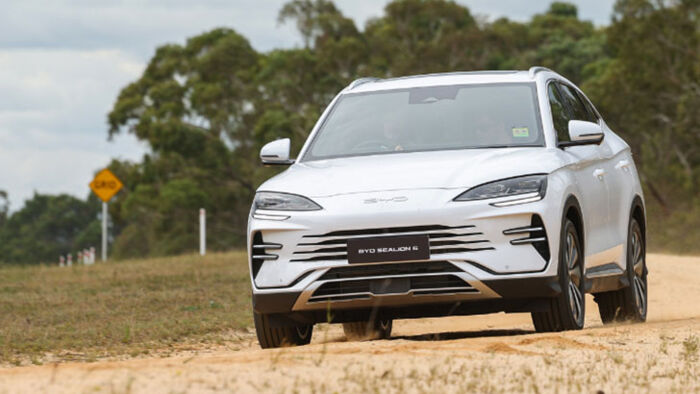
It seems like a 'best of both worlds' approach, and for some Australian buyers it is proving to be exactly that. More than 25,000 PHEVs have been sold in the first six months of 2025, which is an increase of more than 200% on last year.
Many brands from China offer PHEVs at unmatchable prices compared to cars from Korea and Japan, because while the technology is still seen as being in its infancy here, it has been around for decades in China. BYD claims to have built the first mass-produced PHEV, the F3DM, in 2008.
PHEVs have been tottering along at a glacial rate in Australia for a while now, with Mitsubishi acting as the pace-setter in the mainstream marketplace since March 2014 with its Outlander PHEV SUV.
That model continues to be available, but it starts at $57,290 plus on-road costs for the basic ES grade.
And these days it's playing in a more fiercely competitive market, with multiple options on offer that have lower pricing, more standard equipment, and arguably more compelling ownership prospects.
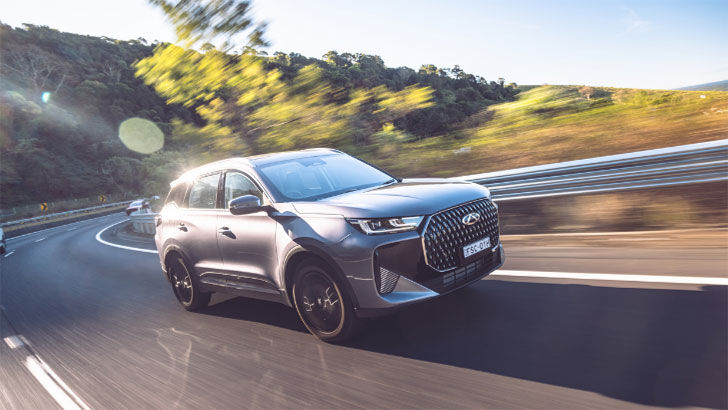
Some of the most recently launched budget-focused PHEVs are listed below, with pricing and their respective claimed EV driving capability.
Note: the testing regime is listed as there can be some variance in range testing methodology, with NEDC typically being a bit more unrealistic than WLTP:
- Chery Tiggo 7 Super Hybrid - from $39,990 drive-away, 93km EV range (NEDC)
- BYD Sealion 6 Essential - from $42,990 plus on-roads, 92km EV range (NEDC)
- Chery Tiggo 8 Super Hybrid seven-seater - from $45,990 drive-away, 95km EV range (NEDC)
- GWM Haval H6 PHEV - from $47,990 drive-away, 106km EV range (NEDC)
- Jaecoo J7 SHS - from $47,990 drive-away, 90km EV range (WLTP)
- MG HS Super Hybrid - from $50,990 drive-away, 120km EV range (WLTP)
- GWM Haval H6 GT PHEV - from $53,990 drive-away, 180km EV range (NEDC)
- Geely Starray EM-I - pricing TBC, 83km EV range (WLTP)
Of course there are numerous other options in the market, and plenty of brands that offer 'plug-free' hybrids in the SUV segment. Hyundai, Kia, Toyota and Subaru are some examples.
There are also other types of electrified models, like the Leapmotor C10 Range Extender Electric Vehicle, which has a petrol engine but it only ever acts as a generator to add range back to the battery. But in its own right, it has a claimed 170km of EV range (NEDC). Nissan, likewise, has its e-Power Qashqai and X-Trail models, which have a similar setup but don't have plug-in capability.
And there are more coming. BYD has confirmed it will be selling a new model known as Sealion 5, likely well under the $40,000 barrier.
Get stories like this in our newsletters.